
The dispute between scientists in the Commonwealth and Commonwealth Attorney General Ken Cucininelli is heating up. Click on the link above to follow the story.
Commencement and new beginnings
Tomorrow morning is Commencement at George Mason University. As in so many previous years, I’ll arrive early at the Institute, don my academic regalia and walk across the campus lawns to the Patriot Center to join the platform party and mark the end of another academic year.
The carnival of academic regalia reflects the diversity of our faculty, my own bears the markings of the University of Michigan where I received my doctorate. But those of us on the faculty, as we enter the arena, will be swamped by the sea of green, as thousands of Mason students prepare to begin the rest of their lives.
In the end, it’s the ability to positively influence the education of thousands of students, that is the core mission of this large public university. Teaching, this past semester, to both undergraduates and doctoral students, I felt energized by this core mission in a way that both invigorates my own efforts here at Mason as an administrator and that gets leveraged into my role as a science leader at this institute for advanced study.
Already, only the seniors are left on Mason’s campus, some 12 miles from the U.S. Capitol Building. After tomorrow, we’ll settle into the summer routine–for administrators, things only gradually begin to wind down–but I already can’t wait for the Fall semester and the challenges that await: working with my graduate students on research, building out Phase II in our expansion project, teaching undergraduate neuroscience and continuing to edit a 100+ year old scientific journal called The Biological Bulletin.
I feel energized by what’s ahead, just as I feel satisfaction in what’s now past. And I continue to consider this, the best job anyone could hope to have.
Jim
Change Comes Knocking
Looks like the NSF and NASA budgets are in for a period of unpredictability. Details here at ScienceInsider.
Mobilizing for Phase II
 Today, the mobilization began for the next phase in the facility that houses the Krasnow Institute for Advanced Study. Over the next 12 months we’ll be adding approximately 15,000 new square feet of wet labs, core facilities and offices to bring the Institute’s main facility up to about 60,000 square feet.
With our outstanding faculty, programs and staff, we’re well on our way to reifying the vision of our scientific founders.
In the meantime, I’m already thinking about Phase III on the other end of the Institute, to bring our Center for Social Complexity and Department of Computational Social Sciences all under this one roof.
Cheers,
Jim
New York City late night
A beautiful piece from the New York Times–puts into words why I love that City.
Jim
The Atheneum at Caltech
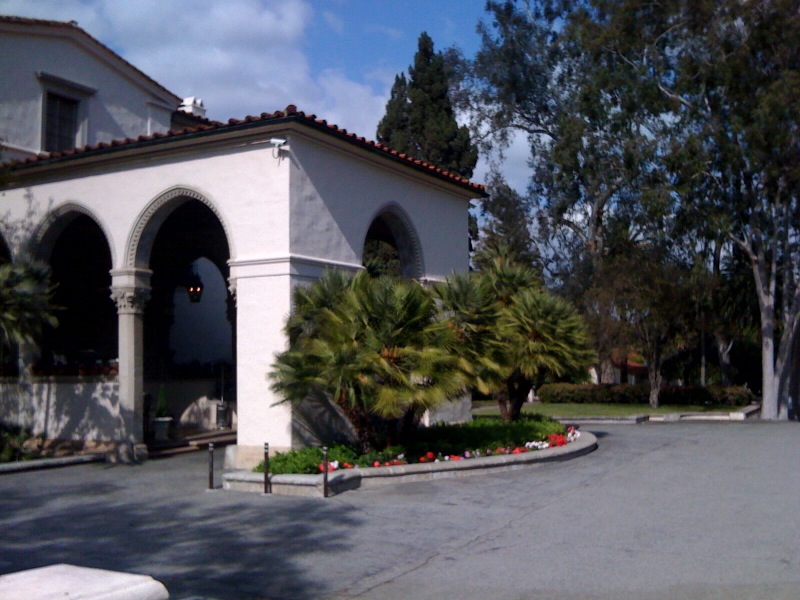 The week before last, I had the pleasure of returning to the place I grew up, Pasadena California. This is the Caltech Atheneum, probably the nicest faculty club I know of. Staying here for a short work visit to LA was full of memories–this place was my family’s first temporary home, back in 1969 when my Dad moved from Ann Arbor to take a job here. But for a few modernizations (such as the student lounge with flat screens in the basement) it’s pretty much the same.
For those with cinematic memories, you may recognize the Atheneum from the movie, Beverly Hills Cop!
Brain Training Resesarch
From Nature via the Chronicle of Higher Education:
Last month Nature published a study that said training your brain was pretty much useless. While practicing a particular task might make you better at that task, the improvement was nontransferrable. Doing crosswords doesn’t make you smarter, it just makes you better at doing crosswords. Those sad findings were reported all over the place.
Decade of the Mind VI, Singapore October 2010
Well the Web Page for registration is now up here. I’ll be there and the program looks pretty exciting.
Jim
Spring semester
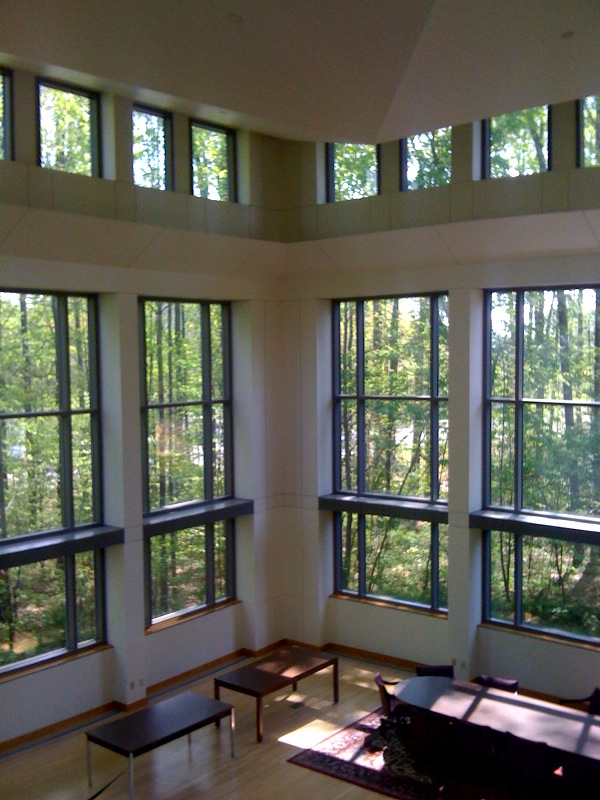 As we enter the latter part of the Spring Semester, the view from the windows of Krasnow’s Great Room gets greener. Only eight weeks ago, the view outside was arctic-like, with mounds of snow that looked to be permanent.
This has been an excellent year so far for our science. Most exciting has been the proliferation of large-scale grant awards that bring together many of the disparate disciplines represented at Mason’s Institute for Advanced Study.
It’s also been gratifying to open Krasnow’s new cellular imaging facility and to welcome two new functional brain imagers to our faculty.
Defining high risk/high payoff
Click on the link above for the mandate from the US Congress to NSF on funding more high risk research.
And what constitutes “high risk”?
“Research driven by ideas that have the potential to radically change our understanding of an important existing scientific or engineering concept, or leading to the creation of a new paradigm or field of science or engineering, and that is characterized by its challenge to current understanding or its pathway to new frontiers.”
 Discoverers and Discoveries