
And was delighted to walk through our new research wing of the Institute and find the labs occupied. It was also excellent to hear George Mason University featured on NPR’s Talk of the Nation, over my Iphone in Bermuda. Hat tip to a loyal reader of Advanced Studies.
Krasnow Science Retreat 2011

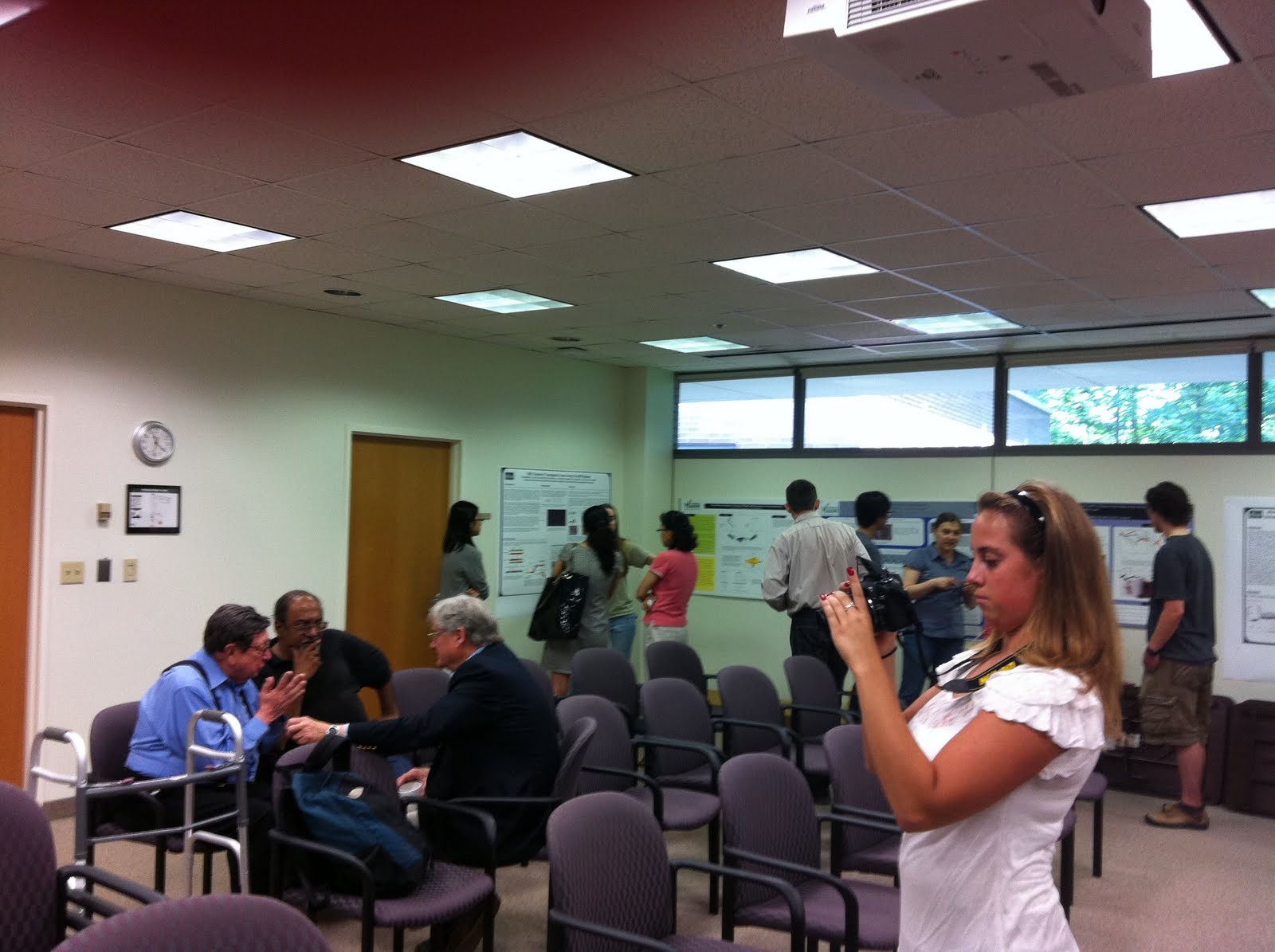
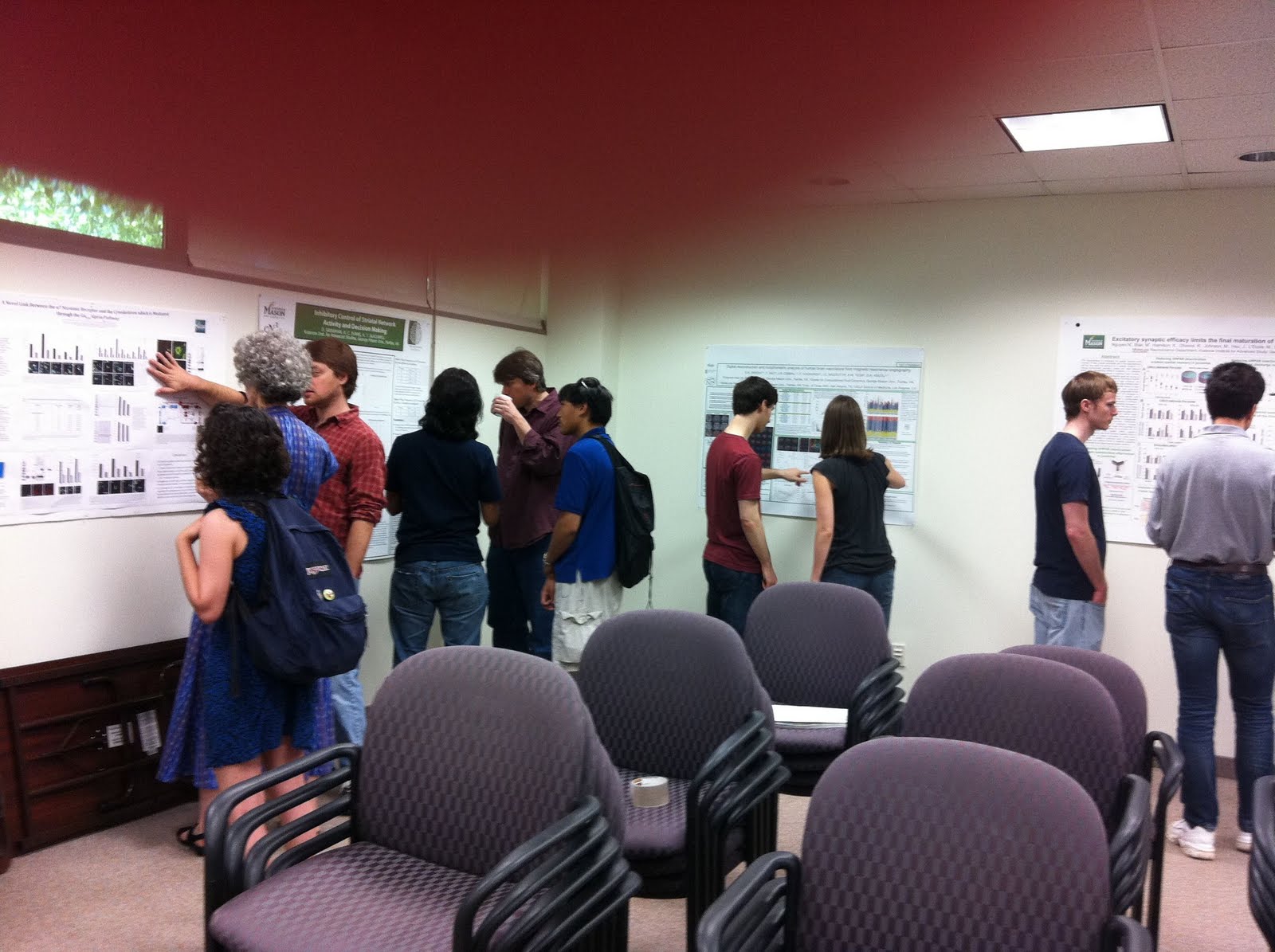
As Institute Director, the Science Retreat is one of the most enjoyable parts of my job. I get to learn about everyone’s work–and these days at Krasnow, that spans from the fall of Lehman Brothers to the effect of anti-psychotic class drugs on the alpha-7 nicotinic receptor in brains.
Patrick Kennedy and Brain Research’s Moon Shot
I’ll have more to write about this later (preparing an op ed with some colleagues), but the story is here. I’ve known Congressman Kennedy for some time and I salute him. He’s a true leader in this important area.
Commencement 2011, George Mason University
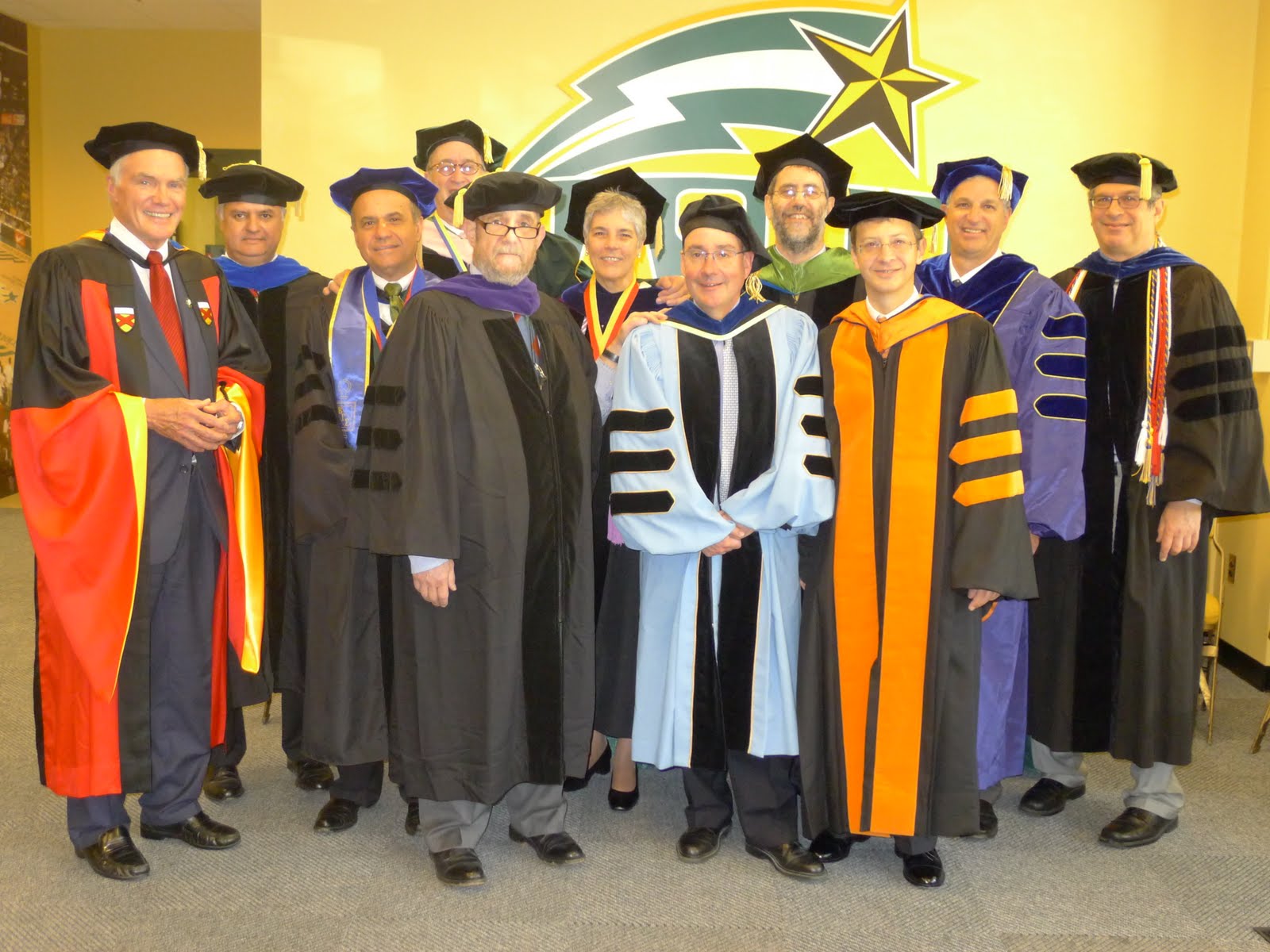
A great photo of my colleagues, the other deans and directors here at George Mason. I’m in the middle, wearing the academic regalia of the University of Michigan.
These are a great group of folks to work with. I consider myself very lucky.
Scenes from the end of the semester (Physics Review Session)
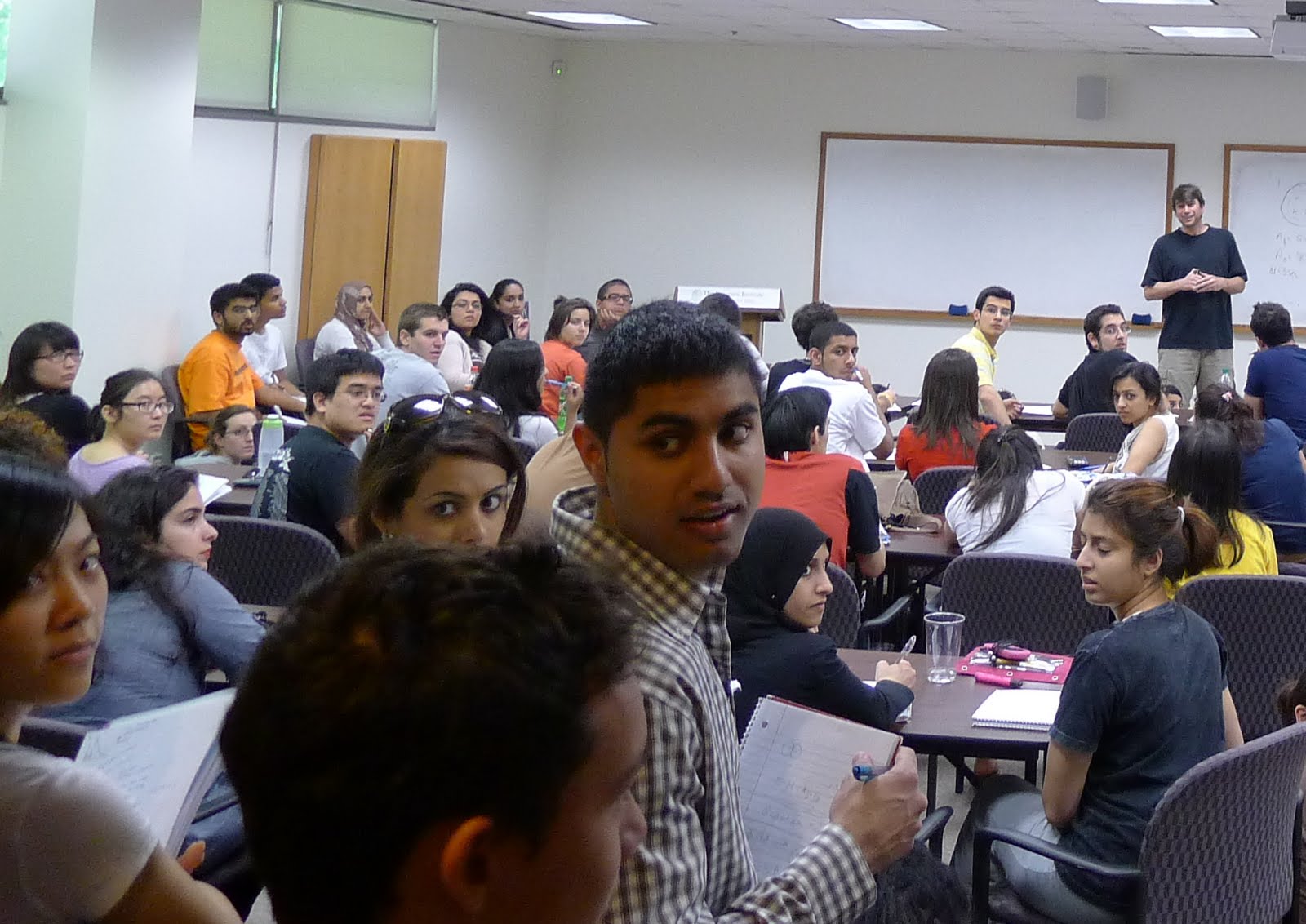
Yes, when it’s exam time, the Krasnow Institute lecture room fills up to the brim. The physics professor (at the back in the black T-shirt) is our very own Rob Cressman. The camera only caught half the room, the other half is equally as jammed. And that’s only half the class!
The Completion of Krasnow Phase II

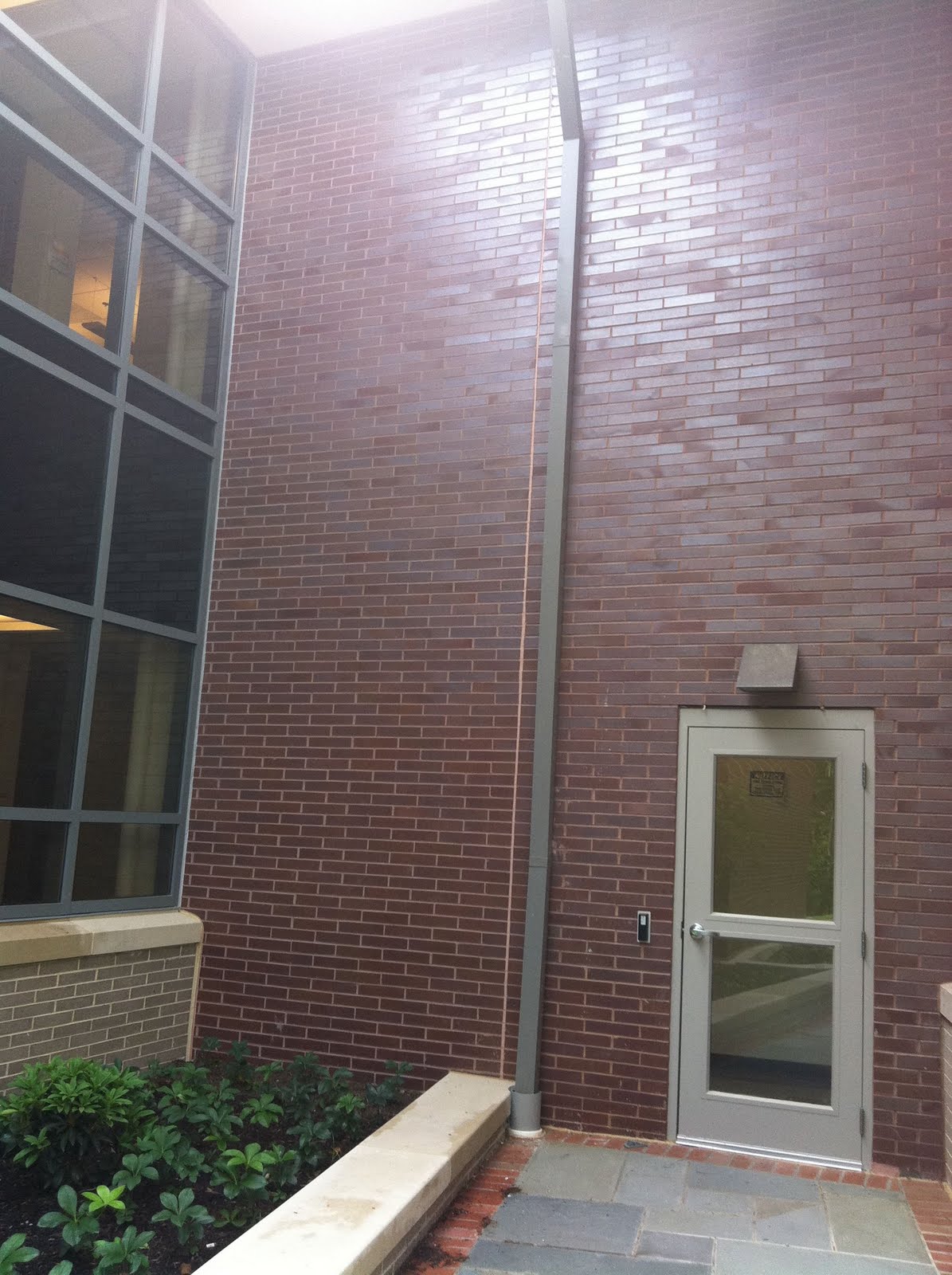
Well, Krasnow’s Phase II is now done. We’ll move in on June 1. In the photos below, the perspective is on the juncture of the research wing (left) with the 1997 original facility (right). There’s wonderful landscaped patio beneath a curtain wall at the juncture and in a few weeks, there will be picnic tables, so that our faculty and students can enjoy the nice weather.
We’ll have a formal grand opening of the new wing in the early Fall. In the meantime, we’ll be moving labs, welcoming new Institute faculty and, in general getting used to the new digs.
The research will will enable a number of lines of research in the neuroscience areas, among them, our translational neuroscience collaboration with the Department of Neuroscience at Inova’s Fairfax Hospital.
Another academic year in the books
We are quickly approaching the end of the academic year with the Spring exam period and it’s worth a pause, to look back. Most salient of course is the new research wing, which is now larger than the original Krasnow Institute facility that we moved into in 1997. I’m looking forward to an official grand opening in the Fall, but we’ll begin moving our scientists as soon as the semester ends.
Second, this past year was marked by a highly successful collaboration with our friends in Singapore with the Decade of the Mind VI Conference this past October. Sadly we mark the passing of the intellectual founder of the Decade of the Mind project, Dr. James Albus. Jim was an intellectual giant and we’ll all miss him.
Third, the Institute is minting its first Computational Social Science doctorate at Commencement next week, Mark Rouleau. This is a milestone both for the Institute as an Academic Unit of Mason, but also for the United States–Krasnow’s CSS doctorate program is the first of its kind in the nation.
So all told, a great year. We’ll be having our annual Krasnow Science Retreat at the end of the month and then hopefully a bit of rest as summer sets in.
Defending doctoral education as a viable career choice
The Nation’s William Deresiewicz has a stinging indictment of doctoral education as a career choice here.
His key point, as I see it, is that the opportunities for newly minted PhD’s are limited in the US by both the lack of mandatory retirement for tenured professors and the use of adjuncts to replace any retirements that do happen to take place.
I would say indeed he is correct factually about the above, however, the distinction between the humanities and hard sciences is somewhat blurred in his analysis, and to some extent this biases his argument.
Far more important, from my standpoint are the following:
First, there are many non-academic careers for which a PhD is not the albatross (think NY city taxi driver who reveals that he has a doctorate in political science–urban legend?) many folks would have us believe. This is especially true for all sorts of policy positions in government and NGO’s, but also very much the case for entire sectors of the global economy such has high-technology, energy and biomedical sciences that lie outside of academia.
Second, I would argue, at least in the sciences, the very best will always thrive in academia on the basis of their intellectual productivity, and for many doctoral students (as with many high performance athletes) the opportunity to make it to the elite levels is the motivational driver, immaterial of the chances for eventual success.
What I detect most in Deresiewicz’s piece is a passionate call for economic justice (perfect for a magazine like The Nation). This is admirable, but at some level irrelevant. The desire of creative human beings to create, whether in the humanities, social sciences or in the hard science disciplines, is something orthogonal to compensation levels.
New NAS Members
The list is here. We congratulate Huda Akil, wife of Krasnow Advisory Board member, Stan Watson–they are both at Ann Arbor. Huda is also a former President of the Society for Neuroscience and with her husband Stan, the co-director of Michigan’s Molecular and Behavior Neuroscience Institute.
Next steps at Krasnow
Having just been reappointed to my third term as Director, a short blog post to acknowledge and thank the faculty, students and staff of the Institute for their confidence in my leadership. And to also thank the current leadership of the University for the same.
I look forward to continuing to work with all of our stake holders going forward to 2016 realizing of course, that there are always unforeseen circumstances and changes for which I pledge to put the interests of the Institute and the University first.
 Discoverers and Discoveries