
At once both insightful into Silicon Valley culture and the human dynamo named Sheryl Sandberg. It’s here.
Long-form journalism at its very best.
My question: why doesn’t she insist on being a Facebook Board member?
At once both insightful into Silicon Valley culture and the human dynamo named Sheryl Sandberg. It’s here.
Long-form journalism at its very best.
My question: why doesn’t she insist on being a Facebook Board member?
The link from today’s Chronicle on-line is here. The problem in a nutshell is making use of social network data (like Facebook) in a way that truly anonymizes the data. In the case of data that appears to come from Harvard University, that proved impossible.
Clearly, at Krasnow, we are interested in this kind of data. What can we do to use it in a responsible manner?
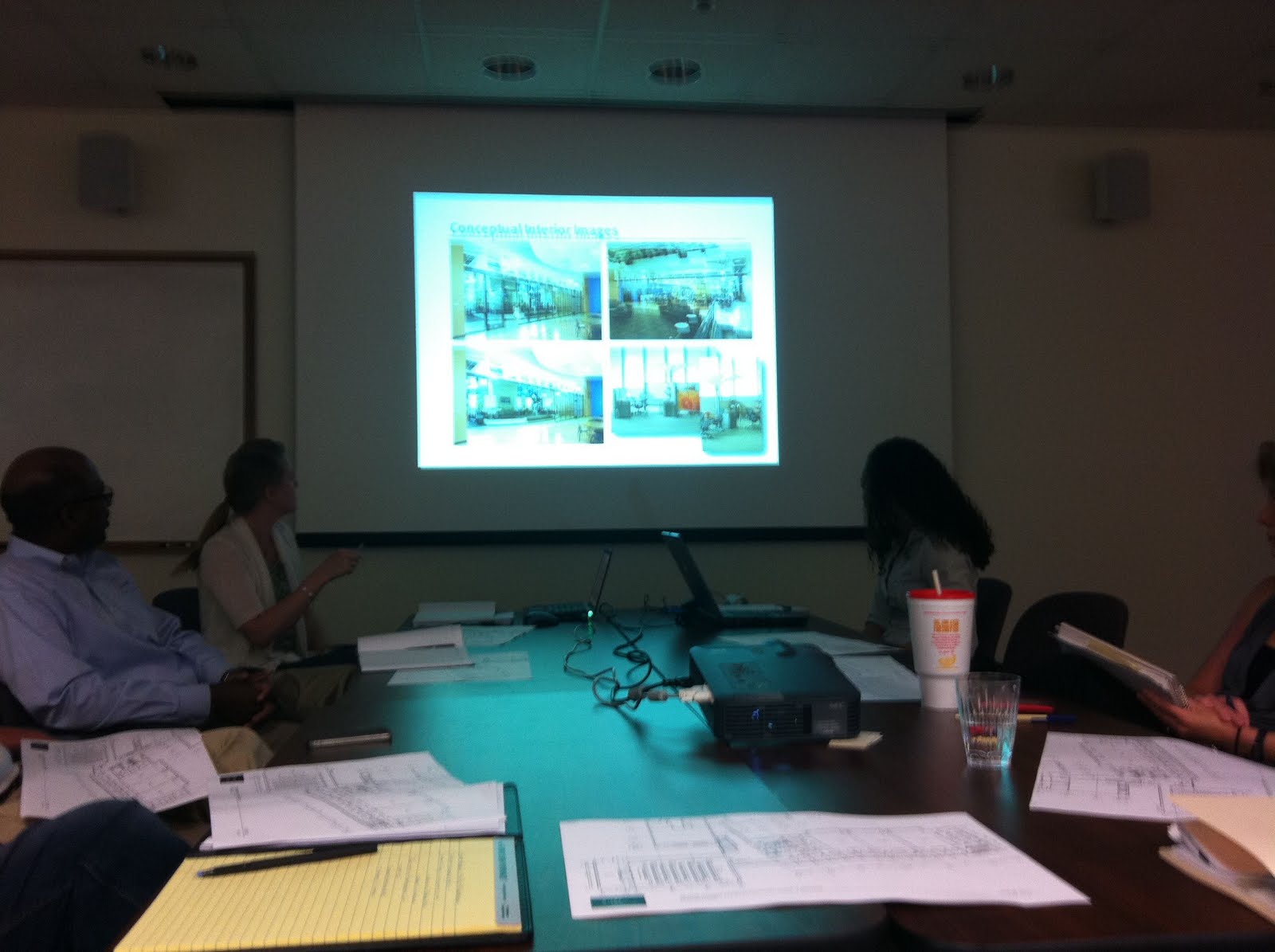
We had an excellent meeting last week on the Phase III expansion project at Krasnow. Phase III of the Institute will bring all of our satellite programs into our current 55,000 square foot facility by adding an additional 20,000 square feet to the south end of the current Institute. The new wing will house our Center for Social Complexity plus two additional new centers, both of our academic departments and a medium-size auditorium.
When completed, the facility will serve as a magnificent home to the scientific program envisioned by our founders, pretty much exactly two decades after the seminal conference that got us started in 1993.
Probably the coolest interactive map I’ve seen is here. Chose your US county and see where the cell calls and text messages are going. Hat tip to Andrew Sullivan.
Over the future of higher ed. Latest news is here. In a world of commoditized education delivery, America stands to loose a crucial soft-power advantage on the global world market: the excellence of its public research universities.
From Peter Stearns blog, here. I’m not sure whether this is a problem specific to the Obama administration or rather an emergent of large bureaucracies gone amok. In any case, really troubling.
The report in Nature Geoscience is here. The geopolitical significance could be large. China has been adopting a neo-mercantilistic policy with regards to these commodities for some time. They are ubiquitous in modern gadgets of all sorts and until we have adequate resource substitution, technological supply chains will depend on a constant supply. Right now, the supplier is largely China. According to this report, that could change.
As an academic unit of Mason we are slowly maturing. I am learning that I am the one to whom distraught students finally turn when something goes really awry. Similarly, we are learning to factor the teaching load into our faculty evaluations. But mostly, we are learning what it means to architect and then nurture new programs. We have minted our first PhD’s and are well on our way to the same for masters degree recipients. We are part of the multi-year self-evaluation cycle at Mason called Academic Program Review and we are learning to work with rubrics as we evaluate student learning outcomes.
At the same time, an interesting challenge: we have to keep focused, not on incremental research findings, but on the really big discoveries, the ones that change paradigms. Which means, we need to have faculty members who can do both: the teaching intertwined inextricably with the research.
It’s their cover piece from this week, here. I don’t hold a strong enough opinion on the future of manned space to argue their thesis one way or the other. I simply find it extremely problematical to extrapolate far into the future from present trends, particularly when dependent on a number of linked complex adaptive systems (e.g. geopolitics, markets, biosphere).
By the same logic, we should just give up on neuroscience, since the brain is so complex and our progress in understanding it, to date, so slow. I don’t think I’m a buyer on that proposition either.
The buzz on a constitutional response to the debt ceiling is here. We’ll see….
 Discoverers and Discoveries