
To visit friends and the Pickering Creek Center. Hope to take some decent photos and see some unusual birds.
It’s really amazing to have such a beautiful estuarine setting less than two hours from Washington.
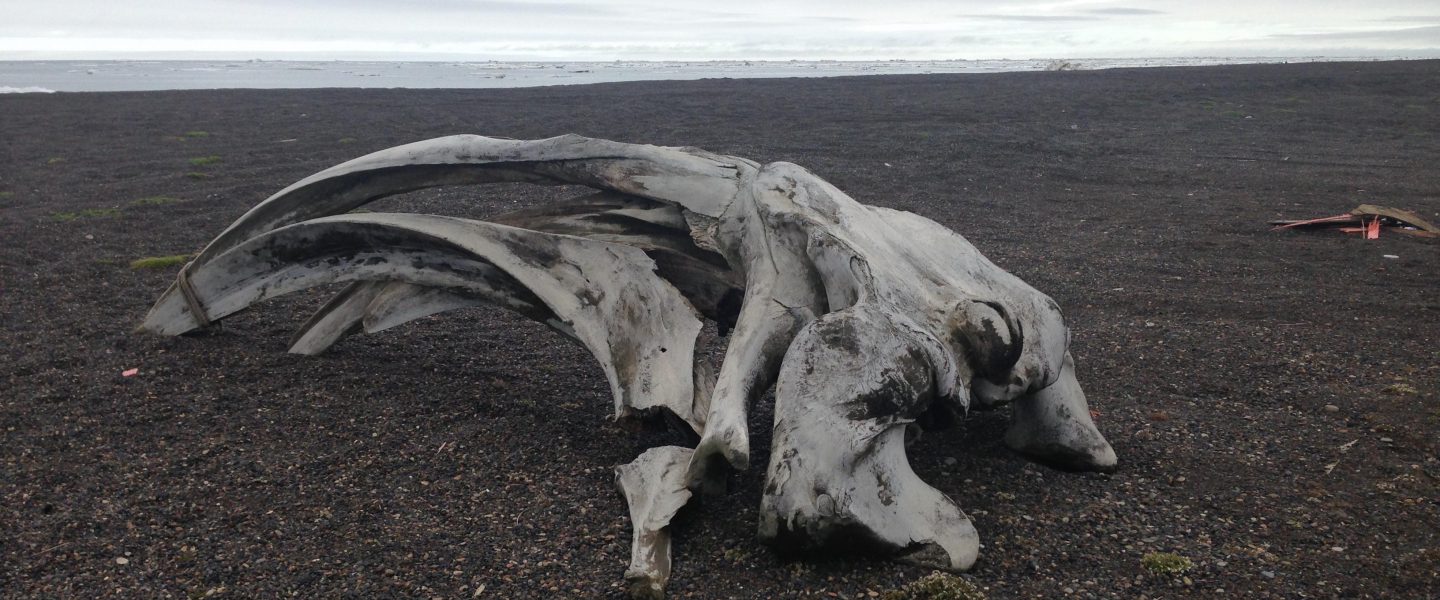
To visit friends and the Pickering Creek Center. Hope to take some decent photos and see some unusual birds.
It’s really amazing to have such a beautiful estuarine setting less than two hours from Washington.
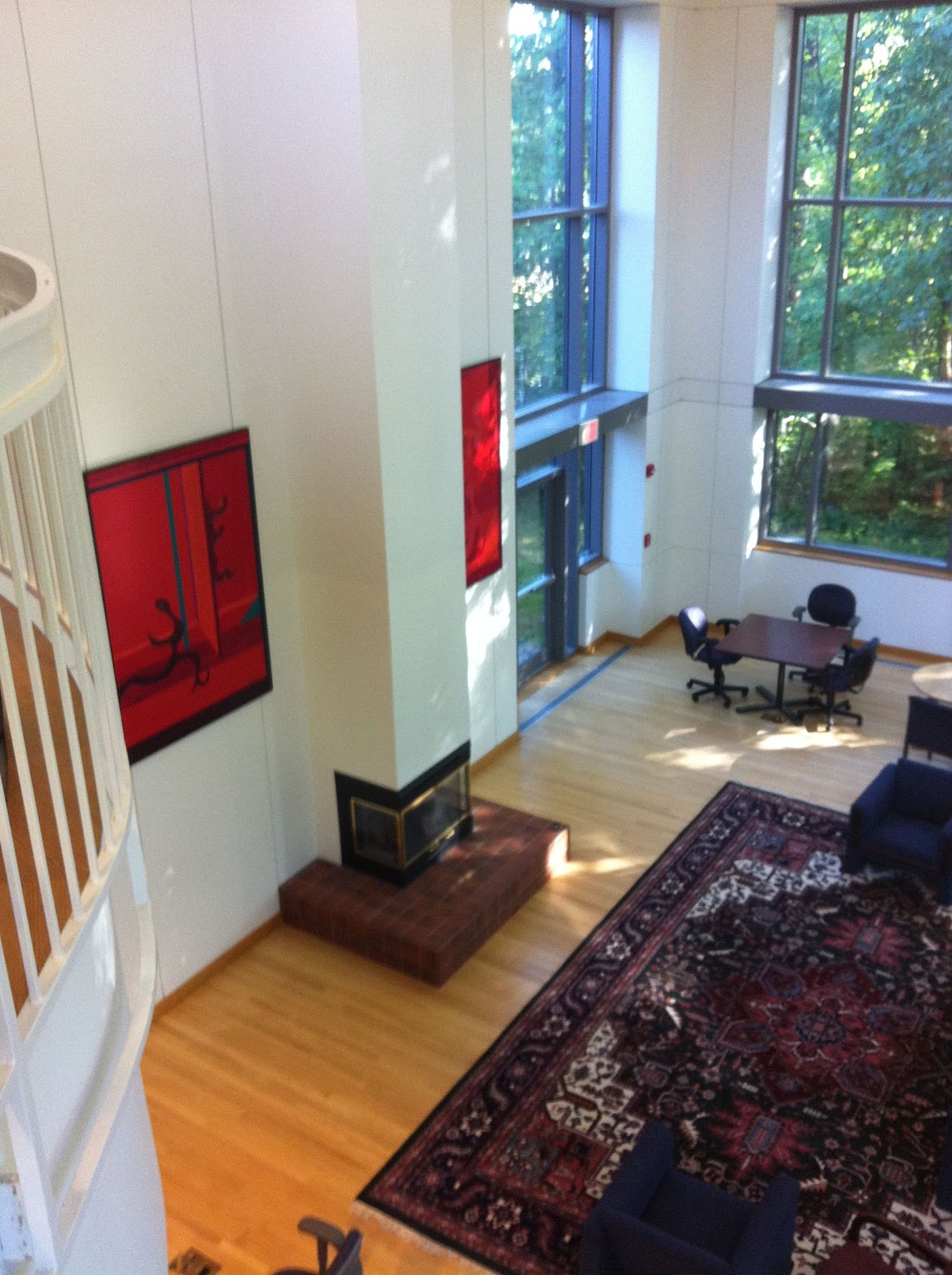
One of the really nice things about the Krasnow Institute for Advanced Study is the art. Somehow there seems to be an important connection between science and art, probably because both involve human creativity and expression. These two pieces are by the Bulgarian-born artist, Stephen Sacklarian.
Not enough is really known about the neuroscience of artistic expression although with the advent of fMRI, the area is definitely opening up.
Just finished up a long conversation with one of my former students. Among our many topics was a questioning of my old assumption about the field of neuroscience: namely that neuroscience desperately needs a general theory (in the sense that the standard model and quantum mechanics are general theories) on which to scaffold the data from our experiments.
The question is: does neuroscience really need such a theory to be a mature science? Can neuroscience progress and even come to deep knowledge even, as a matter of course, understanding comes with a degree of irreducible complexity?
Certainly physics tolerates the current limitations of quantum mechanics and general relativity, although there are many physicists out there who presumably are doing there best to reconcile the two.
But can we really have a science, which produces practical knowledge (curing of brain diseases) but lacks a theory?
Of course I do recognize that there are many neuroscientists who are thinking at the theoretical level and who work very hard at coming up with something like what I’ve writing about. It’s just that so far, there’s been a lack of any real consensus, and to quote myself, “we really haven’t had our Einstein”…..yet.
Hat tip to Tyler Cowen, here’s Paul Graham’s interesting idea: Graham starts from the notion that the default is for start-up hubs is failure, then he points to what makes the Valley a success. Money quote:
I think there are two components to the antidote: being in a place where startups are the cool thing to do, and chance meetings with people who can help you. And what drives them both is the number of startup people around you.
I was just mentioning to Tyler that perhaps the problem with DC is that here, the cool thing is a job from the Plum Book.
I remember the first Apple computer I used was in graduate school at Michigan in the 1980’s. It was an Apple IIe and it seemed completely magical, even without the Internet. Today at Krasnow, Steve’s influence seems ubiquitous from servers to iPads.
Steve Job’s illness took him from us much too early. He will be sorely missed, especially among scientists who were certainly among his earliest adopters.
I’m a big believer in the public research university writ large. These institutions (of which George Mason is one) provide excellent affordable post-secondary education, act as economic engines to their regions, provide cultural enrichment and add to our knowledge through basic and applied research.
Currently, American public research universities are under real stress. This is a reflection of the economic challenges faced by the 50 states (to varying degrees) and is reflected in higher tuition, reduced financial aid, and salary stagnation for faculty. At the University of California, the enormous size of the State’s economic problems have led to faculty furloughs and a real threat to the overall health of what was for a time, perhaps the most prestigious public university system in the world.
One manifestation of the problem is that top professors are now routinely being “raided” from the publics by private institutions, especially those with historically large endowments. The issue is that the superstars, who once were teaching in the diverse affordable education environment of the publics are now, if they are teaching at all, applying their pedagogical skills in what might be considered a monoculture (this in spite of financial aid and diversity programs).
I fully recognize the critique that public research university superstars often don’t teach. But at Mason they definitely do. I’d also add that even where superstars aren’t teaching a full load, they often offer research and scholarship opportunities for undergraduate (and of course graduate) students as part and parcel of their own research.
What to do?
I’m not sure if I have a short answer, but surely there is a message here that the publics need to be appropriately valued by society.
He notes that the proscribed cuts the are supposed to kick in if the Super Committee can’t reach agreement are delayed into FY13 here.
Bottom line: the next congress can rewrite the rules.
It’s an interesting twist that supporting failure requires believing that your party will control both houses of Congress.
Stay tuned for a preview of the Institute’s new web site, our collaborative plans with the Santa Fe Institute here in the DC area and some insights into where we are hiring.

From one of the Institute’s breakout spaces. I can see a chicken, a fruit fly, some chromosomes and a slogan. No doubt the work of our trainees as they tend their experiments into the wee hours. In all seriousness, though, the White Boards throughout the Institute serve an incredibly important purpose as a means of catalyzing scientific discussions, very often across the disciplinary boundaries that characterize Krasnow. Even in the world of apps, the old fashioned white board can’t be beat for this purpose.
But then, this reminds me of the wonderful Intel ad that ran for a bit during the PBS new hour:
Yes, quantum mechanics is weird, but when Ball starts talking about tardigrades….
They say it might even work for tiny aquatic animals called tardigrades or water bears, which, unlike viruses, are unambiguously living or dead.
he should definitely talk to Harold Morowitz. Read the link, it’s still an amazing experiment.

