A sad tale of scientific bad-behavior…

From The Economist, here.  From the article, it all started this way:

ANIL POTTI, Joseph Nevins and their colleagues at Duke University in Durham, North Carolina, garnered widespread attention in 2006. They reported in the New England Journal of Medicine that they could predict the course of a patient’s lung cancer using devices called expression arrays, which log the activity patterns of thousands of genes in a sample of tissue as a colourful picture (see above). A few months later, they wrote in Nature Medicine that they had developed a similar technique which used gene expression in laboratory cultures of cancer cells, known as cell lines, to predict which chemotherapy would be most effective for an individual patient suffering from lung, breast or ovarian cancer.

What follows is really sad.

The tenor on neurotechnology…

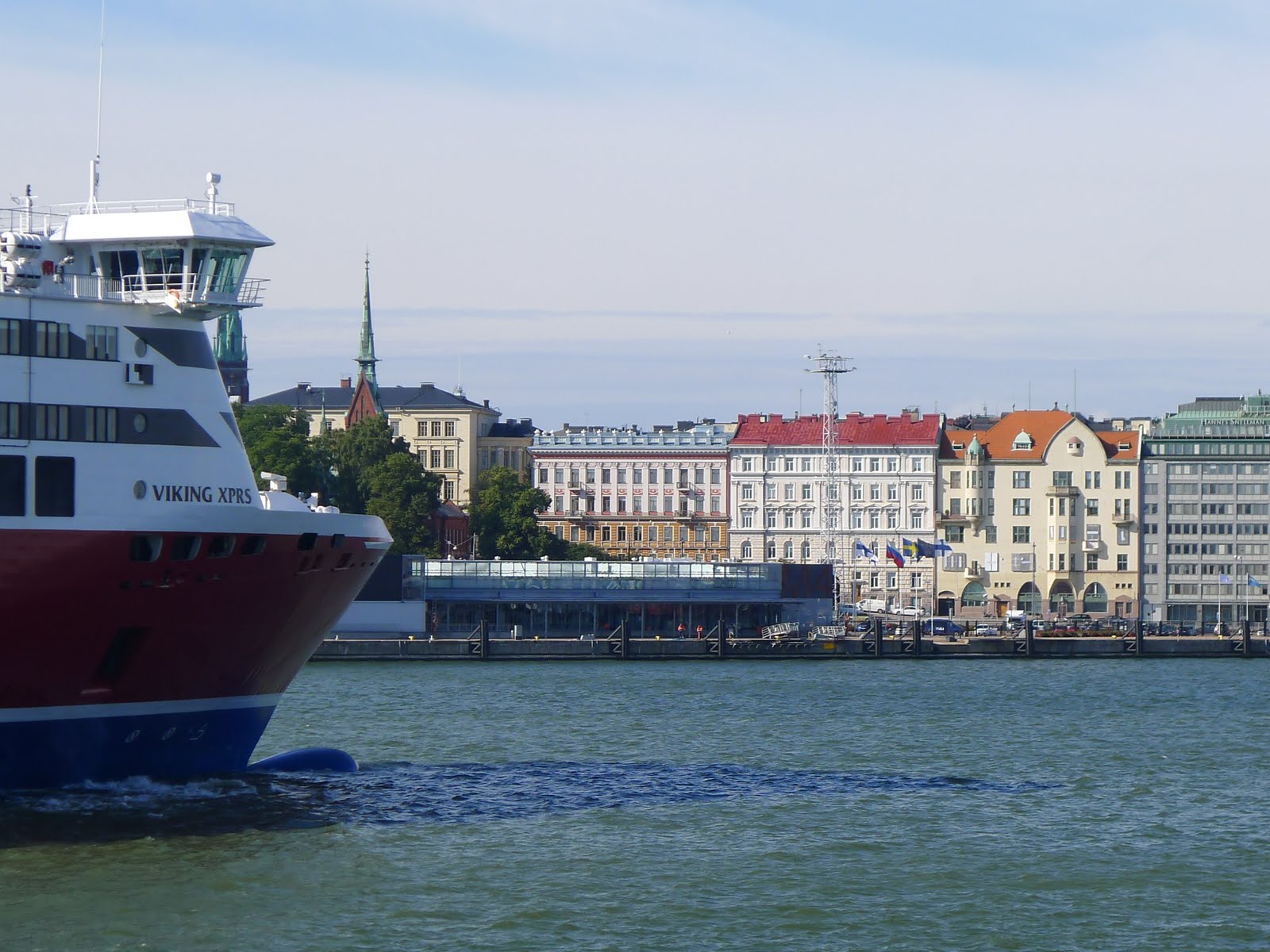
From the NeuroInsights meeting in Helsinki, the mood seems to be quite pessimistic on the industry–as in, how could one possibly make money off it. I think at least part of this is reflective of the on-going recession (especially here in Europe).

There’s another meme going on here: that the EU regulatory environment is much better for neurotech than the corresponding one in the US.

 Let’s see if there’s some deal making this evening….

It’s Labor Day–Off to Helsinki

That is if I can manage to get to JFK in weather that’s certainly less than perfect. Plans for the week include a Neurotech Conference, some networking meetings with technology folks and a talk at the University of Helsinki.

Last time I was in Finland was in 1975 (remember the Helsinki Accords)? Actually learned how to drive a manual shift on Finnish roads courtesy of my Dad’s largesse. I imagine it’s changed a lot since the Cold War.

James Piereson’s piece on Higher Education in The New Criterion

It’s here and well worth reading.

Money quote:

Hacker and Dreifus reserve their strongest criticisms for a handful of elite institutions—the “Golden Dozen” as they call them—that set the tone (unjustifiably in their opinion) for higher education as a whole. The list is familiar: the eight Ivy League institutions, plus Duke, Stanford, Williams, and Amherst. They are the prestigious schools that all ambitious students hope to attend, even though only a small fraction of them can hope to win admission. The existence of this elite stratum of institutions seems to violate the authors’ sense of democratic fairness. In their view, these schools are overrated and do not merit the hallowed reputations they have been assigned.

Back in DC after Sandia meeting

I barely made my connection in Denver, and arrived after midnight, but I’m back for the weekend, before heading out again Monday to a meeting in Helsinki.

As usual, the meeting at Sandia National Laboratory was extremely interesting and the scientific discussions fruitful. The Lab’s efforts in cognitive sciences are really beginning to show pay-off.

In the meantime, a day to catch up on work at the Institute…..

Hurricane Irene

We are now actively preparing the Institute for Hurricane Irene. For our staff and students:

–For those of you in Krasnow building new wing labs, please make sure any of your vital lab equipment, which cannot lose electrical power, is plugged into generator backed-up outlets.
–For everyone, you may want to consider placing plastic over your expensive equipment or computer.  If there is roof damage anywhere, water has a way of crawling along pipes and beams to finally drip off in distant, unexpected places.
If you are in the Krasnow building on Sunday, 8/28, and the electricity goes off or you see building damage, please call 3-KIAS (3-5427) to let the Krasnow on-call person know.  For an immediate emergency, call campus Facilities x3-2525 or Campus Police 911.

Academic Year 2011-2012: Perspectives

As we get ready this week for the return of our students and the beginning of another academic year, it’s useful to take a bit of time for some perspective on what lies ahead here at the Krasnow Institute for Advanced Study…..

In terms of research, the Institute’s full complement of wet labs are now on-line and, together with our faculty, constitute a critical mass to move the experimental aspects of our neuroscience inquiries forward. We are well-funded, we have imaginative scientists and students, and we can ask the next level of questions. This is propitious for high-risk, high-payoff experimental science.

At the same time, we are engaging with students at all levels of higher-education, through our programs. The quality and quantity of our students continues to increase. This is both a function of commitment and support for graduate education from the central administration here at Mason, but also of some recent private gifts, which ensure our ability to attract and train the very brightest.

We are also committed to enhancing undergraduate education here at Mason as part of the University’s Quality Enhancement Program, Students as Scholars. Embedding undergraduate student scholarship within an institute for advanced study represents an “out-of-the-box” approach to improving learning outcomes, particularly in STEM fields.

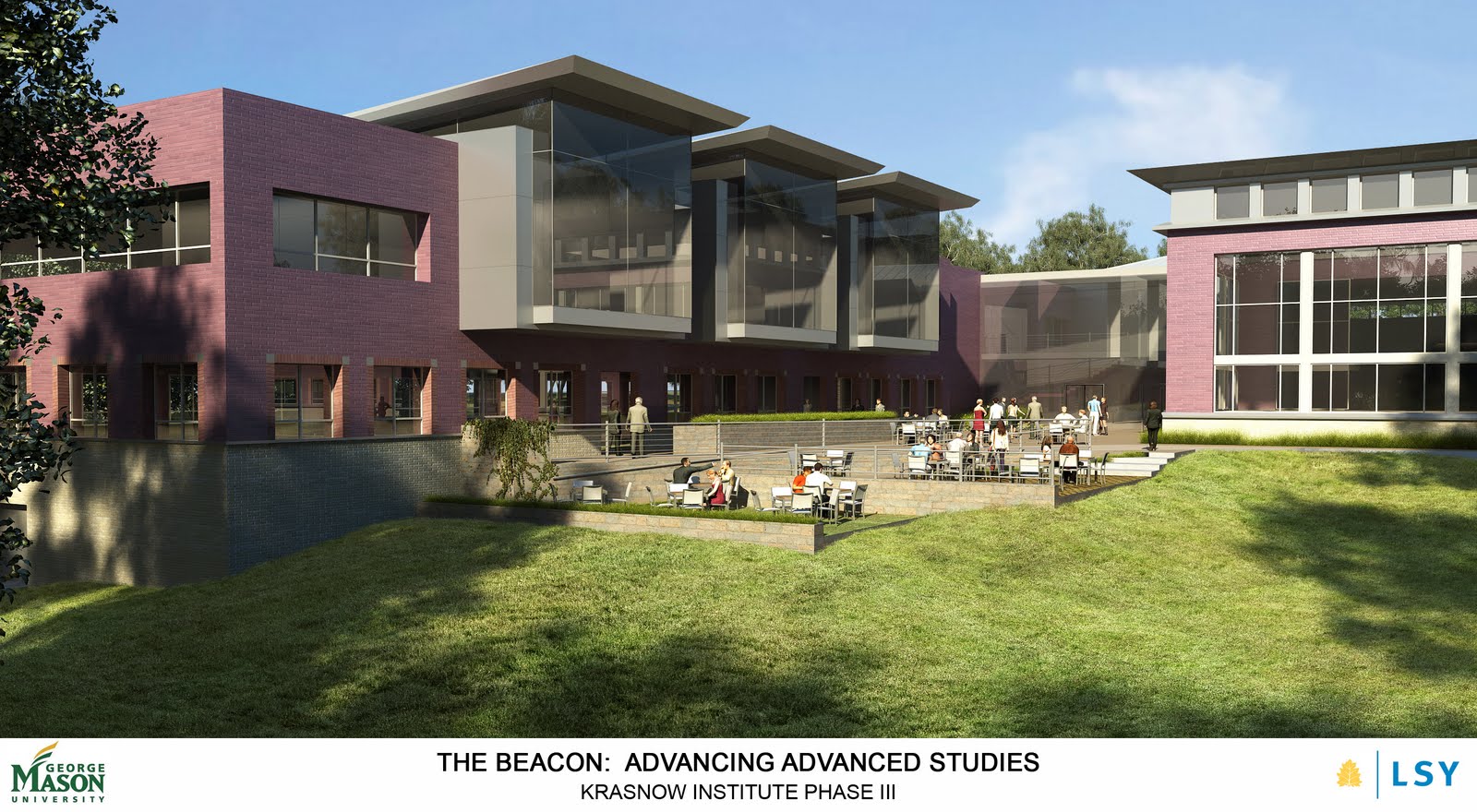
We are also getting traction on our Krasnow Phase III project (stay tuned for images) which will expand our computational social sciences programs beyond what they are now, and, at the same time, bring them under the central roof of the Krasnow Institute facility. My hope is to raise approximately $14M in new gifts over the next year or so, to bring Phase III into being.

We are also moving ahead full-speed into two new arenas for the Institute: executive education and international initiatives. In some cases, we’ll combine the two. The goal is to broaden the Institute for Advanced Study’s research and education portfolio. We’ll work closely with other academic units here at Mason and our long-term external partners in these efforts.

It’s an exciting time to be serving as institute director and chief academic unit officer. I’m looking forward to a great year.