
From Saturday’s WSJ, this essay on health hacking: at its most glorified, rolling your own molecular biology. I first heard about this back in 2008 at Scifoo. It’s certainly taken off. The problem of course is that it’s not science without sufficient statistical power. Although, it certainly wouldn’t require any statistics to detect an unlucky SNP.
Publics in Distress
America’s big public research universities are having a tough time of it lately, and it’s not just in their athletic programs. Fundamentally, they are being squeezed by the Great Recession hitting state budgets and parents’ tuition savings accounts at the same time. Whether sequestration happens or not, Federal R&D is likely to trend downwards for some time, and this will have an enormous effect on the economic engine of research that Vannevar Bush envisioned, and subsequently architected, mid-20th century.
Fundraising is being hurt, not only because of some very high profile PR disasters, but also simply because donors are holding on to their money in times of uncertainty. While the elite privates can count on enormous endowments to carry them through, the publics are, to a large extent (and with some notable exceptions) much more dependent on state support and tuition.
What to do? Who is the lender of last resort for America’s public research universities?
Increasingly the answer to that question is either out of state or overseas. Out of state students pay “full freight” or even premium rates and their recruitment potentially can subsidize the publics as they are being squeezed within their states. Of course, without growth, those are classroom seats that are no longer available for in state students. Which brings up the question of the core purpose of public education: to provide quality higher education for in state students. Or is it: to conduct excellent sponsored research? Or some mixture of both?
We live in very interesting times.
Seeking Alpha’s compendium of imaginative Eurozone saves…
Hat tip to Tyler Cowen. The link is here.
I’d love to know what our readers think of the idea of the Fed funding a Euro quantitative easing!
Ontogeny recapitulates phylogeny?
Monkey midbrain structures are early stand-ins for neocortex, here.
Our new collaboration with the Santa Fe Institute
Next May….the initial website is here. The Science of Complexity: Understanding the Global Financial Crisis…
Among the confirmed speakers, Gillian Tett, U.S. managing editor of the Financial Times.
Art at the Krasnow Institute continued….
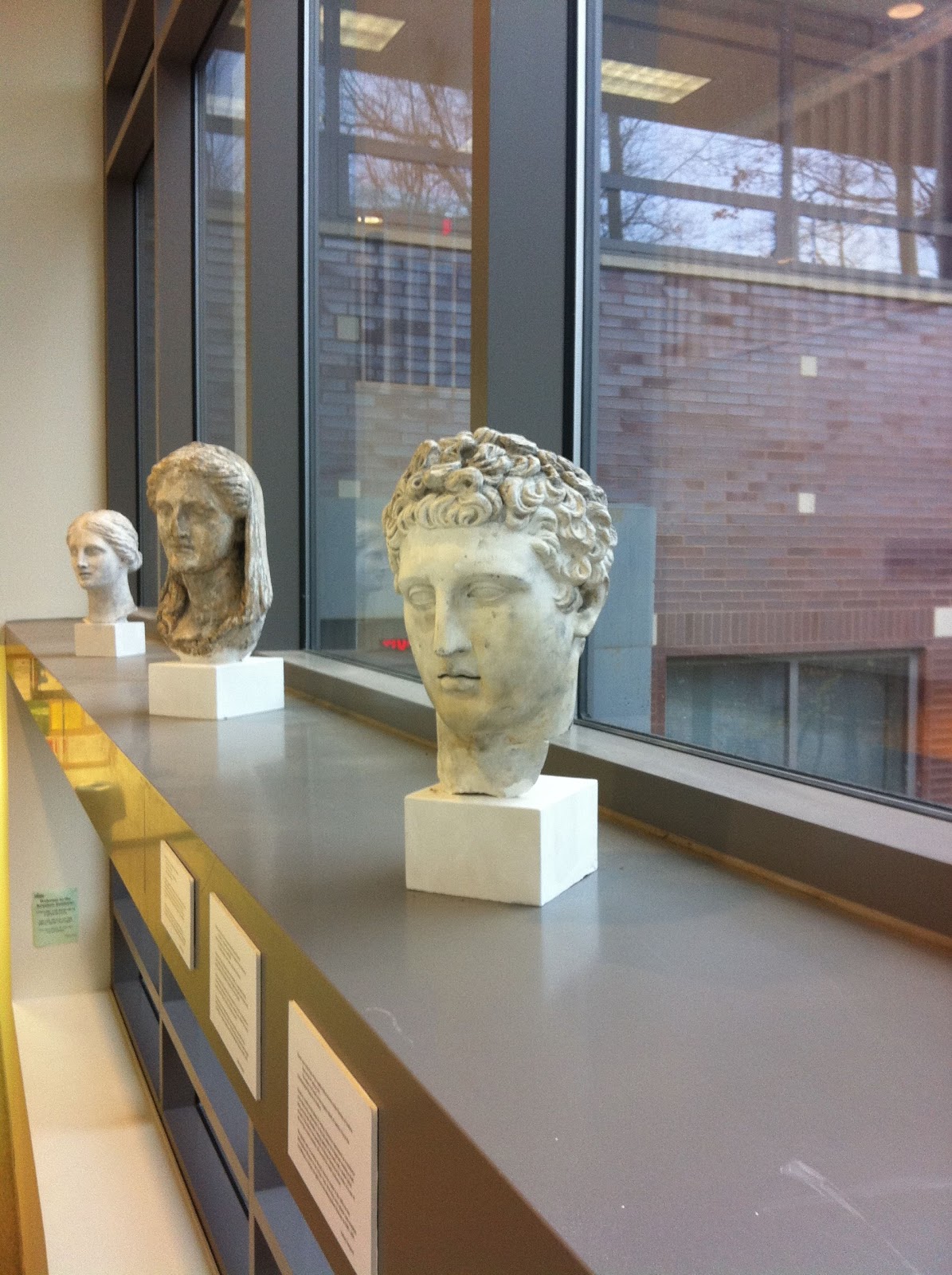
Is art conducive to good science? I think so. There is something about artistic expression which intuitively hooks into the process of scientific creativity.
At some crucial point, a scientist takes a leap of faith, with a hypothesis, that sets up a trajectory of experiments, data gathering and assumed risk. To my mind, this isn’t so different from the gamble that an artist takes in conceptualizing a piece.
One of the nice aspects of the Krasnow Institute for Advanced Study is the interplay between natural beauty, science and art. Today the forest outside my office window is denuded of leaves; the trees look, of course, like neuronal dendrites.
While inside our cellular imaging core, our researchers are imaging neuronal dendrites–real ones using confocal microscopy.
In the meantime, 20 km away in downtown DC, Krasnow PI Paul So’s Hamiltonian Gallery is an another example of how inspired physics (Paul is a professor in the Physics department here at Mason) and art can interplay off one another.
Singapore’s approach to housing
Hat tip to Andrew Sullivan (again), the piece is here. HDB buildings are ubiquitous in Singapore.
Read all the comments–it’s hard to imagine this as a viable approach in the US, although it might well be in other places around the globe.
Lynn Margulis, RIP
Lynn, of course, was a giant in biology. She was also a dedicated member of the editorial board of The Biological Bulletin. Her Washington Post obituary is here.
On her visits to the Krasnow Institute for Advanced Study, it was clear to all that she was a truly great scientist. We’ll miss her.
Krugman on Finland versus Sweden
Blogpost is here.
Of course Finland is in the Eurozone and Sweden isn’t. Look at the divergence of bond rates.
Avian Flu Mechanics
From ScienceInsider, here. The key question: where is the line in scientific publishing where the knowledge could lead to global catastrophe?
In this case, what molecular changes in the avian flu genome would make it as transmissible (to humans) as it is virulent?
I’m sure Oppenheimer and his colleagues on that mesa in New Mexico were having similar thoughts in June of 1945–not in terms of publishing, but rather demonstrating an atomic bomb.
 Discoverers and Discoveries