Kudos to one of our own: Professor Giorgio Ascoli

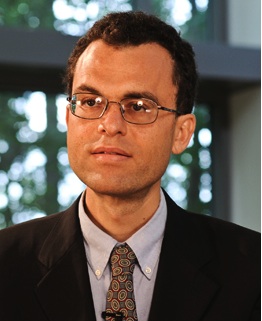
Today it was announced that Giorgio Ascoli, already known as a research superstar is also one of Virginia’s best top faculty! The announcement is here.

Giorgio has the title of University Professor at Mason, reserved for the very top faculty and is a member of the Molecular Neuroscience Department here at the Krasnow Institute for Advanced Study.

It’s an honor to count him as a colleague and a friend. Congratulations Professor Giorgio Ascoli!

First day of classes Spring Semester…

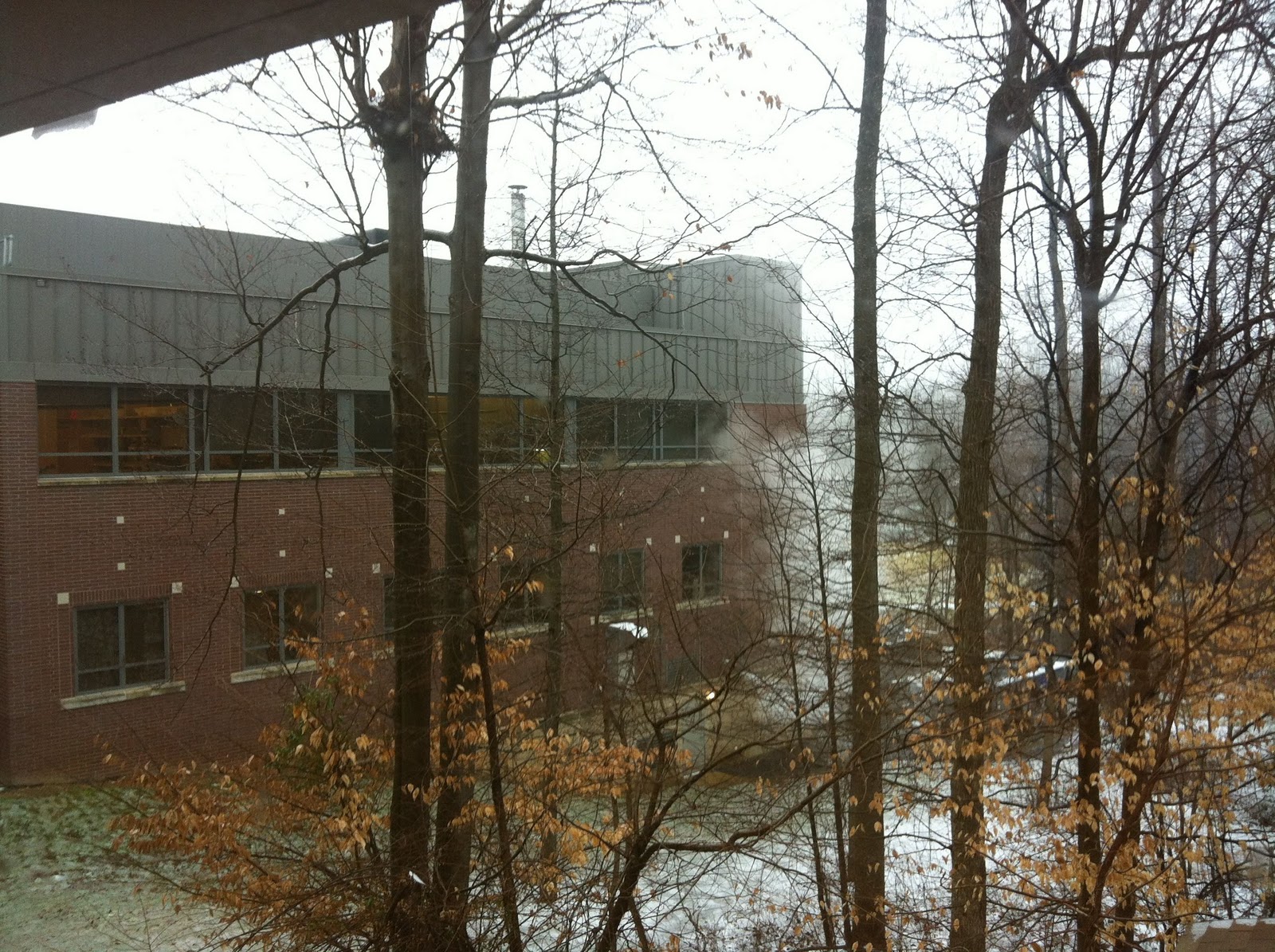
It may be foggy and cold here in Washington, but it’s also a day full of anticipation as we begin the Spring (yes that’s the operative word, Spring!) semester here at Mason.

Tomorrow is my first day of teaching in a bit. I’ll be teaching 50 undergraduates in a cellular neuroscience core course. I’m very much looking forward to trying out some new pedagogical ideas….

In the meantime, the first snowdrop blooms are out in our neighborhood. If the winter continues to be as mild as it’s been so far, we should have crocuses within a couple of weeks.

This semester will also be one of transition here at Mason as we salute Alan Merten for a job well-done and welcome Angel Cabrera as our new President on July 1. Change is part of life, no less within the academy. It will be interesting to watch this marvelous place continue to evolve and grow.

Murray’s WSJ essay: Fishtown versus Belmont

In today’s WSJ, a google link is here. The central notion is a new cultural divide and the main statistical results are striking–De Toqueville wouldn’t recognize current America I think. On the other hand, I sure recognize “Belmont”.

Here’s Murray’s money quote:

Over the past 50 years, that common civic culture has unraveled. We have developed a new upper class with advanced educations, often obtained at elite schools, sharing tastes and preferences that set them apart from mainstream America. At the same time, we have developed a new lower class, characterized not by poverty but by withdrawal from America’s core cultural institutions.

The question is what to do about it?  Murray and I agree, doing nothing isn’t a reasonable option. Where we disagree is whether voluntary behavioral changes from members of his “new upper class” will improve things. I don’t think so because the feedback loops that are driving “Fishtown” down are endogenous to Fishtown (as he points out, there isn’t a lot of mobility).

Am inclined to take a really hard look at educational reform (writ large) instead. The work is with the younger generation of Fishtowners.

More art at the Institute….

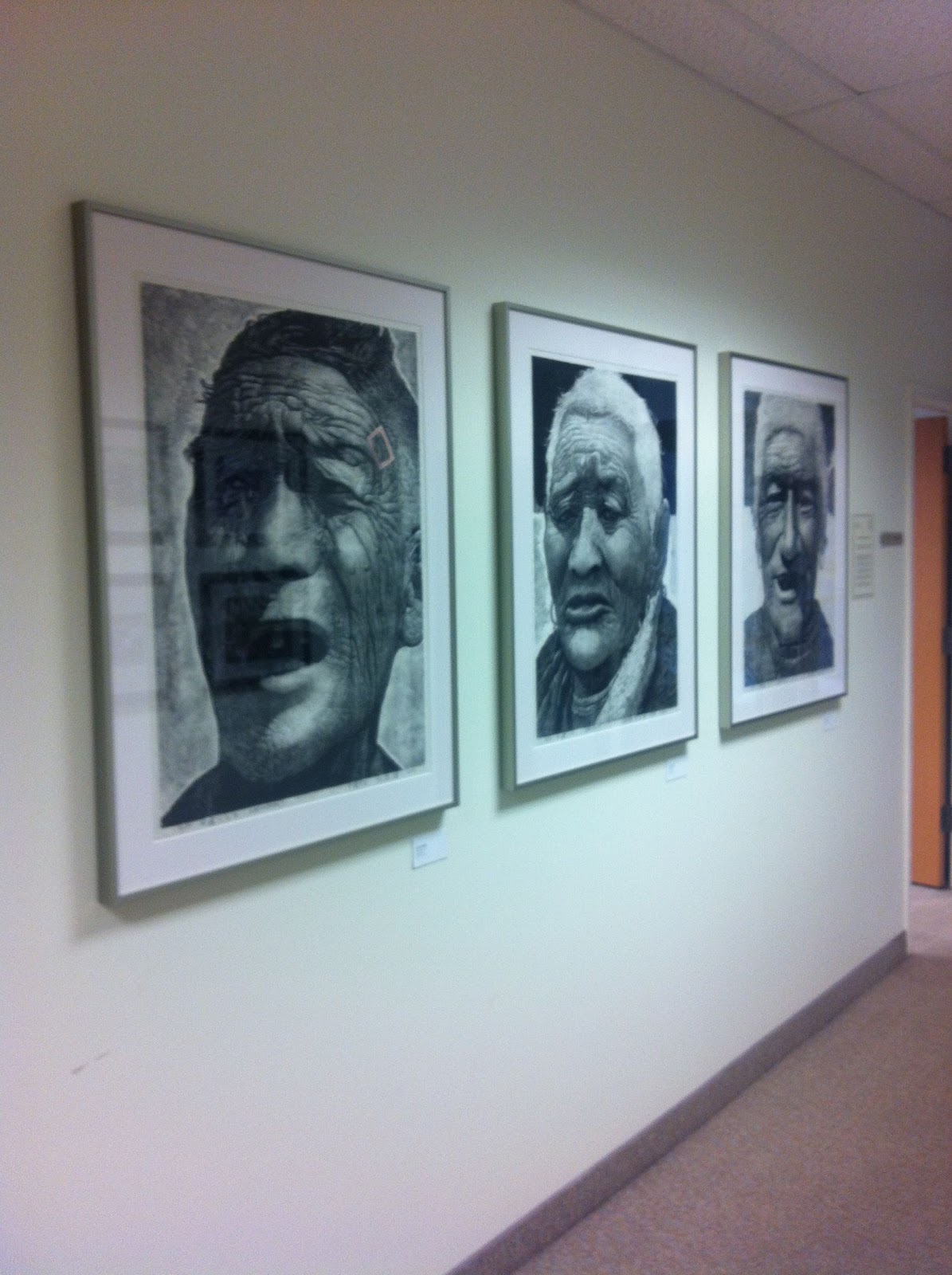
The latest additions to the Institute’s art exhibits…as part of an exchange between Mason and Sichuan Normal University in China. These wood cuts are the work of Professor Silou Xiang….

I am particularly struck by the way these human faces convey emotion, cognition and the process of aging…all relevant to the scientific programs of the Krasnow Institute for Advanced Study.

For those readers who visit the Washington DC area, please do come by and see these new works up close.

Fermi Paradox Discussion continued….

Started yesterday between Tyler and myself by email, now over at Marginal Revolution.

To continue: if we are not in a simulation, then the question of “why the silence“?

Until recently, one idea was that the step from prokariyot (bacteria for example) to eukaryote (us and other complicated plants and animals) was the big filter, but the most recent evidence doesn’t support this notion.

I still think the filter idea might be operative, but at a much later point–when intelligent civilizations acquire the keys to thermonuclear reactions (aka, the bomb). Now we’ve been lucky for about 60 years, but that’s the blink of an eye in cosmological time. I’m not at all convinced that our luck will hold out.

It’s been said that a “Day After Tomorrow” full out nuclear exchange is no longer in the cards, but I recall seeing a Rand study (pdf), that indicated even a single nuclear blast in LA Harbor would be enough to bring down the US through follow on consequences across the economy and geopolitical sectors.

Note added in correction: A reader reminded me that the movie I’m referring to is The Day After…for which I am grateful.

Susan Cain on Group Think in today’s NYT

The piece is here. Note that in spite of the main case being for creative solitude, Cain acknowledges:

Indeed, recent studies suggest that influential academic work is increasingly conducted by teams rather than by individuals. (Although teams whose members collaborate remotely, from separate universities, appear to be the most influential of all.) The problems we face in science, economics and many other fields are more complex than ever before, and we’ll need to stand on one another’s shoulders if we can possibly hope to solve them.

An institute for advanced study: what purpose?

In the short time before the Spring semester commences, it’s perhaps worthwhile to step back and consider  the question of: why an institute for advanced study?

There are quite a few such institutes these days, and not just here in the States, but the granddaddy of them all is the one at Princeton, where Albert Einstein spent the War years in the 1940’s. That Institute has as its key mission “to encourage and support fundamental research in the sciences and humanities – the original, often speculative, thinking that produces advances in knowledge that change the way we understand the world.”

Note the idea of producing advances that “change the way we understand the world”.  That idea of course echos Thomas Kuhn’s notion of a paradigm shift. Not all research does this; most findings are incremental in nature. To aim for paradigm shifts is bold and fraught with risk.

Which brings to mind this commentary on venture capitalists, which appeared on my twitter feed today. Here the operative meme is that VC’s are too cautious these days. That like the Howard Hughes Medical Institute, they should take bigger risks:

VC firms must behave more like the Howard Hughes Medical Institute, which funds radical scientific innovations over long periods of time – and less like the National Institutes of Health, which prefers incremental, almost-sure advances.

 I would argue that it is in institutes for advanced studies that such science takes place, often with great collective purpose and across seemingly vastly different domains of knowledge. It is certainly what we are about at the Krasnow Institute for Advanced Study.

I’ll close with this quote, lifted from our web site, that captures Krasnow nicely:

In the end, we believe that there is no substitute for recruiting the very best people and turning them loose to explore the fascinating world of thought somehow emergent from our biological nature and evolution as Homo sapiens.