Off to talk about open access

to a forum of our faculty put on by the library. As a journal editor I have mixed feelings about open access.

On the one hand, research paid for by tax payers should be available to those same folks without further payment. On the other, non-profit journals such as The Biological Bulletin (the journal I edit), add real value to content and need a business model to keep themselves solvent.

Next week off to Sandia National Lab. And Commencement is coming up too. Busy times….

A.A. Gill’s London…

A terrific portrait of one of my favorite places, in today’s NYT travel section, here.

 There’s an interesting assertion hidden in the piece (if I understand it correctly): that for each of us humans currently living on the Earth, there are fifteen human ancestors. I’d be interested both in the underlying data and in the trend-line.

Whirlwind of a week…

There is something about the end of the semester that magnifies the intensity for work for students–finals, but it’s also true that we faculty feel something along the same lines. And it’s not just that we have to grade exams, there something about the intensity of university life that ticks up as the weeks go by towards Spring commencement.

This week we took a day trip out to Madison to learn about the Wisconsin Alumni Research Foundation or WARF. It’s an amazing organization that exists to support the research activities of one of America’s flagship publics.

This evening, Mason’s 40th Anniversary Gala will celebrate Alan and Sally Merten’s sixteen years leading this wonderful public institution. I’m looking forward to seeing plenty of old friends and colleagues and meeting some new ones.

What are the causes of the reversal in Mexican migration into the US?

Both the FT and LA Times report on this development.

Money quote from the LA Times:

Between 2005 and 2010, 1.4-million Mexicans immigrated to the United States, less than half the number that migrated from 1995 to 2000. At the same time, the number of Mexicans and their children who moved to Mexico in the same five-year period rose to 1.4 million, about double the number that did so from 1995 to 2000.
The estimates are based on data from the U.S. Census Bureau and on Mexican census data. The most recent data indicate that the historic flow of migrants into the U.S. might even have started to reverse.

Both papers attribute the phenomenon at least partially to immigration politics and unemployment within the US.  The FT mentions in passing “improving economic conditions” in Mexico. It would be interesting to take a fine grain look at the labor economics of Mexico to gain a better understanding of how much of this demographic shift is coming from our Neighbor to the South.

External versus Internal

One of the tricky issues in running an institute is the balance between the external (fundraising, friendraising, global issues are examples) and the internal demands of the job (chairing meetings, mentoring, conflict resolution and budget just to name a few). Neither can be neglected. The trick is to balance the two to keep an institute on an even keel.

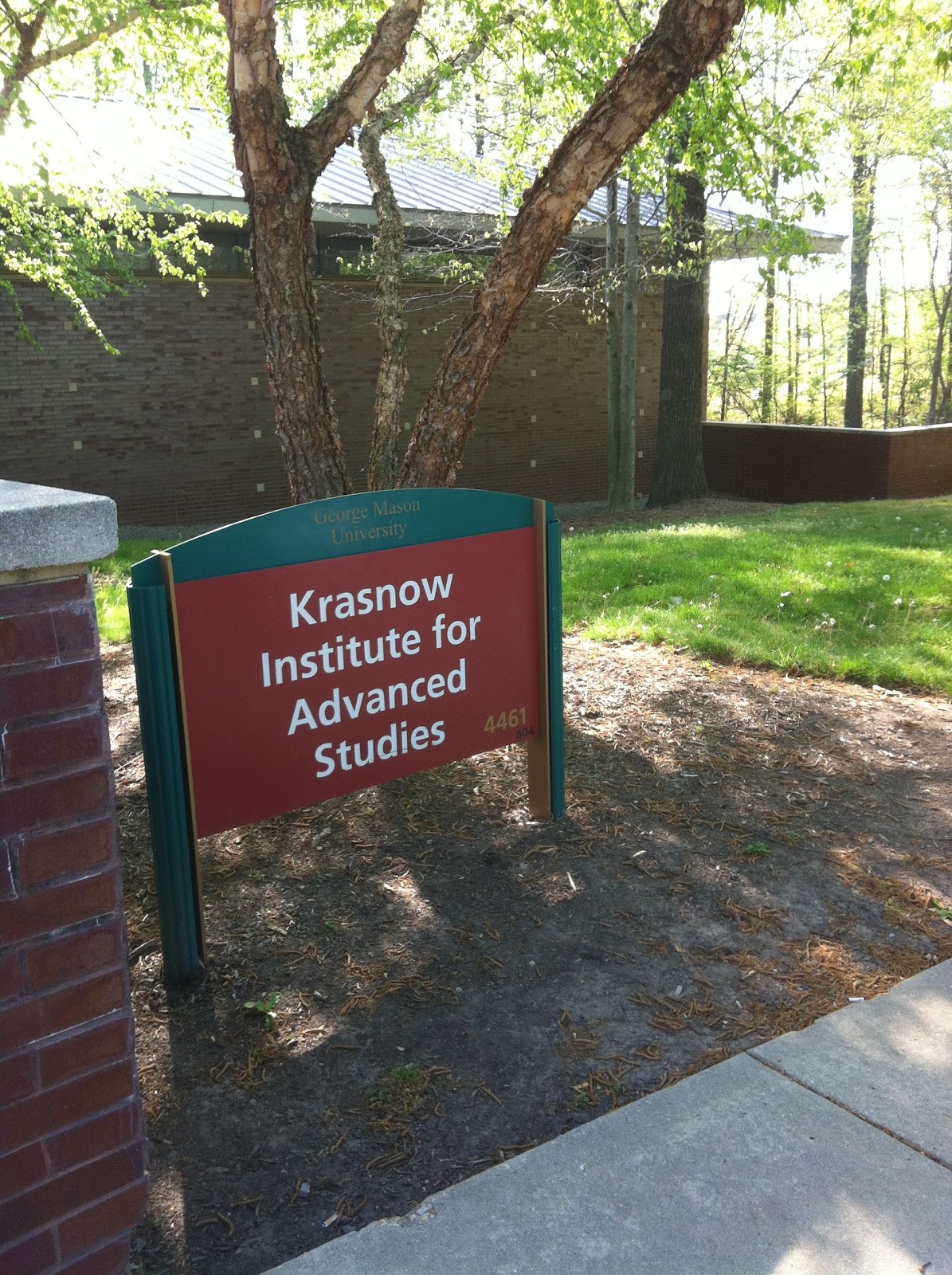
Here at Krasnow, we have a culture of a “light management touch” which suits that external-internal balancing act well. The main role of administration at this Institute is to facilitate science, not to control it. If facilitation comes from external fundraising, so be it. It that catalyst function comes from internal cheerleading, then that’s fine too.

The wet lab part of Krasnow Institute science…

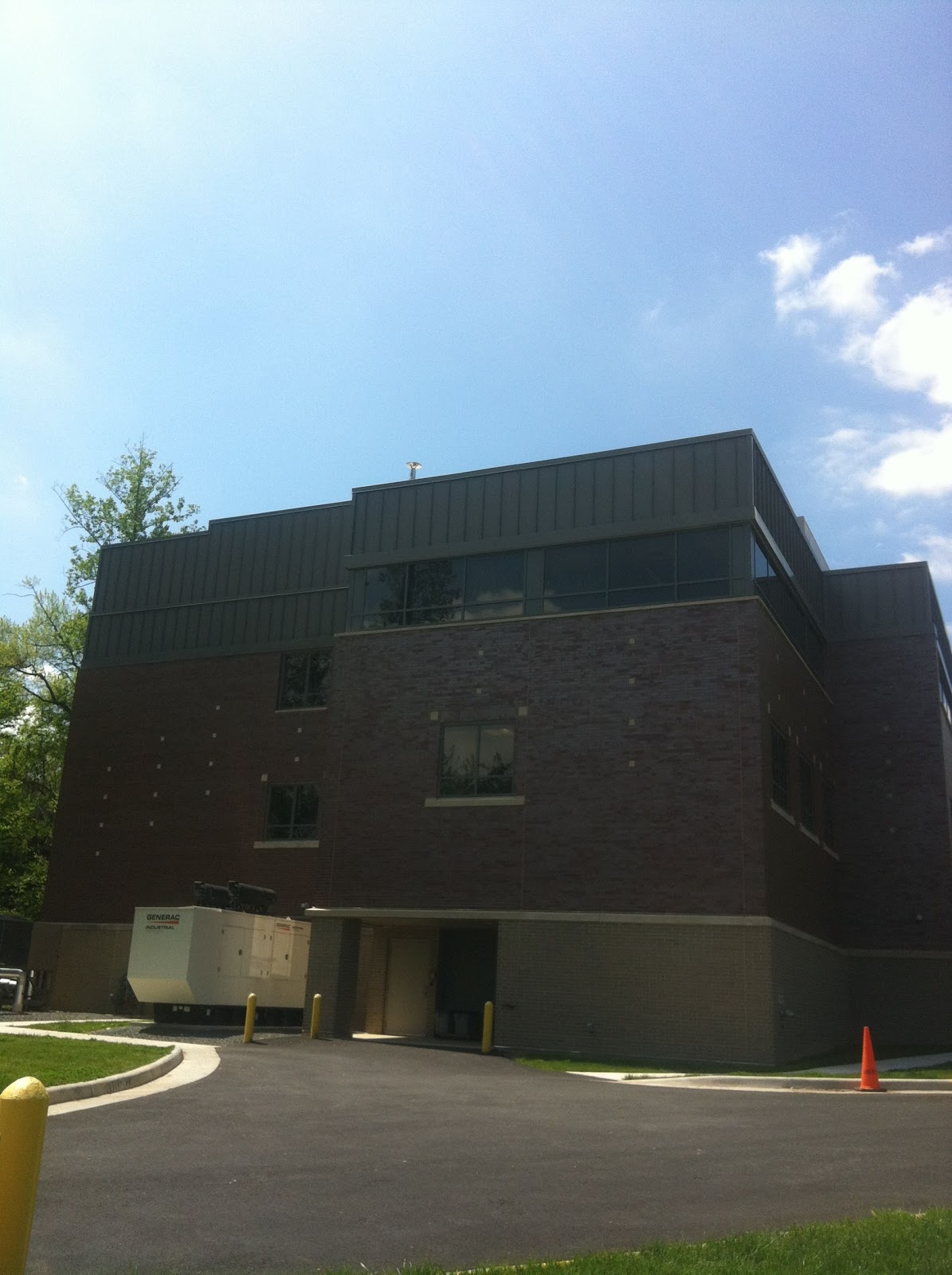
Sometimes, from the director’s office, it’s easy to forget that a lot of wet lab science goes on at the Krasnow Institute. This view from the northeast corner of the Institute, far removed from the floor to ceiling glass of our great room, gives a bit of perspective on what we do.

These labs work on problems from nanotechnology engineering to molecular neuroscience using cellular imaging, mass spec, whole genome sequencing and electrophysiology. The battery of backup generators (one of them is lower left) keeps things humming along even through Washington’s famous thunderstorm power outages.

One of the characteristics that differentiates the Institute is the pairing of hard experimental science along side of the in silico world of modeling and agent-based simulations. We are very much an experimentally-based institute for advanced study.

Although…with the fab that we are busy installing, the term “in silico” will take on a new meaning at the Institute since we’ll be using silicon to produce nanomaterials as a tool for study the brain.

Turning the corner towards summer….

There are about four weeks left in the Spring semester here at George Mason. For my undergraduate cellular neuroscience class, they are finishing up the core material in molecular signal transduction and synaptic plasticity.

In the meantime, the campus is as verdant as ever. Commencement will be here before we know it and then the beginning of a very busy summer with our short course, a new university presidency, my annual visit to the MBL in Woods Hole and Renaissance Weekend in Aspen.

This year has seen the Institute move ahead on many fronts. Our new academic agreement with Berlin’s Humboldt University is in place, we are on the threshold of graduating quite a few doctoral students (I’m heading to a thesis defense later today), and our science is as exciting as its ever been.

Meanwhile, it’s with pleasure that we welcome to campus my former Amherst classmate, Zeke Emanuel today. I wish were able to make it to his talk and hope that our local readers will.

Response to Tyler’s "Sobering Thought" Blogpost

Tyler’s quite interesting short post on American Higher education is here. The money quote:

In other words, I work in what is perhaps the most competitive and successful sector in the most competitive and successful economy of all time.
And yet what I see around me is a total, total mess.  And I believe my school to be considerably above average in terms of how well it is run.

My sense is that he’s on to something here in that higher education is a mirror to the larger society in which it is embedded. Cowen had just blogged previously about David Brooks Two Economies (perhaps the 21st century’s version of C.P. Snow’s Two Cultures). Central to Brook’s thesis is that there are two economies these days in the US and they are growing ever more separate. Here is Brooks riffing on Tyler’s own recent work:

His work leaves the impression that there are two interrelated American economies. On the one hand, there is the globalized tradable sector — companies that have to compete with everybody everywhere. These companies, with the sword of foreign competition hanging over them, have become relentlessly dynamic and very (sometimes brutally) efficient.
On the other hand, there is a large sector of the economy that does not face this global competition — health care, education and government. Leaders in this economy try to improve productivity and use new technologies, but they are not compelled by do-or-die pressure, and their pace of change is slower.

One gets the impression that Brooks sees American Higher Ed as being firmly ensconced in Economy 2, while Tyler in his blog post sees it as being in Economy 1.

I think American Higher Education is mirroring the larger American Economy and that there are elements of both Economy 1 and 2 in the Academy. Further, the “mess” that Tyler sees around him is simply an accurate reflection of the tensions that Brook refers to in his column:

A rift is opening up. The first, globalized sector is producing a lot of the productivity gains, but it is not producing a lot of the jobs. The second more protected sector is producing more jobs, but not as many productivity gains. The hypercompetitive globalized economy generates enormous profits, while the second, less tradable economy is where more Americans actually live.
In politics, we are beginning to see conflicts between those who live in Economy I and those who live in Economy II. Republicans often live in and love the efficient globalized sector and believe it should be a model for the entire society. They want to use private health care markets and choice-oriented education reforms to make society as dynamic, creative and efficient as Economy I.

As long as we have STEM fields viewed from an Economy 1 prism and Humanities viewed from Economy 2….well, that’s pretty much a recipe for the perception of a mess, even at a well run place like George Mason. Oops, we’re back to C.P. Snow and Two Cultures….