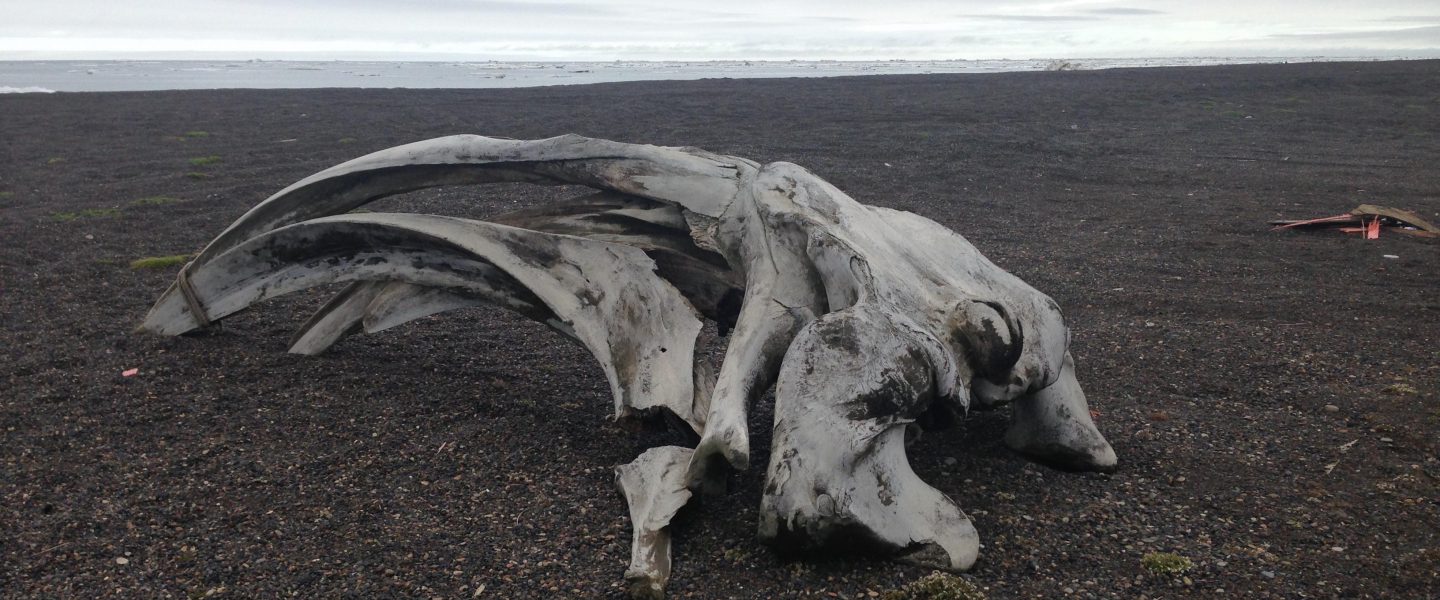
U.S. Food Systems at Risk…

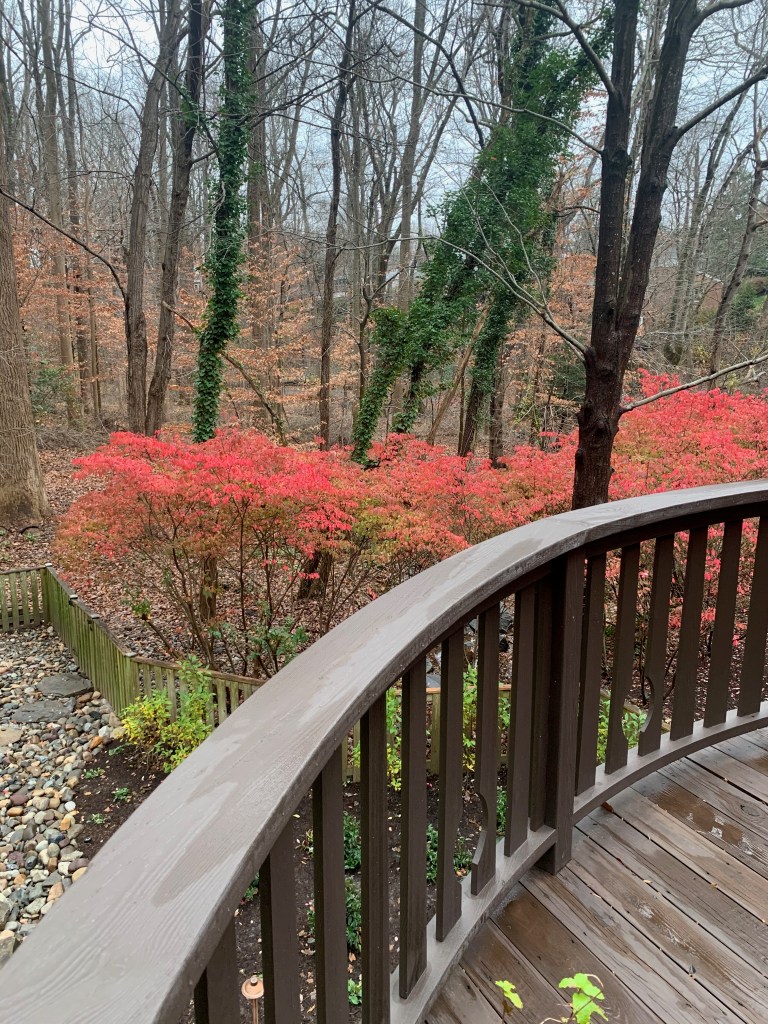
Photo by David Bartus on Pexels.com

Tom Philpot’s excellent analysis in The Guardian here. Both the Central Valley of California and soil-rich Iowa. There are many pieces to solving these issues–they include diversification, cover-crops, re-thinking the role of soil microbiomes and water use–but the driver for the challenges is pretty clear: the climate is changing.

NSF’s Graduate Research Fellowship Program…

The latest call emphasizes computer science areas such as AI. There is what I liken to an immune antibody response from the community to something new–this is the norm for when NSF changes gears (which it normally always does). The science press writes an article with juicy quotes. Perhaps there are Zoom meetings to prepare talking points for the agency leadership. And life goes on.

To my mind, the program (GRFP) is doing just fine. Smart and diverse graduate students from all STEM fields will continue to get funding for their doctoral research–from economics to theoretical physics. And perhaps one of them will make the a crucial discovery in quantum computing that changes everything–NSF funded discoveries have been at the center of practical advances for society since I can remember. From basic curiosity-driven science great things often happen.

My take on college campuses opening this coming Fall semester…

I think the virus isn’t under control and college age young adults aren’t going to stop getting close to one another. So what we have is a recipe for campus hotspots spread across the country. And when these campuses inevitably undergo the so-called “pivot” to on-line…. a lot of those students are likely to return home to spread infection. In short, I think it’s a bad idea.

As a former university administrator, I recognize the financial challenges to all the stakeholders. But in my view, first the country needs to get COVID-19 under control and then it can deal with the myriad of other challenges that it faces. From what I hear, there’s a lot of progress on the vaccine front. And I’m optimistic that treatment for the acute cases of the disease are getting more effective. But we’re not where we need to be as far as packing thousands of folks onto college campuses.

Architecting future minds…

So the neuroscientist in me is constantly amazed by what our brains can do effortlessly. Among my favorite brain features are: unconscious control of walking movements, recognizing music from a very short time series of notes, and most of all the creation of a stable egocentric mental image of our environment from the chaotic images built up on our retinas. So those are among the features. But certainly there are bugs also.

If we were designing a humanoid robot with general artificial intelligence what might we augment or delete from the human repertoire of mental characteristics? This is an interesting question for which knowledge of neuroscience is not a prerequisite. I’m certain that my economist friends would look to tweaking the time discounting bias. And my statistically-knowledgable colleagues might push our robot to be more Bayesian in its decision frameworks. And probably my psychologist collaborators might push for less dopamine-rush from social networking apps. But those are the obvious ones. What might the more subtle design changes consist of?

Some ideas for a Biden Administration…

In the area of science of course. And certainly don’t count your chickens…

But, with that caveat, here are some ideas:

1) Depoliticize earth systems sciences across all agencies.

2) Prepare for the next pandemic (COVID-X) now.

3) Increase the budget of NSF to be able to have an average success rate of 30% (this reflects the excellent science that currently gets left on the “cutting room floor”).

4) Reauthorize the NIH so that the intramural program has the explicit mission of high-risk, high-payoff biomedical research and then fund the Bethesda Campus at approximately 15% of the total NIH budget.

5) Merge PCAST and the NSB into one body with one mission: science and technology advice for the President.

6) Give OSTP a $100M budget to incentivize government cross-cutting activities (e.g. Biden’s Cancer Moonshot).

7) Re-internationalize science–even while understanding that national security interests are a priority.

8) Make climate change a priority while allowing for robust research into safe geo-engineering.

9) Return to the moon and use it as a base for human solar system exploration and astronomy

10) Address sustainable human food and water security for the future.

Do plants have brains?

This was the subject of a text conversation between myself and one of my colleagues this morning in the context of this Ted Talk.

Of course, in the context of neural networks that have sensory inputs and motor outputs, the answer is no. But some plants do have excitable cells that fire action potentials. They certainly sense the environment and they can “behave”. That’s because their molecular signal transduction system is based on the same metabolic chart as ours and allows more the individual plant to respond with movement (sometimes even very rapid movement) in response to stimuli.

So plants don’t have brains, but they have the biological toolset to accomplish things that animals with brains accomplish (like counting! see the video).

COVID19 as a chronic viral illness

We tend to think of this disease as a life-threatening acute encounter, but that may not be correct. Here is an excellent survey from SCIENCE on COVID19 over the long haul–it’s not a pretty story. But once again, it’s a story of inhomogeneity. This is an illness that affects folks differently–in some cases, no problem after the virus clears, in others debilitating problems.

What scientists aim to do…

I’ve been thinking lately about the scientific method. Formally, this refers to hypothesis testing via experiment. The experiments can sometimes be natural ones: before and after some natural event one might observe the changes in species diversity. Or they can be engineered in the lab–at the bench. In this case, the scientist prepares the event. But it’s all in the name of putting a hypothesis to a test and setting the terms, contract-wise, for rejecting the truth of the hypothesis.

Informally, the scientific method refers to a whole lot more. Exploratory science is just that: conducting observations (often with technological marvels like gravity wave detectors) and revealing what’s out there–black hole mergers in the case of the gravity waves. In this case, there is no hypothesis to ritually reject. Whatever is out there is new, previously unseen, and adds to our knowledge.

What drives the above activities is often pure curiosity. The current Mars rover got its name from the driver for this type of scientific activity. But as often, it’s human need that drives science. We strive to understand how the virus gains entry into human cells in order to save lives. We tinker with silicon to build better amplifiers: transistors. But in both cases, the methodology is the same. It’s the aim that is different. But both aims are true (hat tip Elvis Costello).