The agonies of the academy

Andrew Delbanco in the NY Review of books–money quote:

In short, the financial crisis not only is threatening the livelihood of faculty and staff but is also degrading the experience of students. And despite the big hit on the big endowments, the further you go down the hierarchy of prestige, the worse the effects. For instance, the chancellor of the Connecticut community college system recently informed faculty that the first phase of the governor’s proposed budget cuts would require limiting student enrollment, reducing service in libraries and laboratories, and cutting back on the availability of advising, remedial tutoring, and childcare. On the West Coast, things are no better: San Jose State University has been forced by budget reductions to turn away thousands of qualified applicants for the first time in its hundred-year history.[9]

For years, we have witnessed a growing gap between rich and poor colleges, the privatization of public universities, and aggressive if not reckless investment and spending practices at wealthy institutions, where the allure of gain appears to have overwhelmed the consciousness of risk. Now we are also witnessing drastic budget contraction at the most fragile and vulnerable institutions. Higher education has always been a mirror of American society—and, for the moment, at least, the image it reflects is not a pretty one.
AEI event on neuroscience and free will

I went over to AEI yesterday for a very interesting panel discussion on what the recent advances in neuroscience and molecular biology mean for the concept of free-will. Of course for conservatives (AEI is a conservative think-tank), free will is a concept very near and dear.

The lead speaker was Professor James Q. Wilson of Pepperdine University, but I was far more interested in the perspectives of Sally Satel and David Brooks.
Satel seemed to hold the view that in spite of the gee-whiz factor of fMRI, we’re a very long way from being able to “see” free will in the human brain. As I’ve written here several times in the past I tend to agree: fMRI is in grave danger of being over-hyped.
Satel also had a very interesting perspective on the medicalization of addiction. From her standpoint, substance-abuse is qualitatively different from other medical diseases (such as cancer for example) in that its behavioral outcomes (which in the case of addiction are in fact the manifestation of the disease) are uniquely sensitive to external sanctions and rewards. I’m not so sure of that, but I’d like to see the data. So she wants to attach a free-will component to addiction.
David Brooks has talked to a lot of neuroscientists and is clearly a very quick study–we seem to find that in many University of Chicago alums. On the other hand, I find his conclusions in the area of brain sciences a bit glib. Just because the human brain is very complex doesn’t mean we can delineate the principles or rule-sets which allow things like mind to emerge. For Brooks, the brain’s complexity pretty much precludes us every finding out whether free will is an attractive illusion or, in some dualistic manner, entirely separate from the brain’s biology. Brooks also gives too much weight to unconscious processes in the brain–missing the point that the phenomenon of consciousness itself (the “hard problem”) is in fact the central driver for much of cognitive neuroscience.
I find David much more compelling on the economy and politics than on neuroscience. Yesterday evening on the Jim Lehrer hour, I found myself agreeing with him.
Jim

John Holdren on Fusion Energy

From ScienceInsider….

John Holdren, Obama’s science advisor, is actively supporting new investment in developing fusion energy as a carbon-free alternative source. He’s a fusion alum and so am I–just out of college, I interned for the New England congressional delegation looking at the possibility of developing fusion–the question then, as now, was containing a plasma efficiently. It’s not an easy nut to crack.
But if we were to crack it, it would really open up significant technological solution strategies to dealing with anthropogenic climate change.
Jim

How important is federal investment in science?


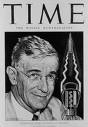
I’ve started many talks with remarks about FDR’s science advisor, Vennevar Bush, who in his report Science, The Endless Frontier, advocated forcefully for substantial federal investment in science R&D as a driver of the economy. In the present context of economic crisis, and in light of the Obama Administration’s very significant move towards funding science in the Recovery Act, now would be an excellent time to return to Bush’s thesis and attempt to generate data showing the relationship between federal investment in science and economic activity (as measured say by GDP). I’m particularly interested in whether it would be possible to tease out a causal relationship between the two–that is, does federal science R&D actually accelerate GDP growth and by what mechanism?

It seems to me that if a case could be made, one that uses recent data and that demonstrates some causality, that would be an extraordinarily powerful argument to bring before the US general public and their elected officials. It would also strongly buttress the new Administration’s policy moves to put science front and center of their agenda.
Who would fund such research? And how important would it really be?
Jim

Team science versus Single Investigator

Certainly across biosciences, a notable trend has been the lists of authors for single papers getting longer. This is especially true for the high impact journals and reflects the evolution of the practice of scientific research from individual investigator to large teams of scientists all working on various parts of a single question or problem. Part of this evolution is due to the need to use many methodologies to completely tell a single scientific “story” –in many cases considerably more techniques than any one single investigator can manage.

This team approach has been explicitly pushed in recent years, most saliently by the recently retired NIH director, Elias Zerhouni. There are some real problems however with the team approach. One of the most important is that maintaining quality control over the entire corpus of experiments that make up a team-authored paper becomes potentially challenging. An additional complication is that with large teams, who actually did what becomes opaque to the reviewer.
I’m not advocating a wholesale return to single PI science in biology–the subject matter has become too complex for many questions in the discipline. Rather, I’m urging a renewed appreciation for what can be accomplished in a single PI laboratory, where, in outstanding cases, a single creative mind can design an elegant set of experiments that like a fine gem, outshine the industrial output of large team labs.
Going further, it seems to me that with appropriate Science 2.0 sharing approaches, we may see a new renaissance of individual investigators re-using data produced by very large groups in imaginative ways that lead to real scientific progress.
Jim

Do we really just need to put more time on it?

On the way down to Wintergreen today we listened to more of Malcom Gladwell’s book, Outliers. The last chapter was perhaps the most interesting to me–about the KIP school in Bronx, where they get rid of summer vacation and essentially catch inner city kids up to their elite private school brethren, at least in mathematics. The notion is that while the rich kids go to summer camp and read, the poor kids just watch TV and play. They fall behind over the summer break. Apparently Korea and Japan don’t really have much of a summer vacation–which to Gladwell, explains their excellence at quantitative subjects entirely.

This is an attractive idea to me because it gets out the tired framework of nature versus nurture. Maybe it’s neither–it’s just getting, to use Gladwell’s term, your “10,000 hours” in.
There’s a case there for simple showing up and hard work. I like that.
Jim

DIADEM Challenge

The Krasnow Institute, HHMI and the Allen Institute for Brain Science announced a grand challenge project today–to create better tools for image analysis.

Money quote:

The organizers hope the DIADEM Challenge—short for Digital Reconstruction of Axonal and Dendritic Morphology—will lead to innovative solutions to a frustrating problem that has slowed efforts to create a functional atlas of the brain. Neuroscientists agree that a systematic characterization of neurons with their dendrites and axons is essential, since these tree-like structures are highly correlated with the electric activity of, and precise connections between, neurons and are thus linked to the functions of specific brain circuits. But scientists currently spend weeks—and, in some cases, months—tracing the intricate neuronal processes by hand, using data supplied by imaging studies.

Jim