
We’ve all seen it over and over, for the past decade. In today’s FT, four new books are reviewed that put forward a potential counter-meme: namely that the US has some crucial advantages going forward. My only worry: Tyler Cowen’s thesis that those US advantages don’t necessarily translate into jobs.
More pictures of Krasnow’s new Phase II lab space….
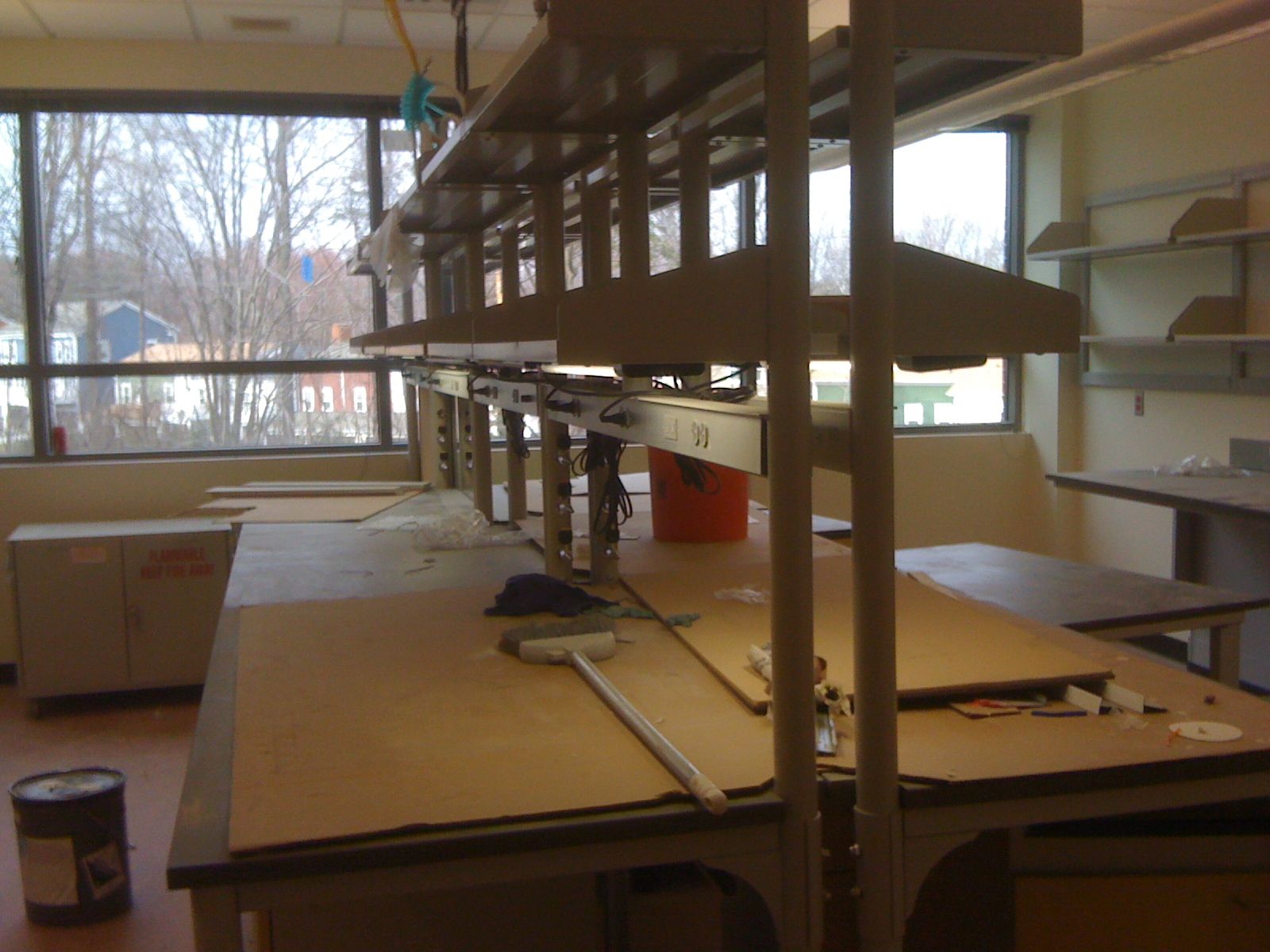
Here are some more i-phone pictures of the new Phase II space. In the top photo, one of our brand new wet labs, and in the bottom, a corner faculty office with views of Mason’s faculty housing, Masonvale.
Enjoy!

Policy as affected by science
Right now, as I write these words, the trajectory of future policy on nuclear energy is being altered by the science of an element called Zirconium. That’s because the spent fuel rods of the Number 2 nuclear reactor at Japan’s Fukushima power plant have lost their water shielding and there is now the possibility that their cladding, Zirconium, will catch fire with catastrophic results.
Science has a way of catching up with policy very suddenly, because being very firmly rooted in reality (we hope!), ground truth can render existing policy moot in an instant. In contrast, policy, rooted in the politics of the moment, often pushes very hard against science, but inevitably loses out when scientific reality pushes back–a Tsunami can moot a policy on sea-wall height.
As a scientist, I’m not in favor of a Technocracy (actually a political movement that existed here in the US in the early 20th century). I’m quite comfortable with the market-based western democracy form of government that has been the norm here in the States. On the other hand, I would like to see policies better informed by science.
How to get there?
The current Obama administration has tried the approach of appointing very high achieving scientists to top-level leadership positions both in the Cabinet (Secretary of Energy Chu is a Nobel laureate) and in the White House. I’m not sure that’s enough.
The problem is that until science rears up and enforces reality upon the polity (these black swan events are often disasters), it’s often quite politically convenient for factions to deny science–arguing that since scientific consensus is constantly evolving (we don’t believe that the Earth is at the center of the Solar System anymore), any group of scientists offering advice to policy makers are just one more special interest group. Just another version of the K-Street lobbyist.
I’ll stay away here from Climate Change, but instead return to nuclear power. The use of nuclear fission as a method to generate electric power is both attractive and fraught with complex dangers for nations–particularly those with limited access to fossil fuels. The science of nuclear fission on the contrary is quite simple.
Problems arise however as a result of the scientific truth: highly enriched nuclear fuel rods will continue to emit heat without cooling and that heat can, under the right circumstances damage and melt-away fuel rod cladding. Returning to Zirconium, its melting point is 1852 degrees Centigrade. Above that point, we have problems.
Hence, the science overtakes the policy when the temperature of the nuclear fuel exceeds the melting point of Zirconium. At that point, the scientist is not another special interest group. Actually the scientist becomes an oracle of sorts, advising the decision-maker on a moment of ground truth.
A caveat: scientists need to act more like scientists and less like K-Street lobbyists if they are to do a better job of informing policy.
The Internationalization of Krasnow
From my first days as director, I have always been struck by how our Institute was internationally incredibly diverse. This has continued to the present, one can’t walk the hallways without hearing several languages going on at the same time (not including the constant Java and C++).
At the same time, particularly since we began the Decade of the Mind initiative in 2007, the Institute itself has been reaching overseas. Our faculty have recently visited East Africa, Moldova, Singapore and, as I write these words, we have a critical mass in Paris.
In less than a month, I’ll visit Berlin for the second time in two years and we just recently hosted a scientist from Indonesia.
This both reflects, the very real internationalization of “advanced studies” and, more importantly, a changed outlook: while US research universities (including Mason) remain superb, there is an entire global generation that is coming of age and they are highly literate in STEM (science, technology, engineering and mathematics) fields–and hence the potential for growing new gardens of collaborations.
In the next five years, I hope that we can do something substantive along these lines both in Asia and Europe, combining both research and education.
Projected path of Fukushima plume
From today’s New York Times, William Broad’s excellent piece of the projected path–arrival in Southern California on Friday?
Live NHK feed : Japan Earthquake, nuclear crisis
Neuromarketing versus Focus Groups
I’ve always had a very healthy skepticism about the use of focus groups in any kind of marketing exercise. Somehow, the entire process of having a group of consumers engaging in supposedly genuine reactions to products, brands and packaging–all in front of a one way mirror seemed like Kabuki theater.
And partly that’s because I’ve been in a few–from both sides of that mirror.
On the other hand, the more I learn about the use of fMRI, EEG and the like to supposedly engage in neuromarketing, the more I fear we’re on even thinner ice. Currently, even with fMRI, we’re not able to image at the proper spatial or temporal scales to pick up what Donald Hebb called cell assemblies, the biological representation of concepts (like soda pop for example).
If you are interested in learning more about these issue with neurotechnologies, please consider attending the Krasnow Symposium on June 19-24 here at Mason’s beautiful Inn and Conference Center.
Krasnow Institute for Advanced Study: Expansion Project nearly complete
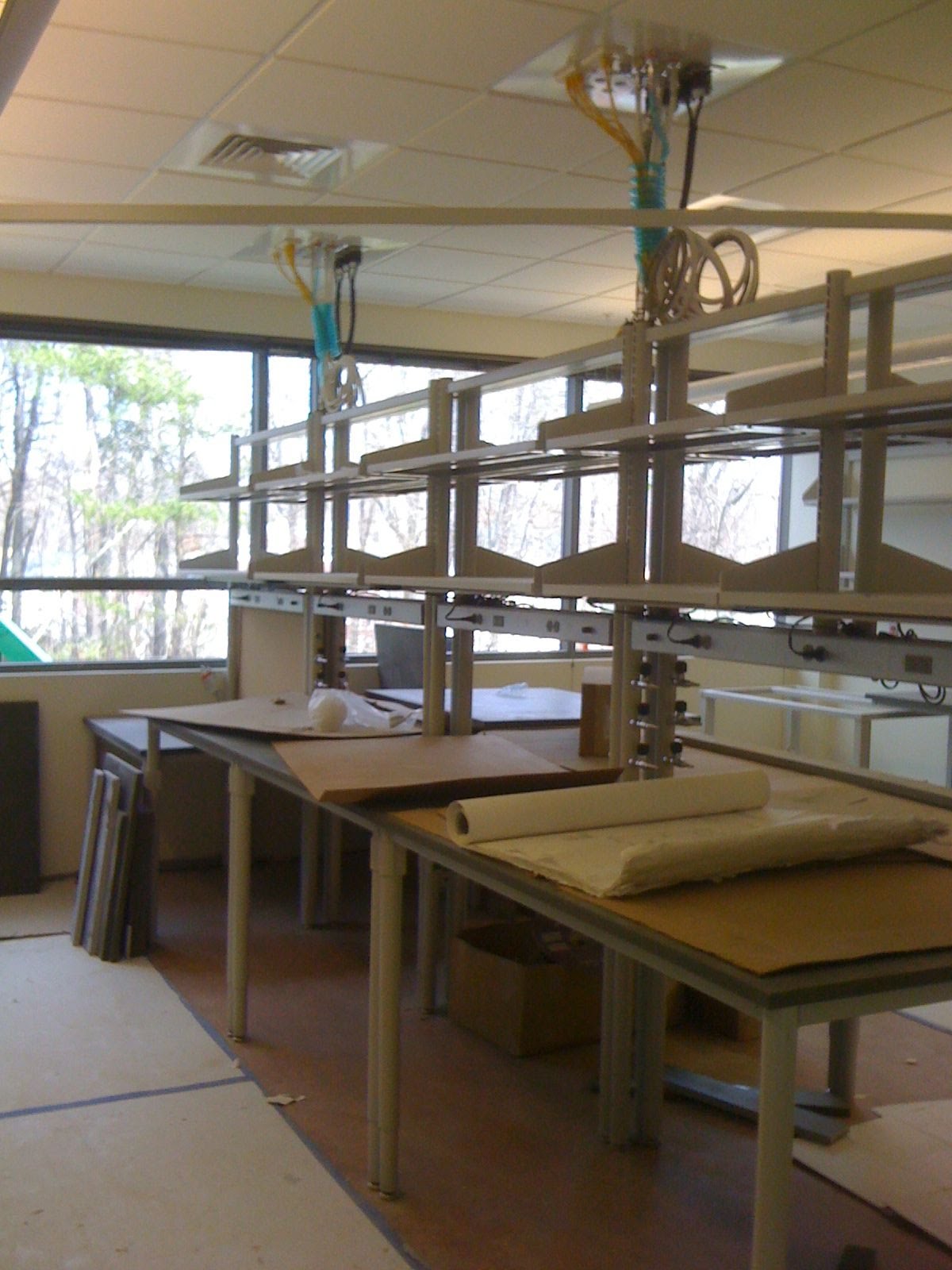
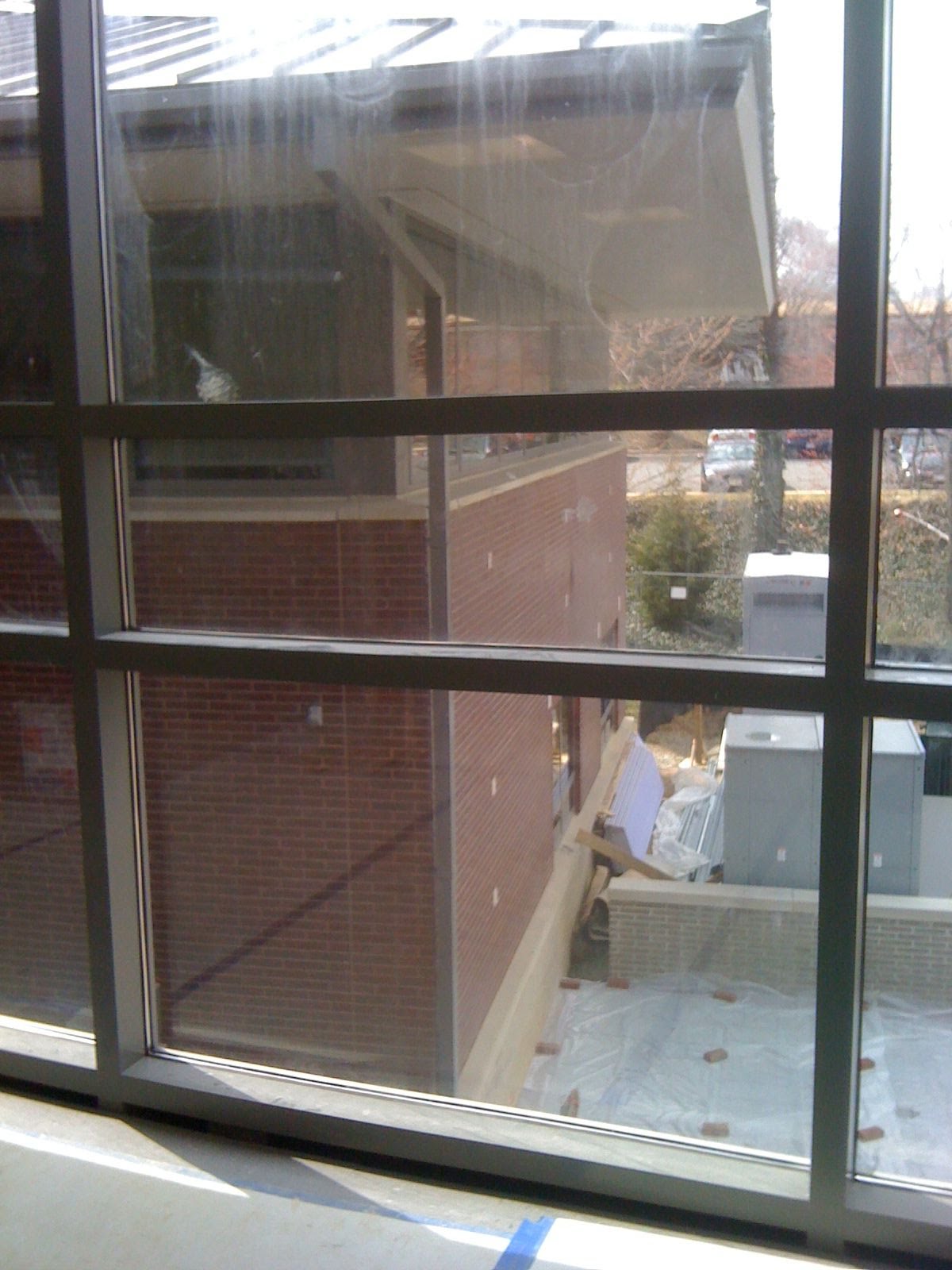
Here are some photos that I just took from Krasnow’s new Phase II wing, which as you can see, is nearing completion. The top image is one of our new wet labs, the bottom is looking out from one of the break-out areas towards the legacy building and our Associate Director’s office on the corner.
A special thanks to our design team including George Mason lead, Mike Herman, and the Whiting Turner construction company.
Finally, thanks go to our PI’s for putting up with all the noise and dust over the past year.
We are nearly there!
Human loss: the mind’s view
As the very sad news comes in from Japan, it’s worthwhile to consider how humans cope with loss. The manifestation of grief eventually arrives to each of our subjective personal experiences. This month two very close professional colleagues lost their spouses to cancer. Once the ceremonies and family reunions are over, the human mind (and brain) is all to often left alone in a sea of grief-inducing neurochemicals.
When mass tragedy hits, as it has in Japan, entire societies can enter this state; it’s as if the grief brain-state is cooperative (to use the biochemical metaphor) across individuals.
The human and societal grief-induced behavior pattern can be catastrophic. But often it is not. Individual humans are remarkably resilient and so are strong societies, such as the Japanese. Over time, the brain stabilizes, families and nations can come together, and life goes on.
We hope as much for our friends who have recently suffered loss and to our colleagues in Japan.
Yes, Advanced Studies is different today….
Advanced Studies has a new look and feel as of today–hopefully a bit cleaner and less cluttered. In sympathy with those who produce slide-decks for talks with similar aesthetics.
 Discoverers and Discoveries