
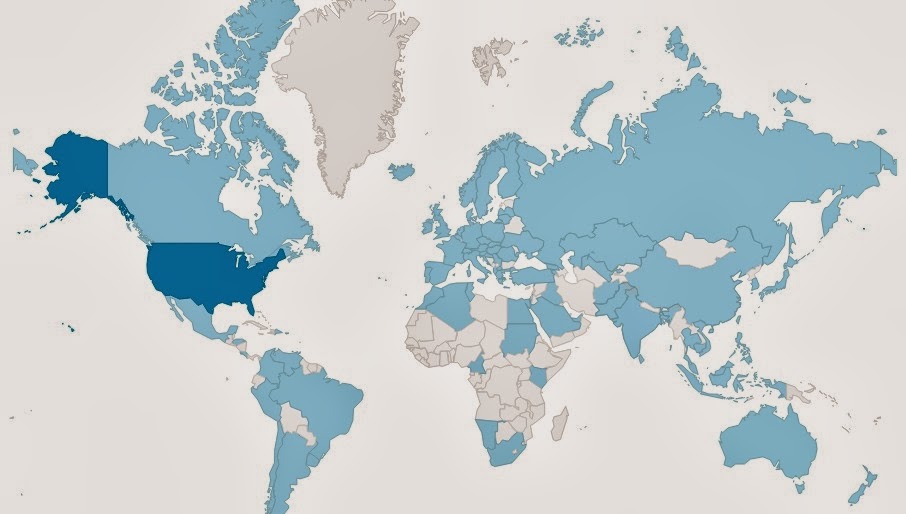
From our analytics: Advanced Studies readers are truly international. Thank you for continuing to support us and we’ll continue to call them as we see them….
From our analytics: Advanced Studies readers are truly international. Thank you for continuing to support us and we’ll continue to call them as we see them….
Story is behind Science Magazine’s firewall, but the abstract is here. The overall meme is of course Big Data….but….at some point, we’ll continue to need new data, so there is a future for wet-lab science too.
“I do not know what the cost of the shutdown will be,” Mr. Augustine said when asked for an estimate of the losses that could result from an Antarctic shutdown. “It is just one more example of what we are doing to rip apart at the grassroots level the fabric of what is one of America’s few remaining competitive advantages: our research and education system. No enemy could have been so effective.”
I couldn’t have said it better.
Of the game, explained here, in The Economist. They may need to be slightly adjusted for the 21st century to handle big-team science.
For Albert Einstein that is, story here. I’ll note that the Director of the National Museum of Health and Medicine mentioned in the story (where Einstein’s brain currently resides) is none other than our Advisory Board Chair, Dr. Adrianne Noe.
From Emory’s Gregory Berns here. Another argument for dog rights.
http://c.brightcove.com/services/viewer/federated_f9?isVid=1
I’m an ethusiast of what Elon Musk is trying to do in Space and with Tesla. On a week when all the news seems grim here in Washington, here’s my version of good news…
Eileen Pollack’s fine piece in today’s NYT magazine is here. I thank Avrama Blackwell for the link.
John Bohannon’s science paper is here. This is a huge deal for science and for academic scholarship. As a journal editor myself (and my journal is over a century old), the value proposition that we offer is the quality of our peer review.
 Discoverers and Discoveries