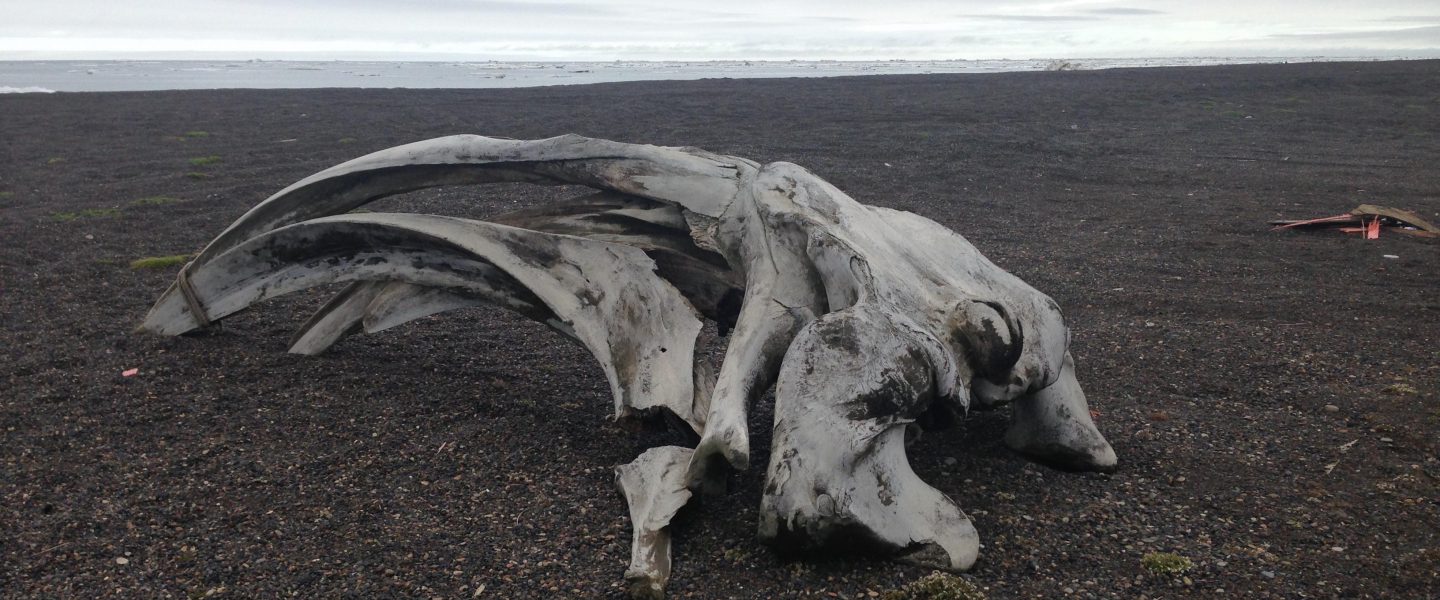
Back across the US in less than 3.5 hrs

Must have close to a record: Phoenix to BWI in 3 hrs and 15 min. I guess the pilot must have not had to pay for the gas or there was an incredible tail wind. In any case, the editorial board meeting was very useful. One area that we’re looking at going is into publishing “position papers”. So what’s a position paper you may ask? Well, around the table we had different ideas–and I’ve certainly got my own. One aspect of a position paper is that it points the way to a future research direction and often includes some primary data. Another is that is generally a bit more speculative that the discussion section of a regular research paper. But I’ve certainly got to think about it more.

Here in Arlington, it’s warmer than it was in Phoenix. In fact, walking the dogs this morning, I felt nothing so much as like my native LA’s climate had moved inside the beltway. It’s certainly local warming, if not global.

Jim

Decade of the Mind Symposium at Krasnow

I promised late last year to put up a preliminary announcement of our
major event for this semester. Hence…

Over May 21 & 22, 2007, the Institute will host a national “Decade of
the Mind” Symposium. “Decade of the Mind” will launch what is
anticipated to be the starting point of a ten-year research
initiative that will focus on the study of the mind from an
interdisciplinary perspective that includes neuroscience, cognitive
science, computer science, computational social sciences,
computational biology and psychology. Eight speakers (listed below)
have been confirmed to speak over the two-day period. The speakers
will also participate in the finalizing of the “manifesto” document
that will present the future scope and goals for the “Decade of
Mind”. Not insignificantly, the symposium will add to the
celebratory atmosphere at the Institute surrounding the completion of
laboratory expansion wing.

I am proud to announce the extraordinary group of “Decade of the
Mind” symposium guest speakers:
George Bekey (USC)
Floyd Bloom (Neurome, Inc.)
Patricia Churchland (UCSD)
John Holland (UMich)
Nancy Kanwisher (MIT)
Gordon Shepherd (YALE)
Vernon Smith (GMU)
Giulio Tononi (UWisc)

As the program and logistical details for the “Decade of the Mind”
Symposium become finalized, they will be posted on the Institute's
“News and Events” web page.

Jim

Do we have free will?

From today’s New York Times:

Daniel C. Dennett, a philosopher and cognitive scientist at Tufts University who has written extensively about free will, said that “when we consider whether free will is an illusion or reality, we are looking into an abyss. What seems to confront us is a plunge into nihilism and despair.”

Mark Hallett, a researcher with the National Institute of Neurological Disorders and Stroke, said, “Free will does exist, but it’s a perception, not a power or a driving force. People experience free will. They have the sense they are free.

“The more you scrutinize it, the more you realize you don’t have it,” he said.

That is hardly a new thought. The German philosopher Arthur Schopenhauer said, as Einstein paraphrased it, that “a human can very well do what he wants, but cannot will what he wants.”

Einstein, among others, found that a comforting idea. “This knowledge of the non-freedom of the will protects me from losing my good humor and taking much too seriously myself and my fellow humans as acting and judging individuals,” he said.

Comment: This is I believe an essential question for those of us at the Krasnow Institute trying to wrestle with the bear we call consciousness. Is there some aspect of consciousness that requires free will?

One other question: we clearly all have the ability (or at least most of us as adults) to say “no” to the dopamine reinforcement system of the brain. I think many would view such neurobiologically by understanding the no as an inhibition signal from frontal cortical areas. This raises the question of simply operationalizing free will to the underlying brain science. Perhaps a more tractable approach.

Jim

Whole genome strategies for brain diseases

I’ve linked to a list of recent articles using a whole genome approach to studying diseases. Essentially this is a classic example of the post-Popperian approach to biomedical research–rather than treat the question as a detective story, carefully putting together a series of hypotheses to test a theory, we instead simply “print” out all of the genetic information and see what’s different. Of course is the case of many brain diseases this may obscure the role for the environment in the etiologies…but the advocates of this industrial style of science are gaining a good deal of strength (look at the journals where these article are published).

I do see a tremendous utility in such research from the standpoint of adding new potential therapeutic targets and also giving us clues outside a disease’s conventional dogma.

In the meantime, happy 2007.

Jim

The Neuroscience of Music

In today’s Sunday NYT: a very interesting portrait of neuroscientist Daniel Levitin (one of several neuroscientists with a real musical background) on his theory of how our brains are wired to enjoy music. Some of it is a bit far fetched, but it’s intriguing nonetheless.

Money quote:

This summer he published “This Is Your Brain on Music” (Dutton), a layperson’s guide to the emerging neuroscience of music. Dr. Levitin is an unusually deft interpreter, full of striking scientific trivia. For example we learn that babies begin life with synesthesia, the trippy confusion that makes people experience sounds as smells or tastes as colors. Or that the cerebellum, a part of the brain that helps govern movement, is also wired to the ears and produces some of our emotional responses to music. His experiments have even suggested that watching a musician perform affects brain chemistry differently from listening to a recording.

This is the last blogpost here for 2006. Happy New Year to all of my readers and we’ll look forward to a productive 2007.

Jim

Some items for the New Year

With the new year soon upon us, I thought I would telegraph some of the significant events for the next semester. I'll be off to the the SICB meeting in Phoenix in the first week of January to chair the editorial board meeting for The Biological Bulletin. I'll try to take some pictures from the road and post them (although I suspect my digital images from trips to Austria and China later in the year will be more interesting). Then on January 11 and 12, the Institute will hold its annual scientific retreat, this year organized by Professor Layne Kalbfleisch. I've written about the retreat before–it's a chance for all of us to get together to talk about our scientific research off-site. In future years, we'll be moving the retreat to the end of the Spring semester, to allow us to coordinate overlap with the Institute's two advisory boards.

Also during January we'll be interviewing candidates for the various PI searches that are on-going. I'm looking forward to meeting with the finalists. These interviews will continue into February. The anticipation is that there will be three new PI's joining the Institute at the beginning of next academic year.

Later in the Spring, we'll be hosting the Decade of the Mind Symposium. The keynote speaker list looks spectacular. More about that later.

Jim

End of the semester

Today marks the last day of the Fall semester. For me, the high point
has been the remarkable scientific productivity among our PI's and
the tremendous dedication of our wonderful support staff. But the
success at Krasnow is really, more than anything else, a team effort:
our graduate students, postdocs and external advisory board members
have also contributed mightily to the dynamism and scientific
excitement at this Institute…12 miles perhaps (as the bird flies)
from the U.S. Congress that ultimately supports so much of our work
and 100 holiday seasons since the seminal Nobel Prize of Cajal that
serves so many of us as inspiration.

Jim

Dissertation III: How much do you own your work?

One common tension in the thesis work is the often unstated conflict between the major professor’s view on ownership versus that of the graduate student. As a matter of fact, the graduate student author generally holds copyright on the words and figures in the thesis; the major professor is generally viewed as owning the data and having rights to senior authorship on the resultant publications. However there are many complexities involved and any real understanding of the issues (at least in the biosciences) must be nuanced.

From my viewpoint, the stumbling block often really lies with the question of who has the right to pursue future follow-on research resulting from the thesis (the graduate student or the major professor). The newly minted Ph.D. understandably feels that she or he has done the experiments, has become the world’s expert on that small area of science , has just completed a tome (i.e. the thesis) on the subject and therefore has the rights to the future research based on the thesis findings.

However, in a typical NIH-funded lab, in my opinion, the PI owns the actual raw data (not the graduate student) and it is generally assumed that the intellectual kernel of the thesis came from the PI (at least as much as from the graduate student). This is less clear in the case of non-federally funded research of course.

The key is that the thread of research in the thesis usually exists within the larger context of that of the major professor and his/her laboratory. Thus the argument is made that the follow-on research stays within that larger context of the PI’s lab while the graduate student goes on to different (and hopefully more interesting) projects during the postdoctoral years.

In practice, conflicts have usually been resolved in favor on the major professor as opposed to the graduate student.

So my recommendation is: enjoy the very real ownership of your dissertation itself…and look forward to all the future science you can do, once you are an independent investigator.

Jim

The dissertation: II

Today I’m going to write about the choice of the thesis project. This is nominally a collaborative choice between graduate student and mentor, although in the sciences, it’s often really the province of the dissertation advisor. The fundamental reason for this is that there are no givens in scientific research–it’s not cookbook. Essentially, the success of the thesis project is somewhat stochastic, although with expertise this can be minimized.

Thus, ultimately one of the most important criteria for choosing a major professor, is their ability to pick good dissertation projects. And typically professors become better at picking projects as they gain experience with supervising dissertations. Hence, one of the principle disadvantages of choosing a newly-minted assistant professor relates to the possibility that they might pick a very bad thesis project.

So what makes a good thesis project? First, I believe that it should have a very high probability of yielding publishable results no matter which way the experiments turn out. At the same time, it should be very much hypothesis-driven. At first, this might sound like a paradox. But at least in the biosciences, this is often true (most successful NIH RO1 applications are designed this way).

The second very important characteristic, is that the entire experimental scope of the thesis experiments should be able to be conducted within a reasonably compact period of time. It’s a bad thesis project that wont get its first pilot data for five or so years (think longitudinal studies such as the famous Framingham Project on blood pressure).

It’s also very important to have the experiments manifest practicality. If getting your data requires space on a mission to Saturn–something your proposed advisor has no experience with, then probably something is very wrong with the choice of thesis project (not to mention that the trip to Saturn will take a bit of time).

Finally, I always believe that there should be some aspects of a thesis project that can be “cut out” from the professor’s research program and published potentially independently by the graduate student. As an example, one of my students has such a chapter in his thesis where he developed a new computational methodology for solving differential equations in neuroscience simulations. This is a topic that might be easily “cut out” into a separate paper from his thesis as a single author unit. The advantage with this strategy is that it gives the trainee early evidence of independence–something that will be crucial for career advancement later.

Jim