Walking through the new building

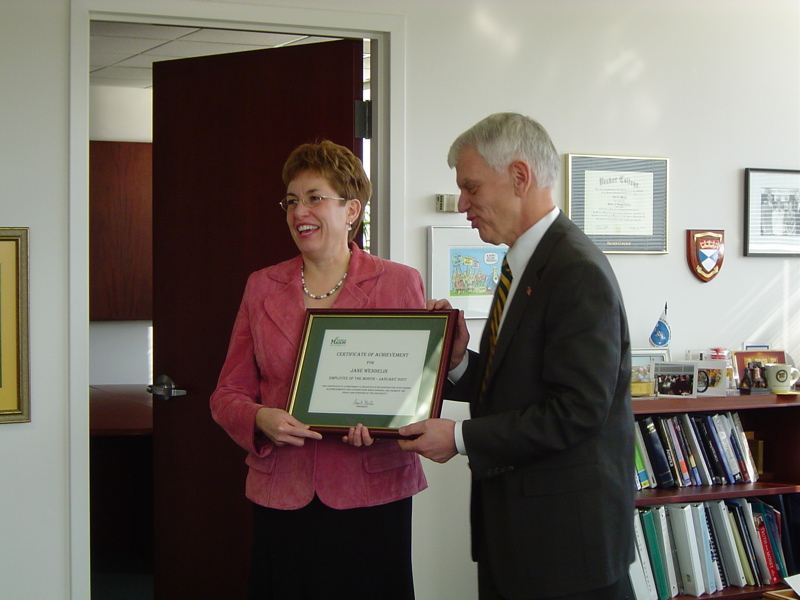
I had the pleasure of walking through the new Krasnow expansion today on a tour with one of our faculty-position finalists. It was incredible to see all the wonderful new space for research!

And our finalists themselves so far are so very impressive! Three new PI’s will join Krasnow in the Fall!

Jim

The Spring Semester Begins

This afternoon, snow is finally falling here in Washington. Tomorrow the Spring semester officially begins at George Mason University where I work. It’ll be nice to see the students back, although I must say the traffic situation around campus this past month has been delightful. As the new term begins, I am reminded of how as an undergrad at Amherst College, I loved flying from Los Angeles, back across the United States into the snowy winter of western Massachusetts because of the promise of a new beginning and the excitement of learning new things.

Here at Krasnow, we’re looking forward to the new term and the promise of learning new things also.

Jim

Turmeric (the spice) and Alzheimer’s

I have long been interested in the science of biologicals (organic chemicals that occur naturally in biological systems) as therapeutic agents. Over the years there have been many such stories–probably the strongest evidence is found in the fish oil story within the context of cardiovascular disease. But here (click on the link above) is a new/old wrinkle: turmeric (think mustard and Indian food) as a preventative for Alzheimer’s Disease.

Jim

Tenure-line interviews

Today we commence the Krasnow interview portion of the simultaneous searches that are underway for junior-level faculty neuroscience positions at George Mason. I’m really looking forward to spending some time with the first of our candidates.

There are also some potential opportunities for more senior investigators here given the new expansion space and I’d informally urge individuals who may be interested to contact me directly.

Jim

Live Blogging the Krasnow Scientific Retreat: Day 2

The picture is of the Layne Kalbfleisch’s talk–the last scientific talk of Day 2.

We ended the first day of the retreat with a lively discussion about
the definition of “mind”. What’s difficult of course is to approach
something that is so clearly ultimately dependent upon introspection
(we’re really only sure that we ourselves have a mind) with a data-
driven, hypothesis testing approach. I brought up the notion that
practically we need to consider mind operationally: what it will take
to build machines that can pass the Turing Test. Or to be more
specific: what will be inside those machines that will allow them to
manifest mind.

This morning, we are beginning with a talk on the study of Stroke
using brain imaging methodologies and crucially computational
approaches to modeling blood flow non-invasively. This is a very
exciting project that is an on-going collaboration between Inova
Fairfax Hospital and our own Juan Cebral. We’ll go till about noon
today with a series of talks and then go into a session with just the
PI’s to discuss the Krasnow scientific program writ large.

Jim

Krasnow Scientific Retreat: Day 1


I’m live blogging from the 3rd Annual Krasnow Scientific Retreat. As with previous years, this is the time during the year when the entire Krasnow scientific family (PI’s, trainees and staff) gather off-site to hear short talks on all of the Institute’s scientific programs. This year the theme is “mind” ( as preparation for our upcoming Decade of the Mind Symposium), but frankly we’re beginning at the level of origin of life work funded by the NSF and over the next two days will be working our way towards higher cognition.

I find this retreat incredibly useful because it not only informs me about each research group’s latest research findings, but also because it enables me to see overall where the actual scientific intersections in the Institute’s overall science portfolio.

But if I find the retreat useful, I think it’s even more useful for our scientific staff because it provides the seed corn for future collaborations.

Jim
The book of Nature (from Physics Web)

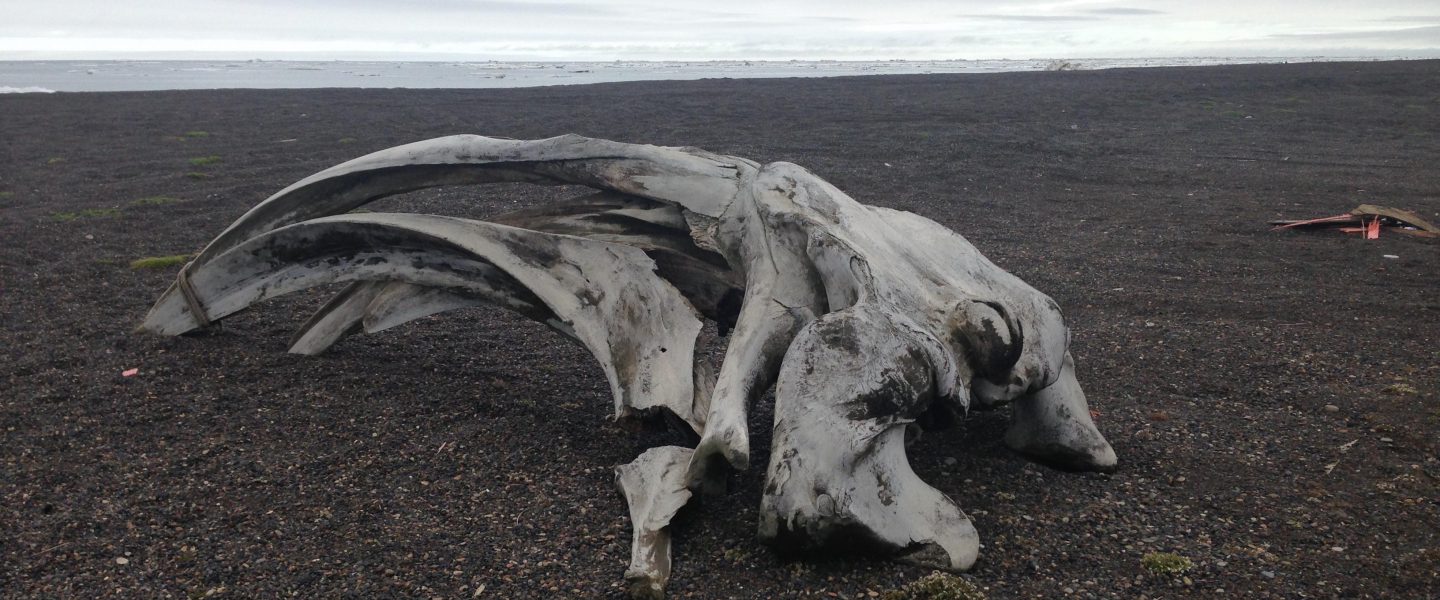
Of course referring to Galileo’s metaphor.

The money quote:

But the image of the book of nature can haunt us today. One reason is that it implies the existence of an ultimate coherent truth – a complete text or “final theory”. While many scientists may believe this, it is ultimately only a belief, and it is far likelier that we will endlessly find more in nature as our concepts and technology continue to evolve. Furthermore, the image suggests that the “text” of the book of nature has a divine origin. The idea that the world was the oeuvre of a superhuman author was the precursor of the idea that it was the engineering project of an intelligent designer. This implication has led some contemporary sociologists of science to succumb to the temptation of characterizing scientists as behaving, and seeking to behave, in a priest-like manner.

The most important lesson to be found in Galileo’s image is the need to keep developing and revising the metaphors with which we speak about science.

Very good point and kudos’s to Robert P. Crease at Stony Brook.

Jim