
I saw this news in today’s Chronicle of Higher Education on-line and clicked through the link. Postdocs are in a difficult gray zone, neither student nor professor–yet often the true engine of research success.
Jim
I saw this news in today’s Chronicle of Higher Education on-line and clicked through the link. Postdocs are in a difficult gray zone, neither student nor professor–yet often the true engine of research success.
Here’s a “glass is half-full” take on the augmented cognition meme in the context of our global challenges.
Yet in one sense, the age of the cyborg and the super-genius has already arrived. It just involves external information and communication devices instead of implants and genetic modification. The bioethicist James Hughes of Trinity College refers to all of this as “exo cortical technology,” but you can just think of it as “stuff you already own.” Increasingly, we buttress our cognitive functions with our computing systems, no matter that the connections are mediated by simple typing and pointing. These tools enable our brains to do things that would once have been almost unimaginable
A bit over a month from now, the University will begin gearing up for the Fall semester. It just seems like yesterday that the Spring semester drew to a close. Summer is short and sweet at the Krasnow Institute for Advanced Study.
My colleague Tyler Cowen sent along his new book and I’m quite enjoying the read so far. It’s made more interesting by the fact that, having known Tyler for more than a decade, many of the ideas in the book are clearly manifested in Tyler the person–his encyclopedic knowledge of DC area ethnic restaurants comes to mind.
My colleague and friend Chris Hill (not the diplomat) has a new piece here. In it he posits the demise of an innovation society based primarily on science and technology. I think Chris is dead wrong, but it’s an interesting challenge for those of us who come from the Vannevar Bush tradition.
Just as the post-industrial society continues to require the products of agriculture and manufacturing for its effective functioning, so too will the post-scientific society continue to require the results of advanced scientific and engineering research. Nevertheless, the leading edge of innovation in the post-scientific society, whether for business, industrial, consumer, or public purposes, will move from the workshop, the laboratory, and the office to the studio, the think tank, the atelier, and cyberspace.
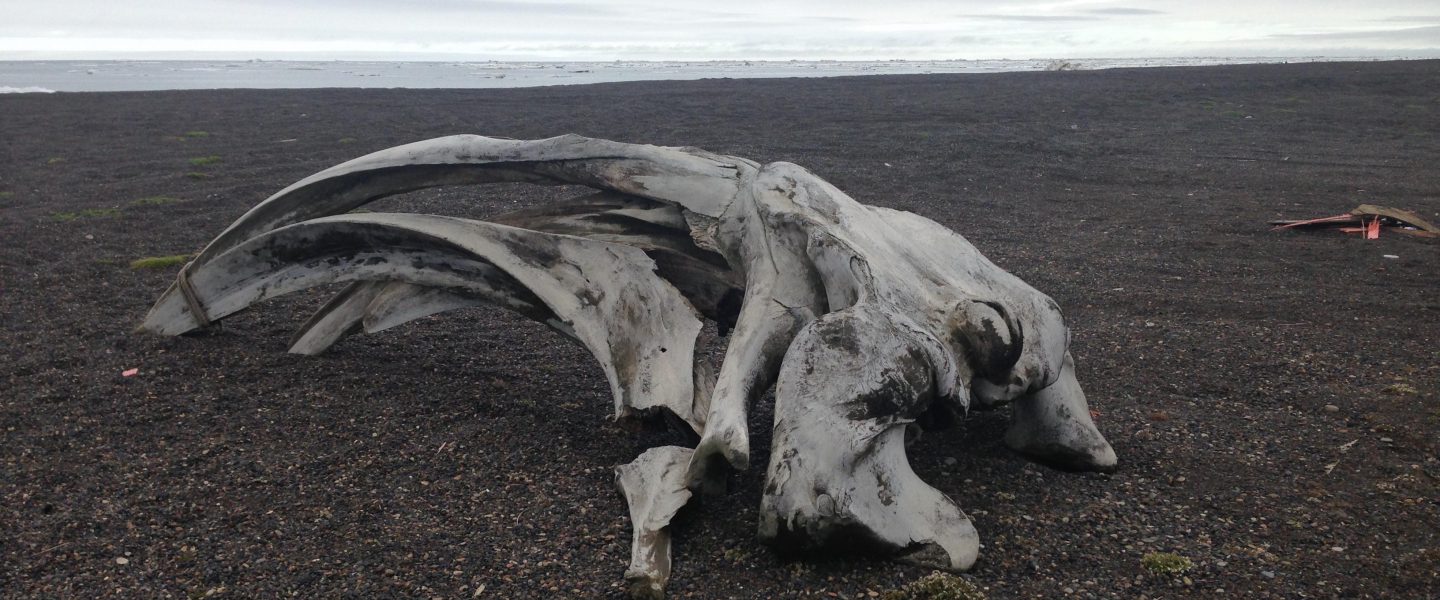
Reading Charles Sibert’s wonderful article in yesterday’s Sunday NYT Magazine, I was reminded by my own encounter with an Orca on the north shore of San Juan Island close to twenty years ago. I had been told that if I showed up at the rocky outcropping around 10 in the morning, I’d run into a pod of the huge creatures face to face.
ScienceInsider has the details of the latest combination of cuts and furloughs proposed for our colleagues at UC here. It’s not a pretty story. Many of us consider the UC system to be the premier public university in the United States. It can’t stay that way for long if the great state of California doesn’t figure out some way to address its structural budget problems (which long pre-date the current crisis in my opinion). As a California native, and with many friends as faculty in the system, I really feel their pain.
We just got the news that, as expected, Dr. Francis Collins has been nominated to be the next director of the National Institutes of Health.
Dr. Regina Dugan will be the next director of DARPA. With a doctorate from Caltech, Dugan served as a DARPA program manager from 1996 to 2000. Her background is in explosives detection.
Money quote:
If you come across a garter snake, nearly all of your brain will light up with activity as you process the “threat.” Yet if somebody tells you that carbon emissions will eventually destroy Earth as we know it, only the small part of the brain that focuses on the future — a portion of the prefrontal cortex — will glimmer.

