
For those of my colleagues in the field who need a new reason, Su Meck’s piece in today’s NY Times Magazine provides it…here.
A really touching story of amnesia and eventual success at my Mom’s alma mater, Smith College.
For those of my colleagues in the field who need a new reason, Su Meck’s piece in today’s NY Times Magazine provides it…here.
A really touching story of amnesia and eventual success at my Mom’s alma mater, Smith College.
There’s an apocryphal story about how my Dad and Peter Milner discovered the phenomenon of reinforcing self-stimulation (“the pleasure center”)–the stimulating electrode was in fact bent and went into the medial forebrain bundle quite by accident. That was the luck. The scientific success came from recognizing the resultant behavior and following up on the histological data to see where the stimulating electrode actually went.
As far as I know, the above story is true.
But the combination of luck and good science are behind many significant discoveries. The key is to work hard enough to generate your own luck and then to be imaginative to recognize a lucky success for what it is with subsequent follow up experiments.
That’s the best advice I can give for a young experimentalist these days.
MBL’s wonderful journal has a new look and feel here. It’s an honor to be the tenth editor of The Biological Bulletin. This month’s virtual symposium issue on regeneration is open access. Enjoy!
He’s the literary editor of The New Republic. His remarks are here. They seem appropriate to the anniversary we observed yesterday here in Washington.
Hat tip to Andrew Sullivan
Tomorrow’s regular Monday seminar here at Krasnow is my annual report on the state of the institute. To telegraph, we face four main challenges going forward:
First, we have to position the Institute to adapt to what will surely be a changing federal R&D environment in the near future.
Second, we need to build on our critical mass of tenure-line faculty members. Both of our academic departments need to grow to adequately support their programs and to use our new research infrastructure effectively.
Third, we need to think internationally, both in terms of future scientific collaborations, but also in terms of funding of our scientific research.
And finally, we need to continue to actively fund raise from our stakeholders and donors to support Phase III and the synergies that will come from having all of our faculty, students and staff under one roof.
I’m looking forward to my talk…
From The Economist, here. From the article, it all started this way:
ANIL POTTI, Joseph Nevins and their colleagues at Duke University in Durham, North Carolina, garnered widespread attention in 2006. They reported in the New England Journal of Medicine that they could predict the course of a patient’s lung cancer using devices called expression arrays, which log the activity patterns of thousands of genes in a sample of tissue as a colourful picture (see above). A few months later, they wrote in Nature Medicine that they had developed a similar technique which used gene expression in laboratory cultures of cancer cells, known as cell lines, to predict which chemotherapy would be most effective for an individual patient suffering from lung, breast or ovarian cancer.
What follows is really sad.
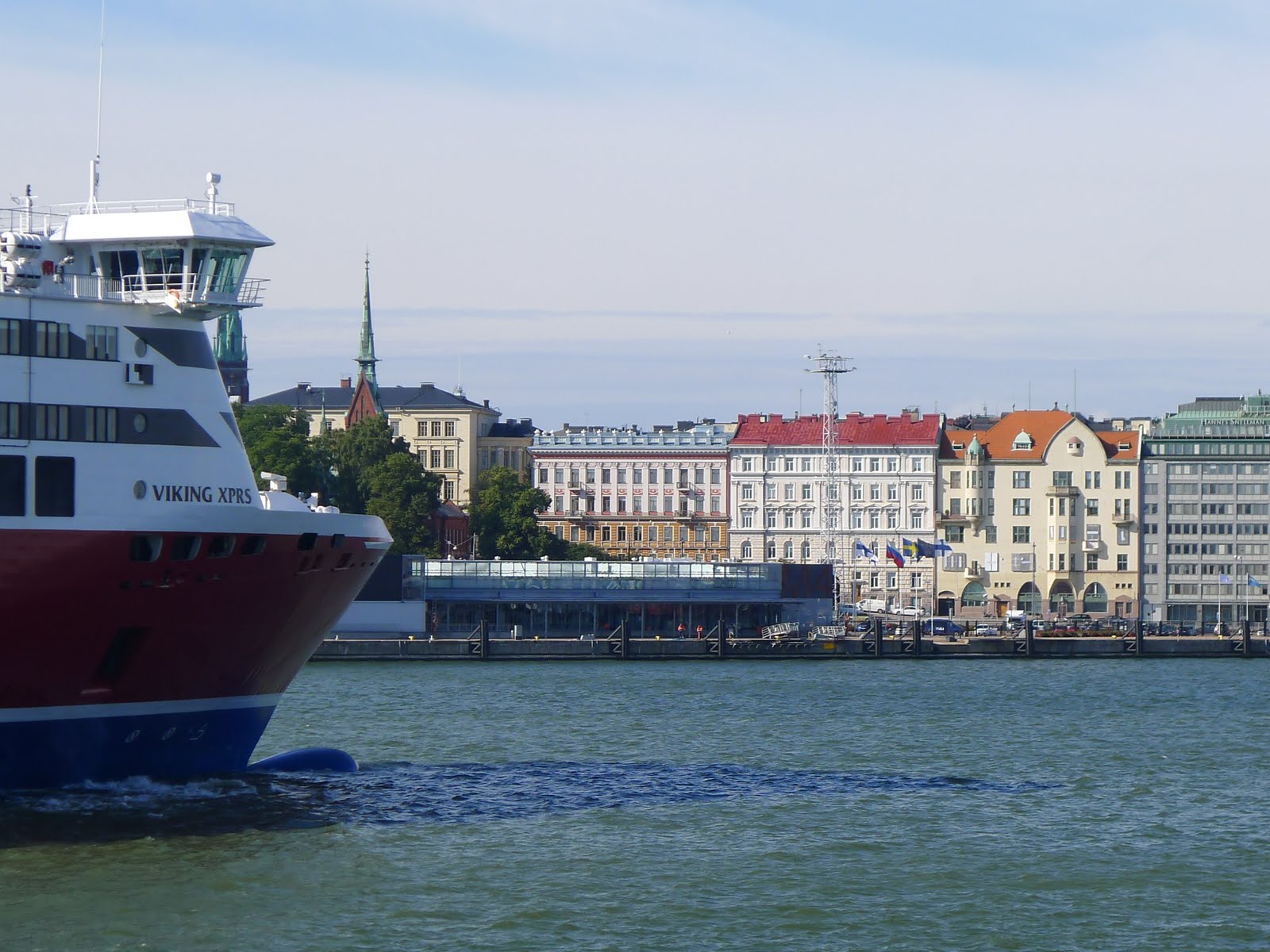
From the NeuroInsights meeting in Helsinki, the mood seems to be quite pessimistic on the industry–as in, how could one possibly make money off it. I think at least part of this is reflective of the on-going recession (especially here in Europe).
There’s another meme going on here: that the EU regulatory environment is much better for neurotech than the corresponding one in the US.
Let’s see if there’s some deal making this evening….
That is if I can manage to get to JFK in weather that’s certainly less than perfect. Plans for the week include a Neurotech Conference, some networking meetings with technology folks and a talk at the University of Helsinki.
Last time I was in Finland was in 1975 (remember the Helsinki Accords)? Actually learned how to drive a manual shift on Finnish roads courtesy of my Dad’s largesse. I imagine it’s changed a lot since the Cold War.
It’s here and well worth reading.
Money quote:
Hacker and Dreifus reserve their strongest criticisms for a handful of elite institutions—the “Golden Dozen” as they call them—that set the tone (unjustifiably in their opinion) for higher education as a whole. The list is familiar: the eight Ivy League institutions, plus Duke, Stanford, Williams, and Amherst. They are the prestigious schools that all ambitious students hope to attend, even though only a small fraction of them can hope to win admission. The existence of this elite stratum of institutions seems to violate the authors’ sense of democratic fairness. In their view, these schools are overrated and do not merit the hallowed reputations they have been assigned.
I barely made my connection in Denver, and arrived after midnight, but I’m back for the weekend, before heading out again Monday to a meeting in Helsinki.
As usual, the meeting at Sandia National Laboratory was extremely interesting and the scientific discussions fruitful. The Lab’s efforts in cognitive sciences are really beginning to show pay-off.
In the meantime, a day to catch up on work at the Institute…..
 Discoverers and Discoveries