
Sam Rodriquez’s take here. He’s actually pretty spot on. If we could get really good at digital twins, it probably would help on the regulatory side.
Mathematician speculates on mind…
Michael Harris speculates on mind being separate from brain, here. Key concept: “you don’t bring along a PET scanner for your first date”.
Cover up at McMurdo?
Jeff Mervis’ devastating article here. Makes NSF and Leidos look really bad. The allegations of chronic sexual harassment deserve a thorough oversight from NSB and Congress.
Making O2 on Mars…really, right now
Link is here. Kudos to NASA.
ARPA-H gets its first head…
The link from the Whitehouse is here. The President chose well. Let’s see whether ARPA-H under Dr. Wegrzyn can change biomedical research for the better.
Fragile Ecosystems…
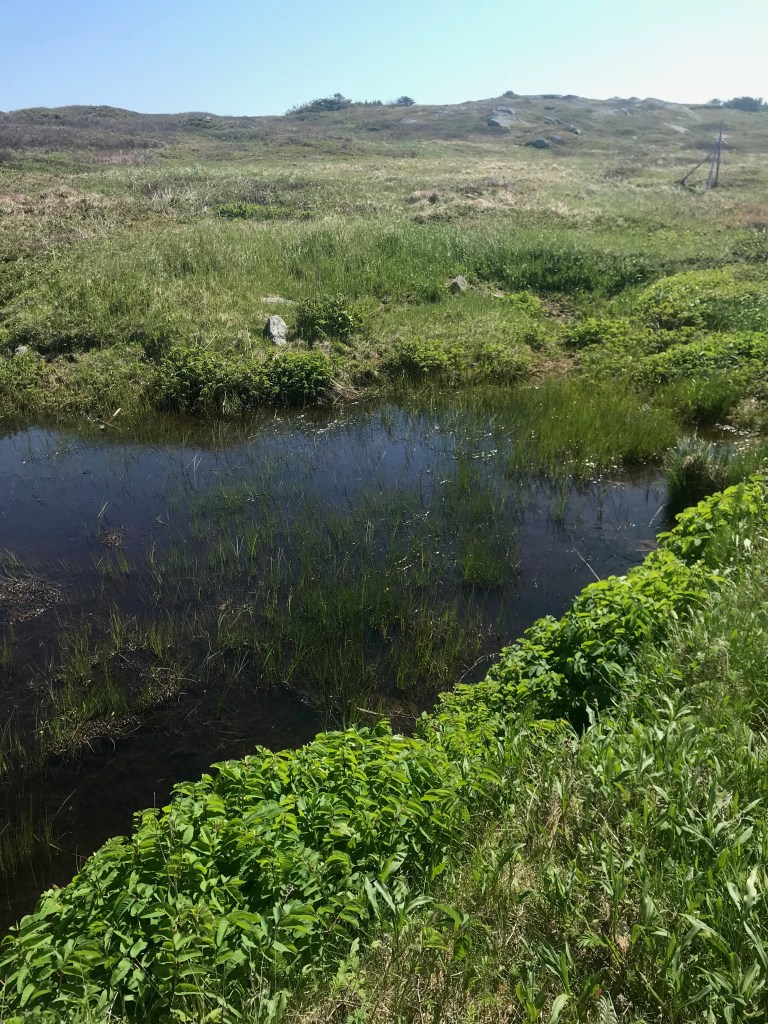
I took this photo a while back while on a hike in one of Canada’s more remote locations. It was early in the short boreal summer and I was struck by both the high biodiversity and the enormous spurt of primary productivity that, out of necessity occupies a very narrow time window. These remote parts of Earth’s biosphere are encountering climate disruption more intensely than most of the planet. How they will fare is unknown, but it’s a good bet they will be challenged because they are inherently fragile.
Humans affect the trajectory of our home planet’s ecosystems. But we can’t accurately predict how those dynamics will feedback upon us. We are coupled complex adaptive systems.
Stuart Buck’s interview with me…
Is here. I enjoyed our discussion on science funding.
Understanding the apparently healthy brain…
From today’s NYT, here. We have a long way to go in neuroscience.
Viral Spillover: predictable?
The New Yorker routinely does an excellent job with science. This piece by Matthew Hutson is another good one. The debate is whether it’s worthwhile even trying to scientifically sample the animal reservoirs (e.g. bats) where this zoonotic transfer begins. Is it hopelessly complex? Is the sampling itself playing with fire?
My own sense (based on my NSF experience) is that there are valuable rule sets that can be revealed and these are what we must try to figure out. Yes, the complexity is high–the interactions span genomes to ecosystems, but the payoff could be immense. Early on in the pandemic, I blogged about a hypothetical COVID30. Because of climate change, we may be facing new infectious disease assaults on humans much more frequently than that as animal reservoir species and humans migrate towards intersections in space and time.
How will we use our quantum computers?
One of my colleagues asked me the other day what I thought the opportunities were for using quantum computing in the biomedical application space. My answer was pretty skeptical. It’s easy to see how AI has paid off for life sciences. Not so on how quantum computing will make a big difference. I’d love to be wrong though. Could quantum computing allow us to predict the trajectory of a viral phenotype accurately? Could we automate rational small-molecule design? How will we use our quantum computers?
 Discoverers and Discoveries