Disciplinary retreat

As in retreating to one’s disciplinary silo. Not a good thing, but unfortunately all too common in challenging funding environments. In an email exchange this morning, several of us have been discussing how important transdisciplinary research really is. One of my faculty members pointed out that it’s the really unconventional stuff that’s getting support right now. That’s the science that has tendrils across disciplines…as in a blend.

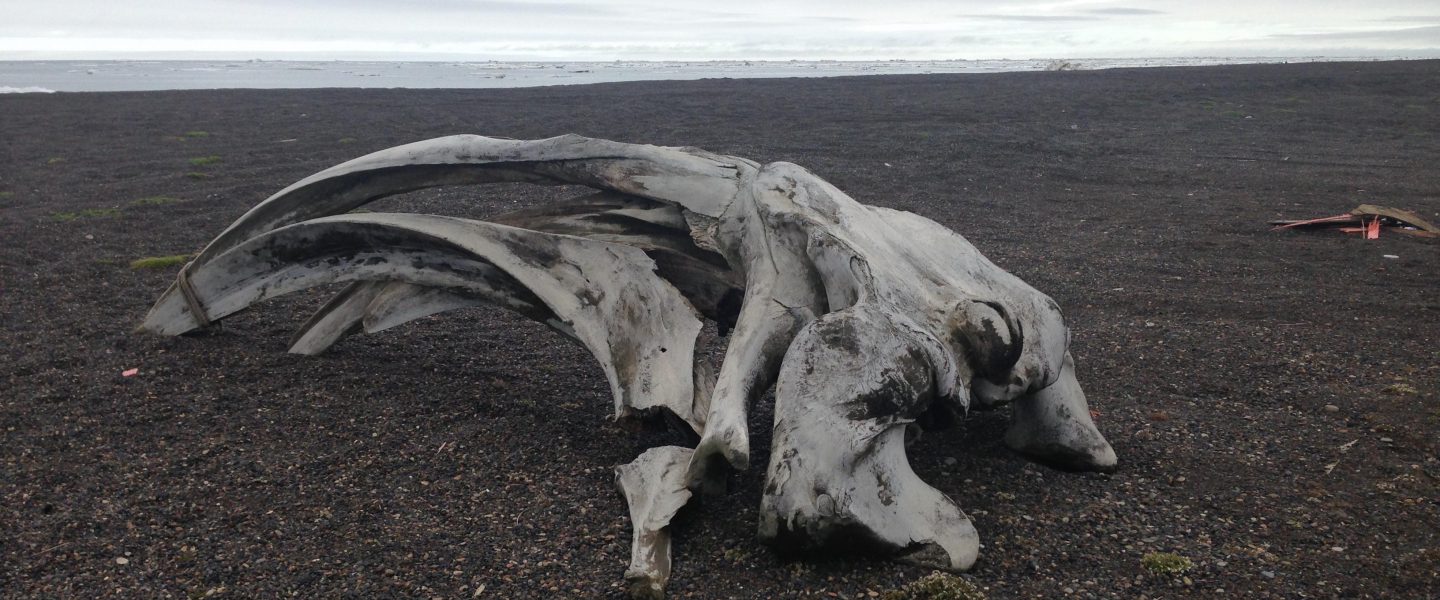
And now, in the tradition of Andrew Sullivan’s Blog, here’s the view outside my office window here in Woods Hole…

Beyond the oceanographic research vessels you can see the island of Martha’s Vineyard.

Post Cold War Soviet Science

In Time Magazine, following the collapse of the Soviet Union, support for Russian science collapsed. According to this Time Magazine piece from last year:

 There are no specific statistics on the number of scientists who leave — emigrants don’t generally notify the Russian migration office that they are leaving. But this is not the first exodus. There was a massive wave of scientists who left Russia after the fall of the Soviet Union. Mathematicians, physicists and biologists took whole laboratories to the U.S. The second most popular destination was Israel, where a previous wave of Russian scientists had already set up shop in the 1970s.
By the beginning of the 2000s, nearly all the top names from Soviet science field were working outside of Russia. According to the Russian-Speaking Academic Science Association, there are around 100,000 Russian-speaking scientists and researchers working outside of the Russian Federation, including those who left Russia before and after the fall of the Soviet Union. The Russian Ministry of Education and Science puts the number closer to 25,000.

It has taken years for Russian Science to build itself back up. And that’s not for lack of very talented, highly educated young talent. It’s because the funding infrastructure that supported massive science investments during the Cold War imploded with the Soviet Union.

There is a lesson here for America. If the Fiscal Cliff implodes the funding structure for American science, that talent will also leave for better climes. When I was in Singapore two years ago, I was already seeing evidence that this could happen. Such a hollowing out of American science would be an unparalleled disaster.

Off to Woods Hole

When tomorrow arrives,  I’ll be driving up the East Coast in my annual trek to the Marine Biological Laboratory (MBL) on Cape Cod. Over the next week, as editor of The Biological Bulletin, I’ll be immersing myself in what surely seems to be the global summer nexus of life sciences–a place where I got off to my own start as a scientist some 35 years ago.

Krasnow Institute scientific life is incredibly enriched by the successive generations of MBL alumni who make up our faculty, postdocs and graduate students. The MBL experience is always life-changing, both in its ability to kindle a life-long exhilaration towards science, but also in teaching a love of basic science–understanding nature better for pure sake of increasing human knowledge.

What’s going to happen to NIH and NSF?

If the “fiscal cliff” scenario happens? My current guess is that if the Cliff does kick in on January 1, it’ll create complete havoc inside the Federal government and then will be quickly resolved (possibly at the cost of a credit downgrade) by a further kicking of the can down the road. This regardless who wins the election–I’m beginning to be convinced that either a re-elected or lame duck Obama administration may see the expiration of Bush tax cuts as a strategically good move no matter the chaos…and the GOP in a lame duck session wont be able to do a thing about it.

None of this is good for NIH or NSF. Because the fiscal cliff cuts are across the board, they are mindless (remember, the cliff was supposed to be a deterrent) so the excellent will get thrown out with the merely good.

The DOD contractors have been lobbying intensely about the Cliff for some time now. The problem though: avoiding the cliff requires something qualitatively different from the political paralysis that has become the norm on the Hill.

If aspects of the Cliff are removed in the new Congress: expect a trade on tax cuts for restoration of DOD funding. I have a hard time seeing NIH and NSF being part of that deal. So worst case: road kill on a bridge to nowhere.

Google Docs as a collaborating tool

Over the last couple of weeks, I’ve been collaborating on a quite extensive chapter with colleagues across the country. In general, we’ve been using Google Docs and I have to say, the power of it as a collaboration tool is really quite amazing. Specifically, the simplicity and elegance combined with an ability to have multiple edits in real time represents a huge advantage of Office suites (generically). I’m impressed!

Google: the non-technology company

The debate between Peter Thiel and Eric Schmidt is summarized over at Marginal Revolution. Alex’s conclusion is that Google’s cash hording is the best evidence there is for The Great Stagnation. I see it as more as evidence that Google has no faith in the stability of the global economy–it’s best to hoard cash if you think the deluge is almost upon us….

Money quote:

PETER THIEL: …Google is a great company.  It has 30,000 people, or 20,000, whatever the number is.  They have pretty safe jobs.  On the other hand, Google also has 30, 40, 50 billion in cash.  It has no idea how to invest that money in technology effectively.  So, it prefers getting zero percent interest from Mr. Bernanke, effectively the cash sort of gets burned away over time through inflation, because there are no ideas that Google has how to spend money.