Wheels down on Mars

As a scientist I can’t help but be overjoyed and amazed at the successful landing of the Curiosity Rover on Mars early this morning. Regardless of what happens ahead, the ability to autonomously land an automobile-sized robot under the conditions of the “7 minutes of Terror” is a lasting human achievement worthy of the 21st century.

Last day in Woods Hole…

I’m heading home to DC tomorrow….and excited to host Mason’s new President as he visits the Krasnow Institute on Tuesday. In the meantime, I’m enjoying some final hours of cool sea breezes off Vineyard Sound.

It’s been an incredibly productive week scientifically. I’m more convinced than ever that understanding the molecular control (e.g. WNT, FOXP2) of neural development is central to our ever making sense of the Connectome.

MBL’s great strength lies in its ability to generate scientific renewal, as well as scientific birth.

Sitting on the dock on the bay….

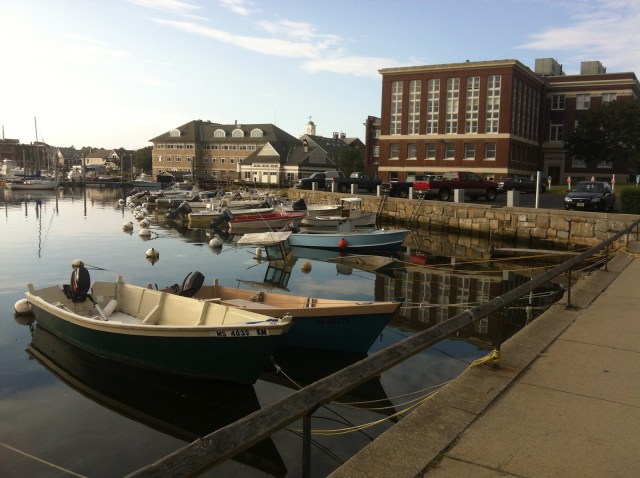
Lillie and Marine Resource Facility, Early Morning Woods Hole

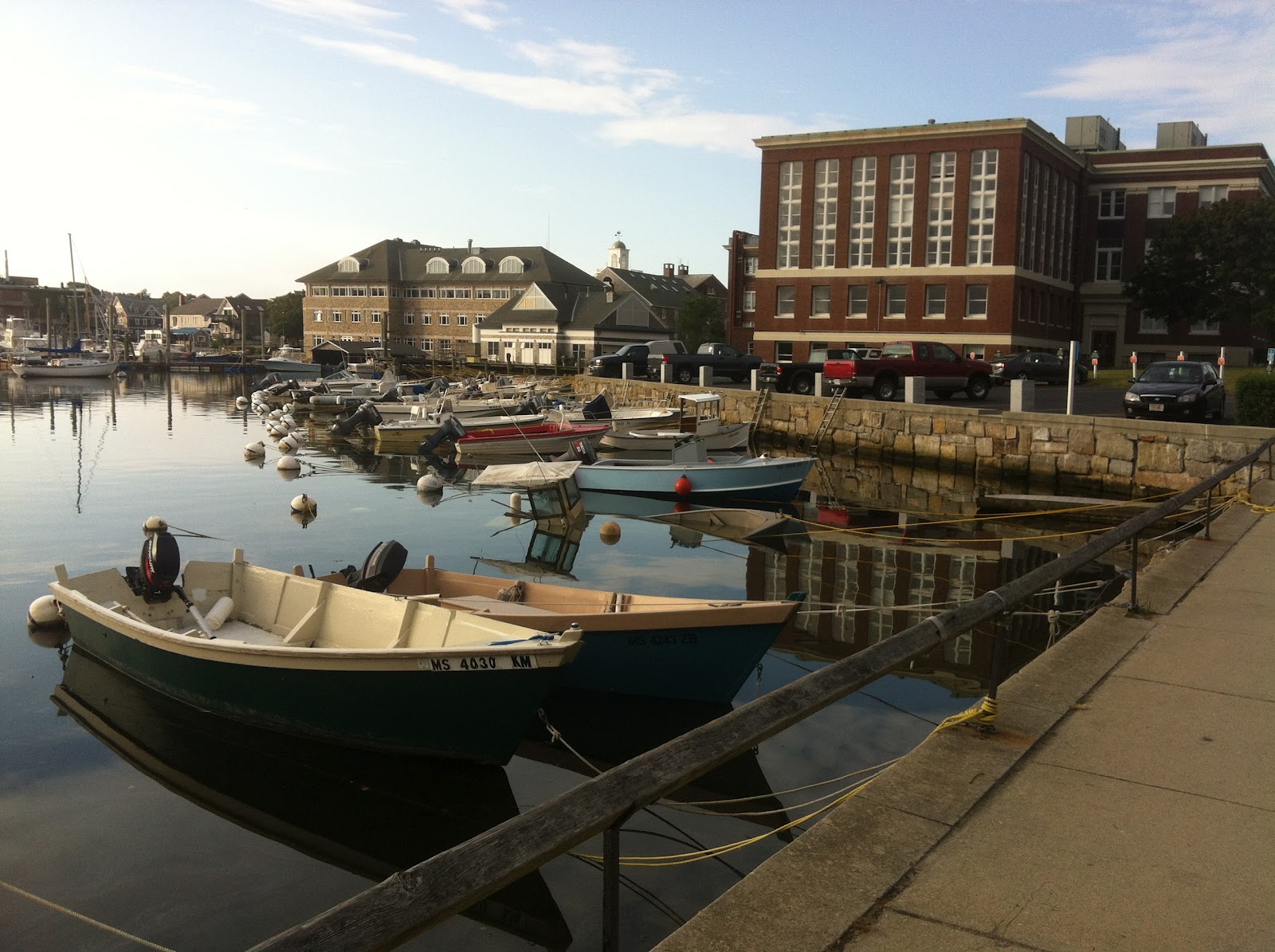
Eel Pond, in the foreground is usually glassy first thing in the morning and today is no exception. I’ve got some time before heading to a lecture on the metabolism of the Malaria parasite to ponder the question of why we study biology.

But wait…

Surely the larger question is what is the thing we call “life”? Here on Earth, at least, it’s a process that’s dependent on Carbon (among a few other elements), the consumption of energy (either directly from the Sun, from carbon-based sugars, or sometimes from the geothermal energy present in deep ocean vents). The information for life is encoded in polymers of nucleic acids and that information is read out into proteins made of amino acid building blocks. These proteins can be either used to build the structure of life forms or to act as chemical catalysts. The amino acids themselves are built up by energy consumption in the form of metabolism.

But life begins and ends all without any sudden phase change in the stuff of life. Yes, the building blocks are recycled, but not immediately upon death. Neither is it mandatory that all the processes of life cease upon the death of a living thing.

Which brings us back to this larger question of defining life. I suppose at one level, it’s a local decrease in entropy and hence a temporary reprieve from the Second Law of Thermodynamics, but there are lots of such things in the Universe that we don’t normally think of as alive. And on this Biosphere, it’s defined within the constraints of a special carbon-based metabolism and XNA-genetics, but it needn’t be elsewhere.

But it surely is compelling and that’s what makes a place like the MBL in Woods Hole so very important.

Science: hobby for the wealthy?

That’s what it was often in the 19th century before public funding took root. And that’s what it may be again if such funding collapses in the future. Docked at the WHOI pier this morning is this research vessel owned by the Schmidt Ocean Institute…as in Eric Schmidt of Google fame. Typically this class of research vessel would have been paid for by a government research agency such as the National Science Foundation–no longer. The RV Falkor is perhaps a window into the future of science: back to the future.

Niall Ferguson’s screed against the optimism of Silicon Valley

From Newsweek Magazine, it’s here. My sense is that colleague Tyler Cowen would agree with him and that Peter Diamandis and Steve Kotler would disagree.

My own take is that we are definitely not condemned to reliving the 1930’s and that technology does have the potential to really change things for us in a positive way.

But I’m far from sure that there are engineered solutions to our profound problems and I remain convinced that human beings are flawed enough to really screw things up for the future.

Disciplinary retreat

As in retreating to one’s disciplinary silo. Not a good thing, but unfortunately all too common in challenging funding environments. In an email exchange this morning, several of us have been discussing how important transdisciplinary research really is. One of my faculty members pointed out that it’s the really unconventional stuff that’s getting support right now. That’s the science that has tendrils across disciplines…as in a blend.

And now, in the tradition of Andrew Sullivan’s Blog, here’s the view outside my office window here in Woods Hole…

Beyond the oceanographic research vessels you can see the island of Martha’s Vineyard.

Post Cold War Soviet Science

In Time Magazine, following the collapse of the Soviet Union, support for Russian science collapsed. According to this Time Magazine piece from last year:

 There are no specific statistics on the number of scientists who leave — emigrants don’t generally notify the Russian migration office that they are leaving. But this is not the first exodus. There was a massive wave of scientists who left Russia after the fall of the Soviet Union. Mathematicians, physicists and biologists took whole laboratories to the U.S. The second most popular destination was Israel, where a previous wave of Russian scientists had already set up shop in the 1970s.
By the beginning of the 2000s, nearly all the top names from Soviet science field were working outside of Russia. According to the Russian-Speaking Academic Science Association, there are around 100,000 Russian-speaking scientists and researchers working outside of the Russian Federation, including those who left Russia before and after the fall of the Soviet Union. The Russian Ministry of Education and Science puts the number closer to 25,000.

It has taken years for Russian Science to build itself back up. And that’s not for lack of very talented, highly educated young talent. It’s because the funding infrastructure that supported massive science investments during the Cold War imploded with the Soviet Union.

There is a lesson here for America. If the Fiscal Cliff implodes the funding structure for American science, that talent will also leave for better climes. When I was in Singapore two years ago, I was already seeing evidence that this could happen. Such a hollowing out of American science would be an unparalleled disaster.

Off to Woods Hole

When tomorrow arrives,  I’ll be driving up the East Coast in my annual trek to the Marine Biological Laboratory (MBL) on Cape Cod. Over the next week, as editor of The Biological Bulletin, I’ll be immersing myself in what surely seems to be the global summer nexus of life sciences–a place where I got off to my own start as a scientist some 35 years ago.

Krasnow Institute scientific life is incredibly enriched by the successive generations of MBL alumni who make up our faculty, postdocs and graduate students. The MBL experience is always life-changing, both in its ability to kindle a life-long exhilaration towards science, but also in teaching a love of basic science–understanding nature better for pure sake of increasing human knowledge.