
The Krasnow Institute did well during the Storm. And frankly Washington DC did well also. Our concerns go out to our scientific neighbors to the north, especially in New York City.
Sandy: an imperfect storm
She’s remarkably asymmetric. But I’m told her wind field is absolutely enormous. Final preparations are complete here at the Institute–we’ll hope for the best. I’m expecting blogging challenges over the next week, depending on how wide spread the power outages are here in the DC area.
Fall reflections…
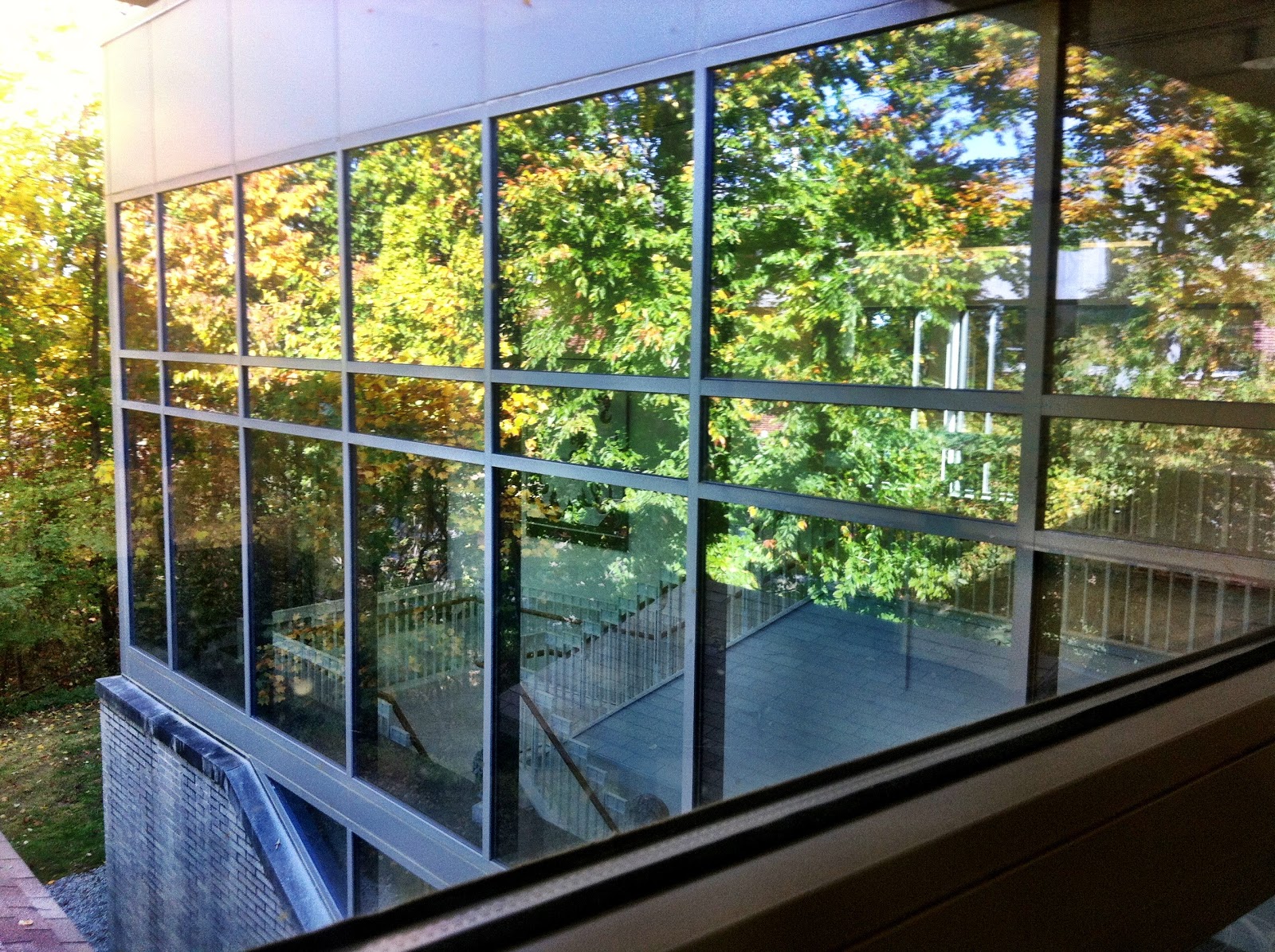 |
| The view out my office window: Krasnow Institute for Advanced Study |
Fall semester is pretty much half over here at George Mason. Over the past two days, after my return from China, I’ve had time to reflect on the incredible dynamism of the science that goes on here…
An example: today I got to see some absolutely spectacular results that may be relevant to interactions between the brain and the immune system–to my mind, an understudied critical physiological axis in developing new treatments disease.
In the meantime, I’ve been reading up on the default mode network–the system in our brain that seems to subserve mind wandering. Specifically, I’m interested in what happens when the function of this network goes awry (for example in schizophrenia). But the larger question is this: how does the neural dynamics of our brain play out in our complex human social interactions? Can my default mode network affect yours? Time for us to hire some social neuroscientists?
Is academic life changing?
Here’s Mason’s provost, Peter Stearns, on the matter. My own sense is that he’s spot on. Even in the comparatively secure hard sciences, the “social contract” between institution and faculty is undergoing an evolution.
A caution however: one of the US’s enduring competitive advantages has been its ability to attract top flight scientists from all over the world. The perception that either tenure or research support is being eroded will not help, especially in a global environment where countries like China and Singapore are pouring massive amounts of money to bring the best and the brightest to their own shores.
The New York Times waxes on blue…
Natalie Angier’s piece is here. For the record, my favorite color is green.
Blogging return…
Back from Seoul and Beijing–access to Blogger was not so easy from the latter.
The Dynamics of Social Wishes…
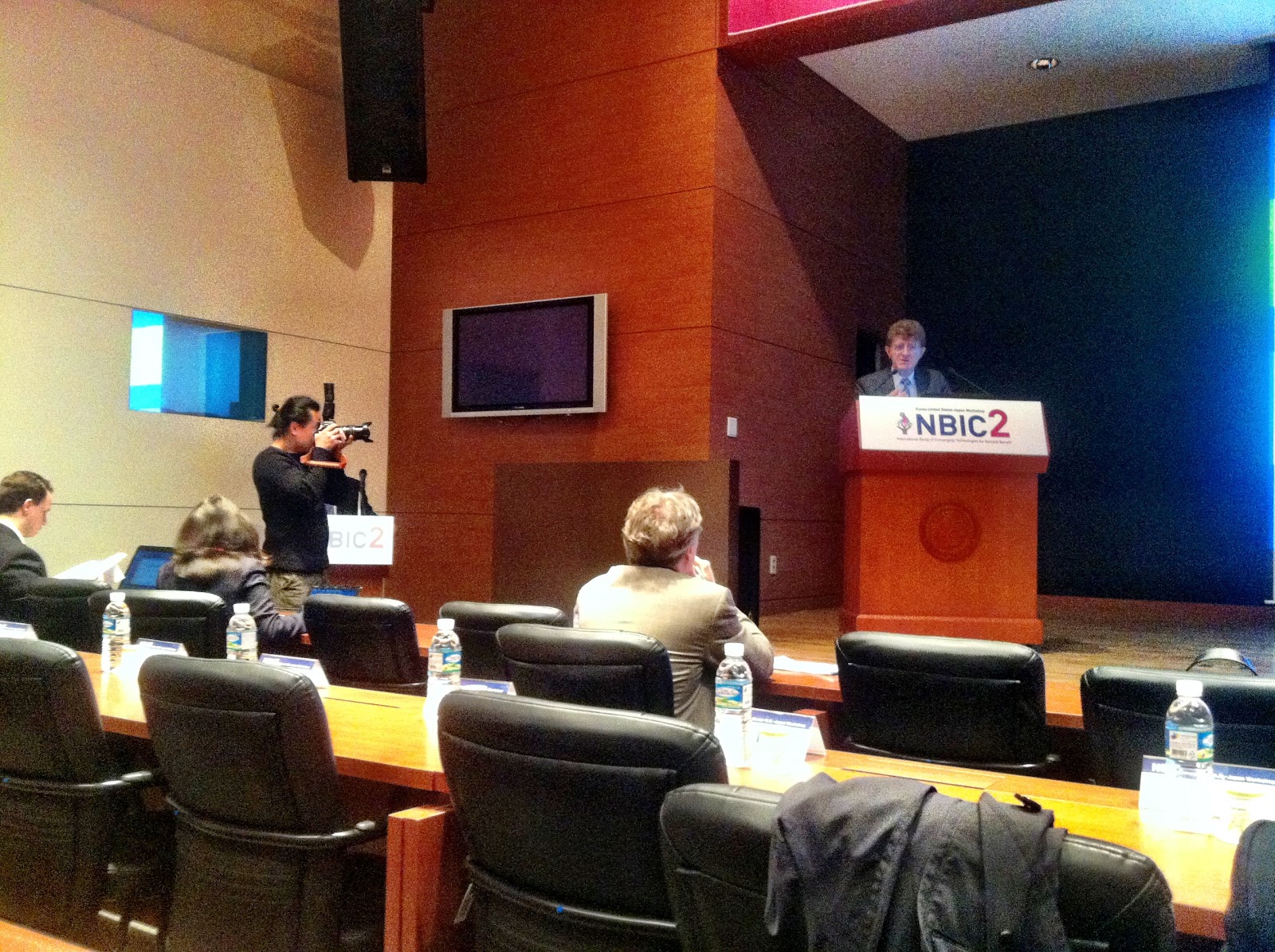
From the Korea Institute for Science and Technology at a Japan-US-Korea co-sponsored workshop on convergent technologies, an interesting idea has been put forward by Professor Tanaka from Japan that there is a dichotomy between scientists who observe (and test hypotheses) and those who design (and create new artifacts). Both types work together to answer the “social wishes” of society.
But how do we determine those social wishes? And crucially, aren’t those social wishes disperate across different societies?
Of course they are. Although there certainly commonalities: we all, I think, want a sustainable biosphere that can support life on the planet. We all want that brain-created thing we call “happiness” (although that means such different things to different individuals).
My plenary is coming up in about an hour. I will be focusing on how dynamics the social wishes of society actually are–two decades ago, the personal computer was a central social wish for those of us involved in data analysis. The emphasis then was autonomy and general purpose computation.
These days, a smart phone and the Net represent quite a different social wish–one that emphasizes mobility, connectivity, and knowledge dissemination. Interestingly, our smart phones are far “smarter” than those early PC’s–but we take the computation for granted and we don’t particularly care about either autonomy….but that connectivity, that’s really critical.
Fall arrives at the Krasnow Institute
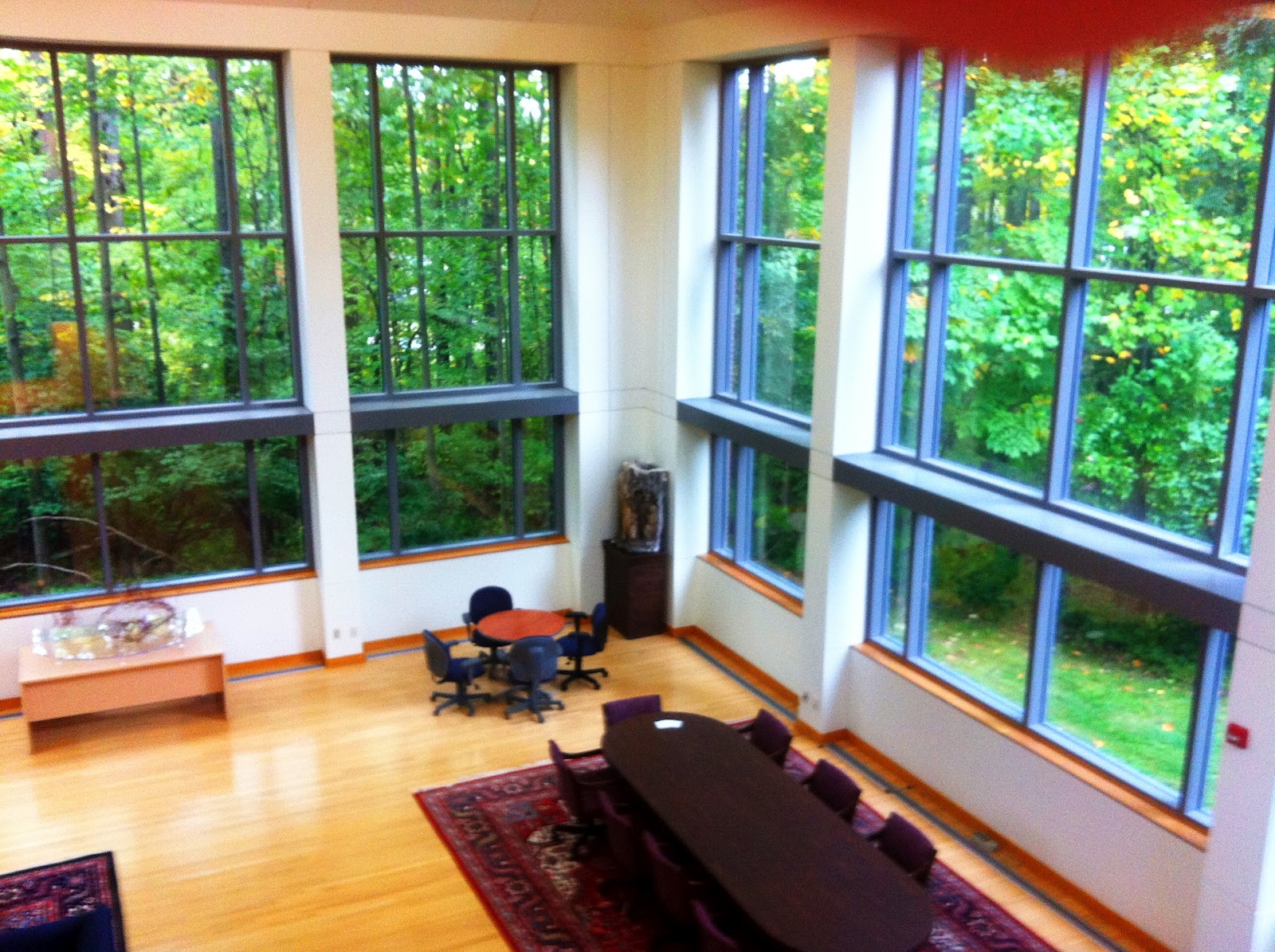
In the last 36 hours, the weather has changed here in the Washington D.C. area. Here at the Institute, you definitely need a jacket to head outside and the tulip poplar trees outside the great room are now turning bright yellow. It makes for a nice natural amalgam of Mason’s university colors.
As if to echo the pathetic fallacy of the seasonal change, the presidential campaign has also undergone a phase shift following the first debate…the outcome of the election seems much more uncertain than it did last week, with potentially important consequences for the fiscal cliff, generally, and science funding specifically.
If Romney were in fact elected President a month from now, I would view a lame duck Obama administration as much more likely to agree to substantive compromise on the Bush tax cuts. Were that to be true, then perhaps the draconian cuts to science funding might be avoided.
On the other hand, it might be that a lame duck President Obama might view allowing the Bush tax cuts to expire as a legacy contribution towards fixing the fiscal problems of the country…
Headed out to Seoul and Beijing….
My colleague Tyler Cowen is already in Seoul channeling this bleg for good places to eat, but I’d welcome any advice from readers.
Fiscal Rift
I was up on Capitol Hill today and have to say the mood is utterly pessimistic among staffers. The chasm between the two sides is too wide, especially in the House. I don’t think they think they can get it all done during the short period of time they have during the lame duck session. So off the cliff we go I suppose.
Interestingly, there doesn’t seem to be a lot of push back against DOD cuts. It’s the NIH budget that seems to have some real support on both sides of the aisle–I think there is a real understanding that you just can’t put biomedical research on hold. But even with that understanding, my sense is that staffers seemed resigned to the ultimate failure of their bosses in fixing things.
 Discoverers and Discoveries