
Interesting blogpost here. It is intriguing to think that scientific enterprise, city construction, and military campaigns are all in the same category. In science, he devalues replication and emphasizes the “decisive experiment.” I think that’s wrong and explains much of what has gotten us into trouble. But I see where he’s coming from: it’s the ‘ah ha’ moment he’s talking about. That’s real. But then you must do many replications and get the statistical power to support the insight.
Anne Applebaum on the UK’s new PM
It’s here. Great piece in the Atlantic–which my sister just gifted me a subscription for my birthday. Thanks sis!
I’m pretty optimistic about what Labor might accomplish with its big majority. The UK is still a critical player in the international science ecosystem.
The big scientific questions…
- Might geoengineering work?
- What is the neurobiological basis of consciousness
- How did life originate on Earth (and elsewhere?)
- Creating a practical fusion reactor
- Building a working nitrogenase system into our primary cereal crops
- Increasing the efficiency of photosynthesis
- Understanding how AI transformer models actually produce specific results
- What is the singularity at the center of a black hole
- How to integrate quantum mechanics with general relativity
- Building a complete digital twin to a eukaryotic organism
- Fixing inconsistencies in the standard model
- Increasing human lifespans significantly
- Getting the right understanding of Alzheimer’s disease so that we can progress toward a cure
Note, I left out all the social science questions–they’re too complicated.
Happy 4th of July 2024
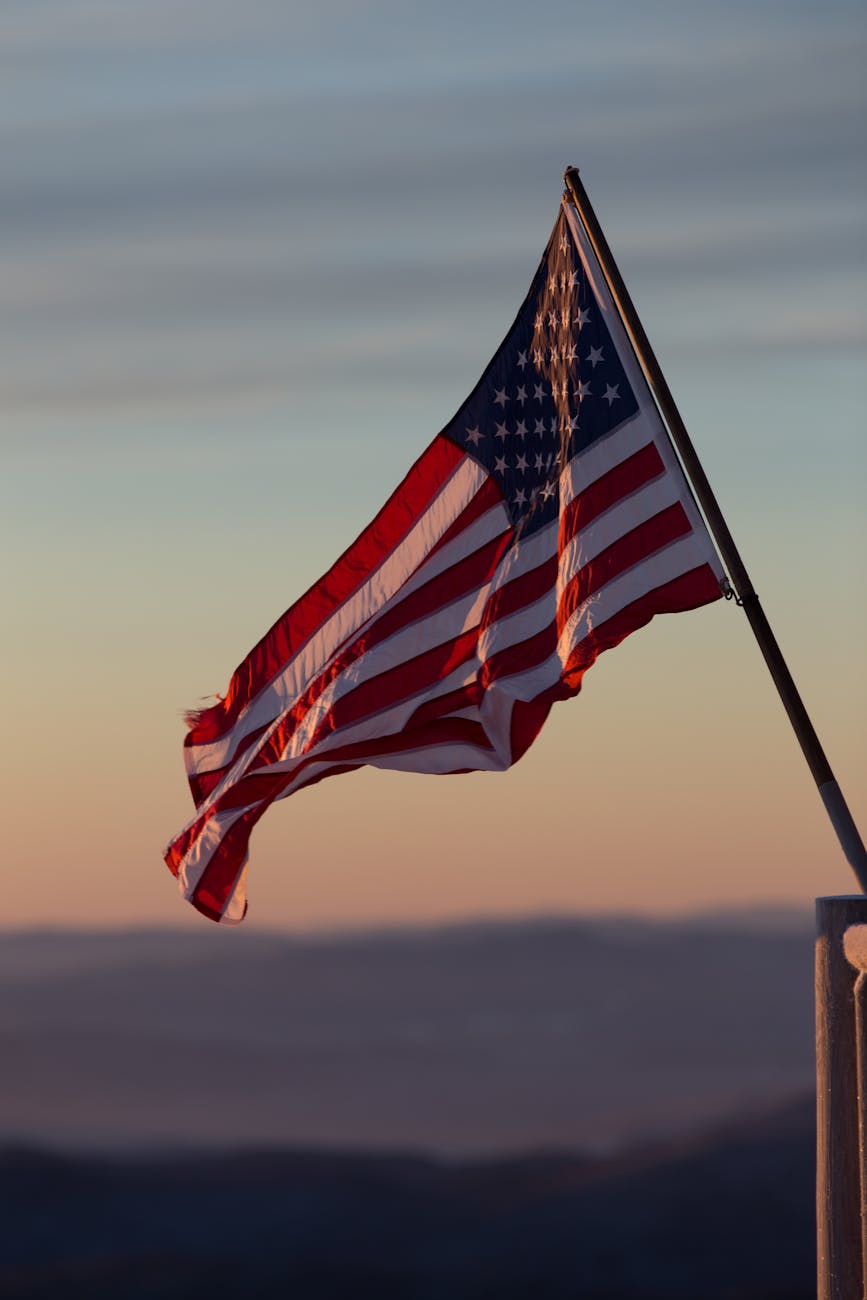
For all the chaos and partisanship, this is still a fantastic country, replete with dynamism and natural beauty. And when I think back to growing up as a kid, a lot has improved!
Using AI in the classroom
My nephew, an expert in education policy, emailed me about this topic. It’s a big deal, I guess. My philosophy is that students can use AI in preparing their deliverables, but they must declare their use of it and reveal their prompts. Obviously, they are responsible for fact-checking anything written in their name. This requirement can be pretty embarrassing for students. So, the choice comes down to prevarication or disclosing that they needed ChatGTP to finish the assignment. Students have always had the option to lie about their work–sometimes, they get caught. The more things change, the more they stay the same.
But doesn’t this detract from learning how to write? Yes, indeed, it does. That’s on them, though. My job doesn’t entail teaching the skill of writing; my course learning outcomes are outside that particular domain.
My view of generative AI in writing is the logical follow-on to my view of word processors back in the 1980s: nice to have, but not required for becoming a successful scientist. The latter involves a kind of creativity that is still far off from the current large language models.
What would a single US science agency look like?
Imagine the impossible: the ability to reform America’s patchwork of science agencies into a single agency that would fund basic, applied, and translational research for academic institutions and teaching hospitals. That same agency would conduct intramural research at all US national labs and the current NIH Bethesda campus. The waterfront would extend from particle physics to cancer to planetary probes. What characteristics would it have in an ideal world?
First, it would have a high tolerance for scientific risk (this is quite different from business risk). So, we would want decision makers to have excellent scientific taste and some mix of advisory counsel from the community on both the quality of the investigator and the proposed work. Notably, there would be no pay line or algorithm against which to use game theoretic approaches. If the review was project-based, the philosophy would be to fund the entire project, not some a la carte menu-picking.
Second, the intramural component would have an explicit mission different from the extramural component: perhaps a higher tolerance for risk or a willingness to fund investigators and trust them to find suitable projects.
Third, we’d want to explicitly encourage and reward the dissemination of negative results and confirmatory studies. Perhaps we’d have a national lab dedicated to this mission alone?
Fourth, we’d want to prime the STEM labor pipeline with evidence-based approaches that explicitly track individuals through their training and into their careers. So think ORCID on steroids, from k-50+, in combination with adjusting to what works based on the data.
Finally, we’d want to vigorously promote science that breaks with groupthink, particularly in biomedical fields where progress has been unsatisfactory. The idea would be to create an ecosystem where progress is not measured in the funerals of senior thought leaders. This would require altering the US academic promotion and tenure architecture because that system currently kills off novel ideas through tenure denial or self-censorship.
Where would this agency live? As an independent agency, I think–one that would merge NASA, NSF, and NIH with DOE’s science operations. Its director would be nominated by the President and confirmed by the Senate. There would be no NSB or PCAST; the National Academies would provide advisory oversight to complement Congress, OMB, and the GAO.
And the budget: it would ideally be provided in multiyear chunks analogous to the way the US procures submarines and aircraft carriers: the goal to provide stability, even at the cost of growth.
Vanevar Bush imagined such an agency in Science the Endless Frontier. Politics created the patchwork we have.
At Duke University…
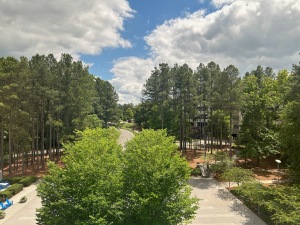
I’ve been to the Research Triangle several times, but this is the first time I’ve set foot on this campus. I’m participating in a faculty seminar that encourages civil discourse in our classrooms. What a good idea! At Amherst College, even at the height of the Vietnam War, I vividly recall very strong opinions but no uncivil behavior. There was definitely civil disobedience, but it was respectful.
As faculty participants, we come from institutions of all types across this country. I’ll be looking forward to learning from my colleagues.
My new book contract…
I’m working on a book about becoming a scientist who is also a public intellectual. Kind of the story of my professional life since I ‘graduated’ from being a postdoc at the NIH. Yesterday, I signed a book contract with Elgar. I’m really jazzed about this project and I’ll keep you up to date as things progress.
Last day of classes: Spring semester
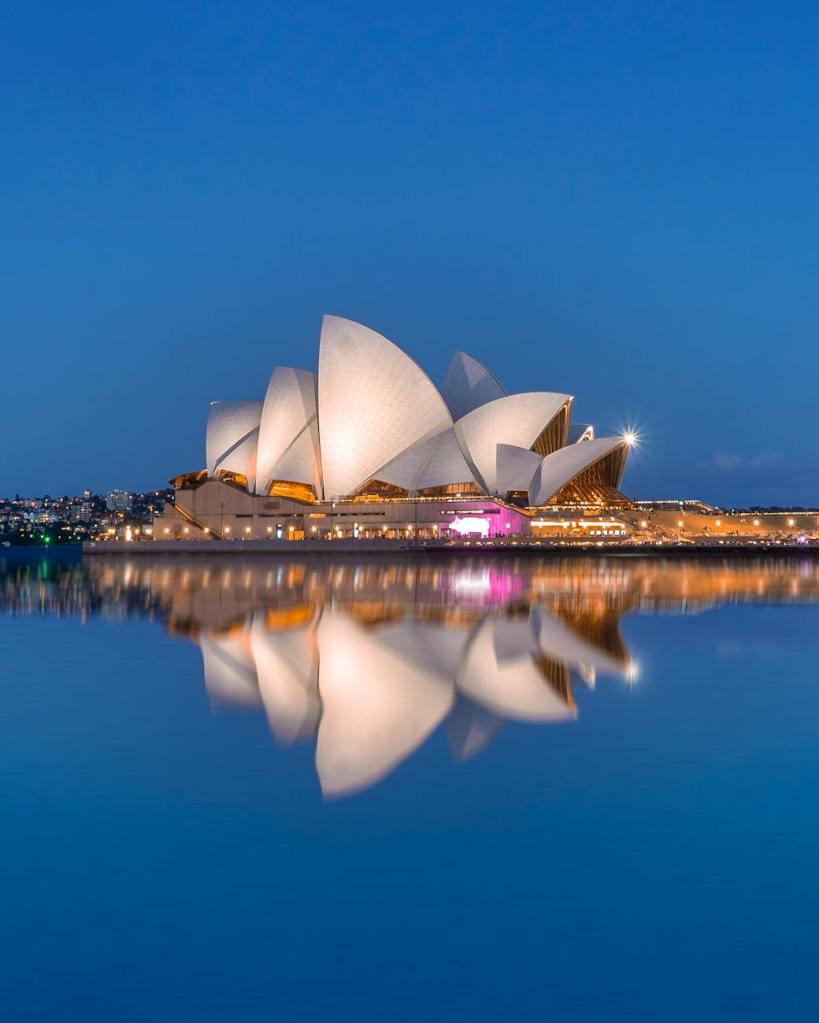
This was a particularly enjoyable semester for me. Lots of very smart students (both grad and undergrad), and I learned some new tricks for teaching more effectively. George Mason has a new provost and a new logo. On the latter, my students weren’t too enthusiastic. But I think we got a good one on the former. I’m pleased to see our leadership team’s roots in the University of California system.
My new book project about scientists as public intellectuals is moving forward at full speed this summer. I’m also looking forward to revisiting Australia (see photo).
The pleasure center goes downscale…
In Dopamine Land, here. This almost seems like the stuff of SNL, but no, it’s real and coming to Washington, D.C. I’m not sure what my Dad would make of this, but it shows we’ve come a long way since an experiment at McGill University.
 Discoverers and Discoveries