Steven Brill’s book: Tailspin

I am reading it now. I did not realize that he would write about two of my favorite higher education institutions: Amherst College and UC Irvine, both in the context of bridging the moats that currently exclude many (if not most) from the benefits of 21st century American meritocracy. Amherst, because its former President, Anthony Marx, put in place a program to actively reach out beyond the usual legacies and elite high schools in its recruitment of freshman. UC Irvine, because like my own institution (George Mason), it has focused on educating bright students who are from under-represented backgrounds. And by that I mean backgrounds that historically have not had access to the top-flight resources that a UC education is all about. Reason to be a bit optimistic.

On the other hand, Brill really focuses on the legal and financial ecosystems, what he calls the Casino Economy. I wish he also wrote more about scientists and engineers in the same context of the American meritocracy.

How Valium works: in detail

This week, in Nature, the structure of a very important neurotransmitter receptor was revealed. The receptor, the GABA-A, allows the functioning nervous system to avoid the “brain super storms” that constitute epileptic seizures. When the neurotransmitter, GABA, binds to GABA-A, in synapses, in acts to inhibit neural activity. The inhibition of neural activity is critical to brain function because the brain can then compute in a very meta-stable state, quite like a marble on the edge of a saddle. That is one of the key design features of our brains that perhaps can be reverse-engineered someday for more power high performance computing a great energy efficiency.

It’s not surprising then, that the GABA-A receptor is also the target for some key drugs, like Valium and alcohol. Both of these drugs act to inhibit brain activity. When taken together with opioids, the effect is one of synergy and the effects can be deadly.

The paper by Zhu et al. used a technique called cryo-electron microscopy to reveal the detailed structure of GABA-A “frozen in the moment” of binding to a Valium analog. This is very important because it may reveal design hints at how to build a future Valium-like drug that relieves anxiety without sedation.

Humans are naturally curious….

Of course, we know that. And as a scientist, it’s a wonderful thing to get paid to be professionally curious. But too often, scientists and journalists, responding to the siren song of reductionism, act in their own worst interests and over-simplify what is inherently complex. Here is a wonderful piece  by Amanda Ripley on her own experiences with this challenge in the context of the charged political times that we are currently experiencing. I was happily surprised, mid-way through the article, to find my colleague Sara Cobb quoted extensively.

Rules of Life: James Lovelock version

So there are many very naive ways of looking at the Gaia hypothesis–and those have engendered a lot of “antibody-response” over the years from the scientific community. Here, Bruno Latour, the French philosopher lays out Lovelock’s scientific perspective on the biosphere in lay language. I think it’s really quite a good essay–and it would be the proper way to talk about it with a lay stakeholder such as a member of Congress. It reminds me of Harold Morowitz’s views on the subject.

Trees under duress…

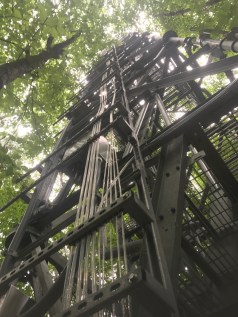
I really like trees. When I was coming to the end of my time at NSF, I got interested in the local urban forestry commission. When I see mature trees come down in my neighborhood due to in-fill, I see a distinct loss. Those trees provide shade in the summer and  a nice windbreak in the winter. Trees are also extremely important to the health of the planet because they fix carbon. According to this paper in Nature, they account for approximately 45% of the terrestrial carbon stocks. But the paper is worth reading because it reviews how trees respond to the stress of droughts…of which there are likely to be a lot more in the future. What’s interesting to me is how trees respond to stress through a variety of mechanisms that are truly multidimensional. But…eventually they reach a threshold point where the mechanisms of homeostasis break down and mortality ensues. When this happens, it can be a mass-event with thousands of hectares dying at nearly the same time.

France and a new super R1 university…

From Inside Higher Education, here. Money quote:

Five grandes écoles (leading French universities) should be formally merged to form a Parisian science and technology university emulating the likes of the Massachusetts Institute of Technology, the French government has been told.

I think this quite a cool idea. And fits with President Macron’s recent interest in investing a lot of new money in science. Post-Brexit, France has a real opportunity in building a science powerhouse.

Broader impacts (NSF specific)

I thought today I would write down my thoughts on how I define broader impacts (BI) from an NSF perspective. First some background and a caveat: BI is one of two criteria that an NSF grant proposal is evaluated by (the other is intellectual merit). BI arrived at NSF as a criterion in 1996, but the notion really goes back to Vannevar Bush’s arguments for US R&D investments after the Second World War. You can read this in his report,  Science The Endless Frontier, a response to a letter from President Roosevelt.  And the caveat: I’m no longer with the NSF. But I was asked about this a lot when I visited panels and generally my response was as follows….

First, probably the most important BI from my point of view is to communicate the intellectual merit of the proposed science in plain language that the lay public (and especially Congressional stakeholders) can understand.  Even the title of a proposal can be thought of as part of this kind of BI. Far too often, proposers fall back on the pithy titles that are both humorous (to colleagues) and grab the attention of journal editors at places like Science or Nature. Bad idea. From the taxpayer standpoint, the case for the science needs to be sober and cogent.

But this notion of communication extends to the entire BI component of the proposal: a central broader impact is that the general public understands why the proposed science is worthy of investment. So public science communication as part of the BI is an extremely worthwhile activity–as long as it scales. What I mean by this is that if you are communicating the intellectual merit of your science in lay language, make sure to use a medium that reaches a lot of people.

Another excellent BI is to broaden participation (BP) in scientific research. Under-represented minorities and women are often discouraged from careers in science during K-12, but also later during undergraduate training. BP activities that are integral to proposals are definitely responsive to the BI criterion. But here again, they have to scale. Often proposers make the mistake of prioritizing novelty of approach at the expense of scale. If your institution is already actively and successfully engaged in a BP activity, consider, aligning your proposed BI to what is already on-going at your campus. Not only is that efficient use of scarce funds, but it also has the advantage of scaling beyond your own lab or field site.

Finally, understand that the basic big idea behind BI is that scientific research can have dual use: it can increase our knowledge about the universe around us and it can benefit society. BI is about explicitly making that connection clear.

Counting action potentials

A very interesting (non-firewalled) paper by Chamberland et al in PNAS reveals a new kind of transfer logic for brain cells. The neural circuit is the first synapse in the so-called hippocampal tri-synaptic loop, an area of the brain that I’ve been very interested in from the standpoint of my own research. The usual suspects for informational transfer between neurons at the synapse are either frequency or timing encoding of action potentials. Here the author’s demonstrate a new type of encoding such that the post-synaptic neuron, a CA3 pyramidal cell actually counts the incoming number of action potentials to determine (decide) if it in turn, will fire an action potential.

Why is this important? How information is gated in brain circuits is crucial to how they compute on information (just as it is for non-biological digital computers). If we want to understand (from a reverse-engineering standpoint) how human brains do the cool things they do, then we have to be on the look out for phenomena like the one described here, because therein lies a clue to brain computation.

I’ll just add, that this neural circuit, the hippocampus, turns out to be crucial to learning and memory–particularly the kind called episodic, or what I describe to my students as “the movie of your life”.

AI and Video Gaming

Today’s FT has an interesting article(behind paywall) about AI being deployed into the video game space after its success at Chess and Go. What interests me here is that such video games are more open ended and ‘noisy’. They typically don’t have compact rule sets and strike me as capturing more of the flavor that smart machines are going to encounter in the real world (say when they are autonomously driving on the Washington DC beltway). Of course, the typical algorithm right now involves reinforcement learning and the AI plays against itself. That’s perfectly sensible in a gaming environment, but not really applicable to autonomous robot roaming out in the wild.

There’s a different approach out there and it’s based on reverse-engineering the brain processes that sub-serve hu man child language acquisition.  The key idea is that human children acquire language with great ease and not a lot of reinforcement. We know quite a bit about the neurobiology of mnemonic function, both at the molecular level and at the neuro-algorithmic level. That this existence proof manifests so saliently suggests to me that this is where the next paradigm is going to be revealed.