
There’s this op ed in today’s NYT by former Secretary of Defense Perry and Tom Collina. It’s worth a read because it’s a no-brainer in my opinion and would make the planet a lot safer. The notion that one individual should be trusted with the power to kill the biosphere of our planet is a bad one. Shame on Harry Truman for claiming it.
AAUP
That stands for American Association of University Professors. They are the collective bargaining unit for many of my colleagues across the country at schools where the faculty are unionized. Not here at George Mason, but still the local chapter is very active. Yesterday, after more than two decades at my university, I attended my first AAUP event (virtually of course). It was a very positive experience.
Why? First, it’s heartening to have an organization that exists to protect your role in the labor force. At yesterday’s meeting, there were conversations about COVID19, protection of faculty intellectual property and work-load expectations. You don’t get that stuff so much at faculty meetings. Or at least, when there are administrators in the room, it’s a very different tone.
Second, AAUP’s primary historical role has been to protect the idea of academic freedom in American colleges and universities. This is why tenure came to be in the first place: to protect faculty from being fired because of their political views or their scholarship. As a tenured faculty member, this is something I value a lot.
I remember hearing about the organization from my faculty member parents both at Michigan and Caltech. They were both very enamored with both the idea of a faculty union and its practical day-to-day function. I think I am also.
What would SARS-CoV2 do inside the brain?
The paper Nadine Kabbani and I wrote in March/April got more traction today with this report in the FT (behind their firewall). Note that this latest original manuscript is actually still out to peer review at Altex, so please treat with caution.
But if Brain COVID19 were a thing, what might be going on? First, I think that the anosmia symptoms are pretty important here because olfactory odor receptors are actually part of the brain–the just hang out in your nose. If the virus gains access to the brain via those cells, then it potentially could use the wiring system of the nervous system as a superhighway. Second, the brain is actually separated from the rest of the adaptive immune system by the blood brain barrier. So virus in the brain can just chill–it’s not under constant attack from immune cells. The virus that causes Shingles actually does exactly this: after initially infecting a person (giving them Chickenpox), it awaits in neurons, for the right moment to reactivate. When it does, it produces the disease we know as Shingles.
What causes the reactivation? We don’t really know. And we have yet to see what a reactivated SARS-CoV2 might look like. I really hope we get a vaccine soon.
The 54…
My colleague and friend T, sent me this link to a Jeff Mervis piece in SCIENCE. Apparently 54 scientists have lost their jobs as a result of essentially hiding their connections to China while taking funding from the NIH. As with other funding compliance issues (for example protection of human subjects), violations can be career-enders. I am quite sure that other US funding agencies are taking a close look at their PI’s also.
The key issue here for me is not declaring a conflict of interest. If they had, then if I were on the enforcement side of the equation, I’d be looking at ways to manage that conflict. So if I were to hand out advice, it’d be to disclose as much as you possibly can to a funder all the time about anything that might have questionable optics. I suspect these 54 individuals would still be gainfully employed if that had pursued that approach.
That said, I’m disturbed by the implied national distrust of Asian scientists. The use of ethnic background as a trigger for suspicion has a long and sordid history, both here in the US and around the globe.
I’m also saddened by the de-coupling that’s occurring in science collaboration between nations–particularly between the US and China. That’ll be a loss for everyone because the really big science questions can’t be solved in isolation–Manhattan Project not withstanding.
What does the future hold?
Almost everyday I get asked, by dint of being a scientist, what’s going to happen in the future. Recently, these questions are often through the lens of the pandemic. And like mostly everyone I know, I do spend time looking at the various dashboards, trying to glean some picture of where things are trending. But, like everyone else (truly all of us), no amount of modeling is going to reveal the future. It’s unknowable to us until time passes and we are there looking back.
What we can do however, it act wisely. We can act now to enhance our resiliency. Wearing a mask to protect others involves operating under the assumption that we are asymptotic COVID19 positive. That may not be true, but wearing a mask under that assumption protects others. Likewise, if others reciprocate, it protects us.
We can act with our vote. Across the democracies, the act of individual voting is both a leap of faith (what difference does my one vote mean?) and, at the same time, the main way we can produce positive social change (through the emergent sum of all our votes). Please plan to vote. That’s something you can do that’s far more effective than looking at the various epidemiological models.
Origins of Life: RNA or DNA or both?
I have written about this scientific question before. How did DNA (more stable than RNA) come to be the primary information-store for living things?
Because we don’t have access to the early Earth, the question of how life arose on our planet remains obscure. But here is a new experimental result. The authors address the question of how RNA and DNA came to exist. These are of course the polymer molecules that store the information required to construct “Life”. The blueprint, if you will.
The elegant wet-lab experiments show how the letters of the RNA and DNA alphabet can be synthesized with the correct handedness (chirality for those with chemistry backgrounds) under conditions thought to exist on our Earth at the time that life originated.
The article is in Nature, so it’s behind their firewall. But the abstract is free to read.
Using data science to find out when COVID19 started…
This preprint is being discussed heavily today. The upshot: traffic and search engine activity suggest Wuhan early disease activity in Fall of 2019. Very clever approach.
Your theory and mine….
One of the major problems for scientists, when they communicate–whether with the public or with their colleagues–is language. Even within disciplines, a word can mean different things to different scholars. We tend to label that whole set of issues somewhat trivially by telling our trainees to avoid using “jargon”. But the problem is larger than that.
An example: the word “theory”. For the general public (and many of the direct stakeholders for science), the word means “best guess”. In a TV detective drama, the hero has a theory for who committed the crime which may or may not be correct. For scientists however, theory has a different meaning altogether: it means something that has been settled over time by numerous experiments from independent scientists–the Earth orbits around the Sun, is “theory” in the language of scientists. It’s been tested experimentally and by observation many times; the answer has come back consistently; the world of science has arrived at consensus that this statement is fact.
So when scientists communicate with the public and use their version of “theory” for talking about something like “evolution” or “climate change”, the public doesn’t hear what the scientist thinks they are hearing. Instead, what is heard is that: this is my idea of what is true. It may be correct. It may not be. But it’s my best guess.
That’s a big problem.
So what language do scientists use for the public’s version of the word “theory”? I suppose “hypothesis” covers part of it, but that word, in science, also has the implicit requirement that the hypothesis be testable using experimentation. Lots of physicists are enamored with String Theory, but it’s not really a hypothesis because there is no current way to really test it.
And by the way, String Theory is a scientific misnomer because it is “theory” in the public sense of the word, not the scientific operational definition.
In any case, what passes for the scientific version of the public word “theory” usually goes into the Discussion section of a scientific paper. That’s the part of a publication where the scientific “detective” is telling what she thinks is happening–and it may or not be correct.
In general you can trust scientific data. But what goes into the Discussion section, that’s just “theory”. In the public sense.
Hantavirus and climate change
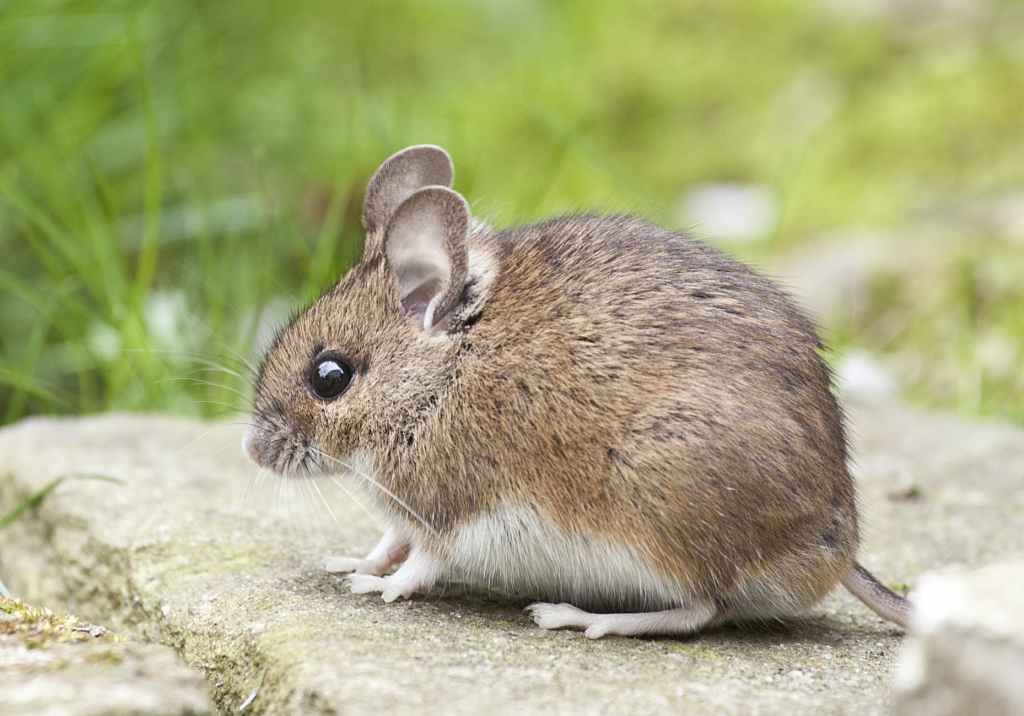
When I first came to NSF to head up the Biological Sciences Directorate, I learned about a very interesting connection between climate change and human disease. Now hantaviruses are carried by rodents. In the Western Hemisphere, they cause serious cardiopulmonary disease in humans. In the Eastern Hemisphere, these viruses result in haemorrhagic fever with renal syndrome. The point is that their rodent hosts as migrating as the climate changes, so there are places in the US that now have the human disease that previously didn’t. You can read about that here.
Why am I writing about hantaviruses? Because it is a clearcut example where a viral-borne diseases affects a new, previously naive human population as a result of climate disruption. When species that act as reservoirs for viruses change their habitat to escape a warming climactic temperature, they act as vectors. Just as significant to public health as infected humans jumping on commercial airliners. For more on this notion in the context of COVID19, see here.
Anne Applebaum’s essay in The Atlantic
I normally don’t write much about politics in this space, but I do need to provide the link to one of the best essays yet about our particular time in history. It aligns well with my own particular response to the election of our current President when I left NSF in January of 2018.
 Discoverers and Discoveries