
http://www.ustream.tv/flash/viewer.swf
Free live streaming by Ustream
Neuromarketing versus Focus Groups
I’ve always had a very healthy skepticism about the use of focus groups in any kind of marketing exercise. Somehow, the entire process of having a group of consumers engaging in supposedly genuine reactions to products, brands and packaging–all in front of a one way mirror seemed like Kabuki theater.
And partly that’s because I’ve been in a few–from both sides of that mirror.
On the other hand, the more I learn about the use of fMRI, EEG and the like to supposedly engage in neuromarketing, the more I fear we’re on even thinner ice. Currently, even with fMRI, we’re not able to image at the proper spatial or temporal scales to pick up what Donald Hebb called cell assemblies, the biological representation of concepts (like soda pop for example).
If you are interested in learning more about these issue with neurotechnologies, please consider attending the Krasnow Symposium on June 19-24 here at Mason’s beautiful Inn and Conference Center.
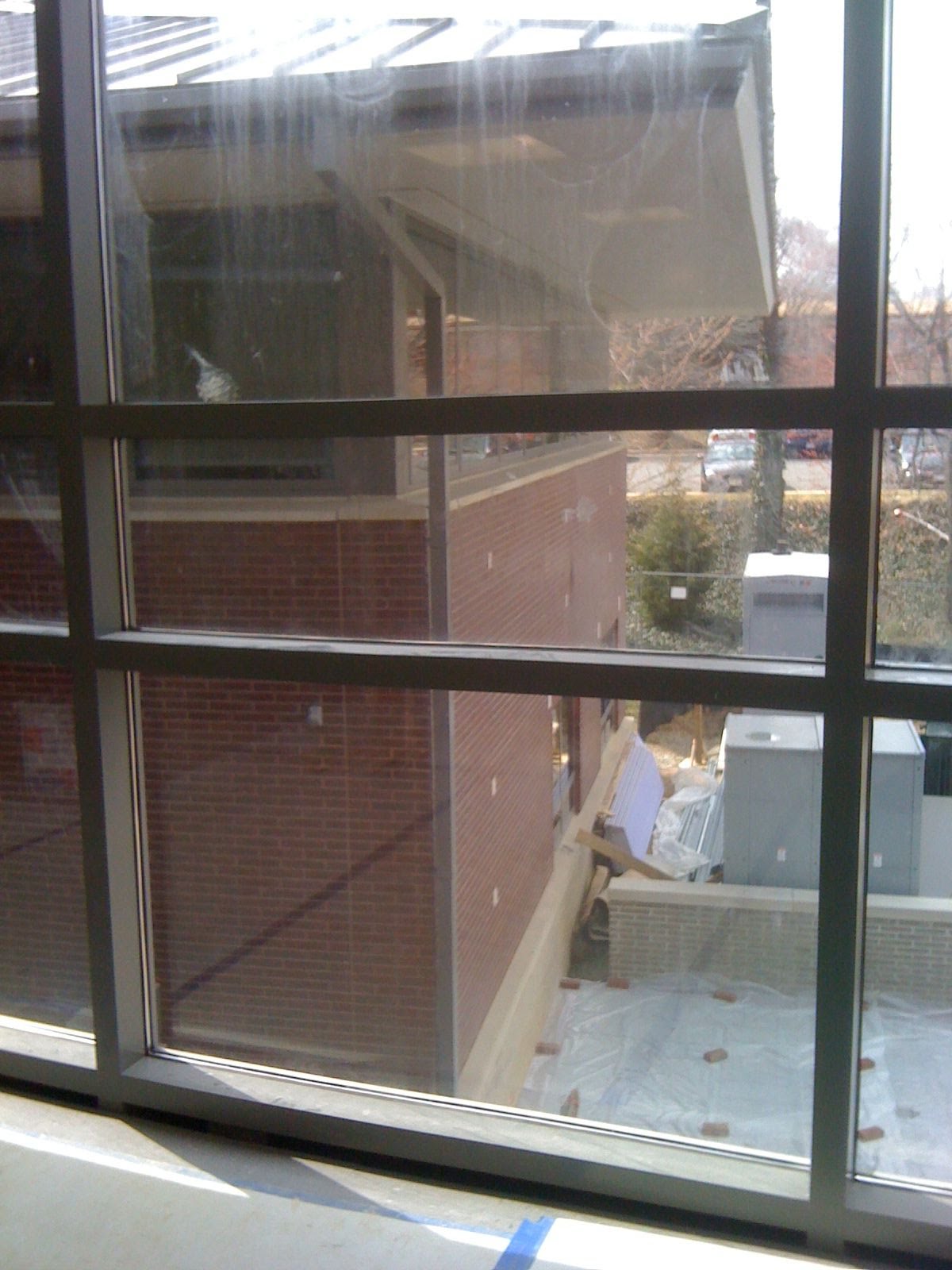
Krasnow Institute for Advanced Study: Expansion Project nearly complete
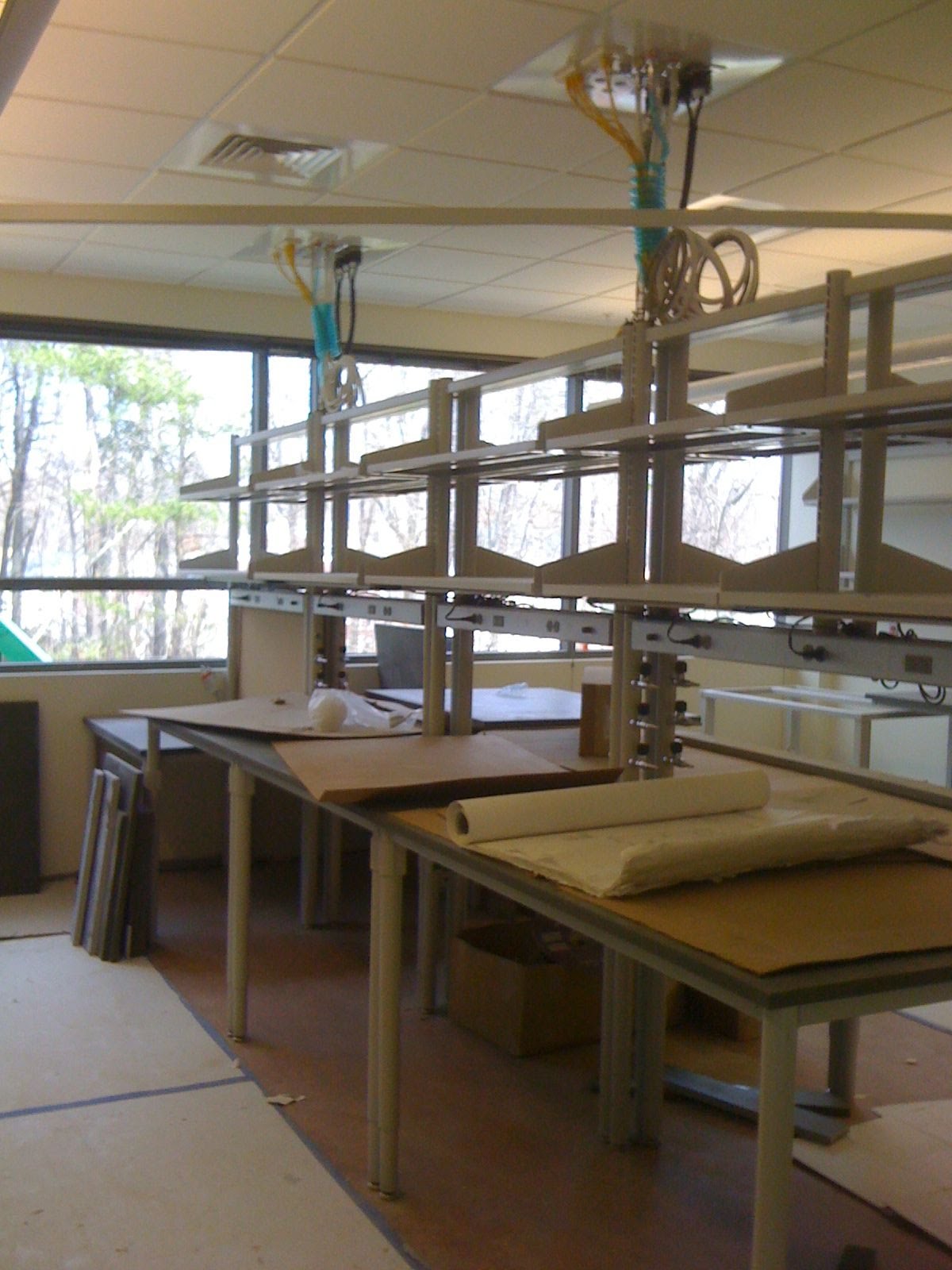
Here are some photos that I just took from Krasnow’s new Phase II wing, which as you can see, is nearing completion. The top image is one of our new wet labs, the bottom is looking out from one of the break-out areas towards the legacy building and our Associate Director’s office on the corner.
A special thanks to our design team including George Mason lead, Mike Herman, and the Whiting Turner construction company.
Finally, thanks go to our PI’s for putting up with all the noise and dust over the past year.
We are nearly there!
Human loss: the mind’s view
As the very sad news comes in from Japan, it’s worthwhile to consider how humans cope with loss. The manifestation of grief eventually arrives to each of our subjective personal experiences. This month two very close professional colleagues lost their spouses to cancer. Once the ceremonies and family reunions are over, the human mind (and brain) is all to often left alone in a sea of grief-inducing neurochemicals.
When mass tragedy hits, as it has in Japan, entire societies can enter this state; it’s as if the grief brain-state is cooperative (to use the biochemical metaphor) across individuals.
The human and societal grief-induced behavior pattern can be catastrophic. But often it is not. Individual humans are remarkably resilient and so are strong societies, such as the Japanese. Over time, the brain stabilizes, families and nations can come together, and life goes on.
We hope as much for our friends who have recently suffered loss and to our colleagues in Japan.
Yes, Advanced Studies is different today….
Advanced Studies has a new look and feel as of today–hopefully a bit cleaner and less cluttered. In sympathy with those who produce slide-decks for talks with similar aesthetics.
Taking university-developed IP to market
A very worthwhile piece in today’s NY Times business section here.
Money quote:
Give a few V.C.’s access to the technology deals. Let them raise some capital and invest it shrewdly. The V.C.’s become rich. And if the deals are done correctly, the schools share handsomely in the riches.
Earthquake in Japan
I checked in with colleagues in Japan today and was relieved to hear so far OK. Our condolences go out to the victims of the quake and Tsunami. And of course, we watch with concern a nuclear power plant in distress.
Chernobyl as a biological experiment
Here‘s a fascinating account of what the exclusion zone around Chernobyl is like these days. There are two interesting interacting “dependent variables”: the removal of human beings and the radiation. Both are interacting.
Daffodils and Dentate Granule Cells
The first daffodils are out here in the Washington DC area, their shape always reminds me of dentate gyrus granule cells, which in rodents, at least, are born throughout the individual’s lifetime, sprouting up anew, just like the jonquil.
There are many hints, but no overall deep understanding of what’s going on with neurogenesis in the rodent hippocampus. Somehow, the new cells have to integrate themselves into the existing tri-synaptic network without screwing things up. Or at least, that’s what it seems that they do.
Further, there are tantalizing clues that what goes on in rodents may also take place in our human brains. And that human neurogenesis in hippocampus might correlate with stress.
I’m always amazed at how the daffodils when they emerge from the winter mud, do so in a somewhat orderly way, so that when they are all in full bloom, you can view the seas of yellow blooms along the Rock Creek Parkway, previewing the tulips which will follow.
Tyler Cowen’s new e-book
It’s The Great Stagnation and the Amazon link is here. The basic thesis is that during the 19th and 20th century we (meaning the US) plucked virtually all of the “low hanging fruit” that would increase GDP and we’re just stuck until some serious innovation takes place–innovation that can actually produce revenue and get people jobs (the Net doesn’t do particularly well at either of those).
I’m still reading the book, but couldn’t help a blogpost about one of his prescriptions for fixing things: increasing the status of scientists. Tyler knows full well that I’m biased on this point, but I couldn’t agree more.
I believe that if we’re to see innovations that will make a difference, they are going to come from our investments in basic and applied science. And, to some extent, they will be serendipitous. But, like electricity and railroads, they will get us on the move again.
My top guesses:
- Energy
- Public health
- Privately funded exploration and exploitation of the solar system
 Discoverers and Discoveries