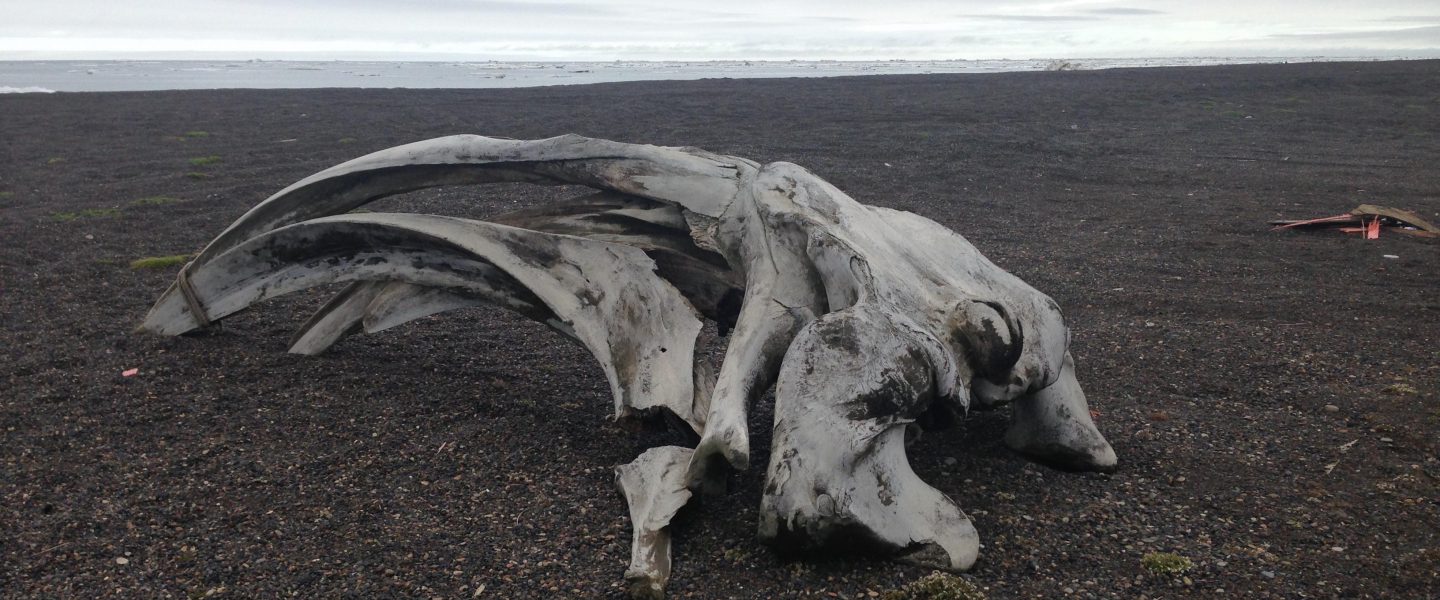
Winter in Woods Hole


I’m in Woods Hole this morning for several meetings. Winter here is a strange combination of activity (the scientific institutions are year-round activities) and utter peacefulness (the beaches are essentially empty).

Yesterday, on my way here, I stopped in Cambridge for a late lunch with my sister, who is a psychiatrist, and we had a long conversation about where medical education should be headed in the coming years? What changes can we expect in the curriculum? And given that medical students probably need to learn some entirely new things (think biomedical engineering, medical informatics, nanotechnology) how would one incorporate the new items and the old, in the same amount of time? There aren’t easy answers to this, but it’s entirely fascinating.

Jim

Winter not done with us yet

It’s snowing outside my Arlington Virginia house…just a stop light from the DC line and the Potomac River. Snow is always preferable to the “wintery mix” that really means ice…which is what we get often in these parts of the US. I’ve been out shoveling the walkway but it looks like that might be a losing battle at this point…the stuff is coming down very hard. Nevertheless, I can still hear the jets taking off from Reagan National Airport–which is good because tomorrow I’m headed for Woods Hole, taking the US Air shuttle into Boston.

Boston is about 75 miles north of Woods Hole, and I’ll be driving down after spending the afternoon at my sister’s house in Cambridge. Hopefully it’ll all be plowed snow and I’ll have an easy time of it.

As for Woods Hole and the MBL ? It’ll remind me of the winter I spent there in 1979-1980, quiet, beautiful and very much full of the sea. I’m there for a meeting with the journal’s staff and a meeting with the MBL director.

Jim

George Johnson on Douglas Hofstadter’s new book

George is a super accomplished science writer and we both share a close mutual friend. Here he reviews Douglas Hofstadter’s new book in The Scientific American.

Money quote:

Think of your eyes as that video camera, but with a significant upgrade: a mechanism, the brain, that not only registers images but abstracts them, arranging and constantly rearranging the data into mental structures–symbols, Hofstadter calls them–that stand as proxies for the exterior world. Along with your models of things and places are symbols for each of your friends, family members and colleagues, some so rich that the people almost live in your head.

Jim

Another PhD

My student passed his defense with flying colors today. Kudos to him on a major achievement. Now (actually following the various bureaucratic forms that must be filed) he joins the world of neuroscientists, his “union card” in hand. And yet, the challenges ahead for him, and the other newly minted science PhD’s are substantial. First to find a rewarding post-doctoral fellowship and a new mentor, and subsequently to begin to formulate scientific “independence”–something that is hard to define, but that we all know when we see it.

Jim

A thesis defense and management styles

Tomorrow one of my students will defend his dissertation and hopefully transition to the community of doctoral scholars. I’m looking forward to it. Thinking back on his thesis work with me, my mind goes back to the project he was working on at the beginning of his pilgrim’s progress and how massively it has evolved over the course of the work. That’s the nature of science, you can’t predict how it will play out. How one experiment that doesn’t work leads to a new experiment that does, but gives you a totally unexpected result and forces you to change directions.

Which bring me to the topic of management style. How is one to manage science given the challenges predicting course? Should we look to the strategy of the day-trader or alternatively play science as one might play poker (it doesn’t matter if you have the best hand as long as you win what’s in the pot). I reject both of these approaches. It seems to me that the best management is that which creates an environment that is likely to produce some successes (think bacterial cultures on an agar plate). And then, I would suggest to step back and watch the experiment unfold. Unfortunately that’s very difficult.

Jim

Digging out

It’s been a couple of days to get things moving again after the storm, but we’re making progress. At the same time, I managed to screw up my home directory on my macbook, so I spent much of yesterday reconstructing the account–which is now fine. So there are a couple of fine excuses for the sparseness of posting.

It has been extremely busy however. We’re working on a reconfiguration for the various neuroscience programs that will put the Krasnow Institute in a more central role academically. At the same time we’re now preparing to make offers in our three faculty searches. All of this has been going on the last 48hrs using Treos, Blackberries and home networks–we’re not very good at dealing with the winter weather here in Washington.

Jim

working from home

We're getting one of the mid-Atlantic's typical weather events today: a combination of various winter precipitation mixtures that is a result of having an ambient temperature of right around freezing. Worst case and everything turns to ice, the power goes out for several days and cars spin like pin-wheels. Best case, it stays all rain, albeit the very cold miserable variety. Middle case, we get several inches of snow. Impossible to tell right now, but I'll be working from home today.

Which will give me time to read some articles and necessary time to work on a very complicated budget for next academic year.

Jim

Patricia and Paul Churchland profile

It’s behind their subscription wall, but you can just go out and pick up a copy of The New Yorker at your local newsstand: Larissa MacFarquhar’s wonderful profile of Patricia and Paul Churchland (a marriage devoted to the mind-body problem).

In the meantime, a reminder that Patricia will be at Krasnow in May for the “Decade of the Mind” symposium.

Jim