Money quote from Joel Achenbach….
Ten years and $4 billion: That’s a reasonable cost. The evolution of the human mind is arguably the most important biological event in the history of our planet since the origin of life itself.
Jim
Money quote from Joel Achenbach….
Ten years and $4 billion: That’s a reasonable cost. The evolution of the human mind is arguably the most important biological event in the history of our planet since the origin of life itself.
Jim
Here’s a really interesting piece from Cnet News about a rather strange Russian Institute that claims to “manipulate the subconscious minds” of terrorists.
Money quote:
SSRM Tek is presented to a subject as an innocent computer game that flashes subliminal images across the screen — like pictures of Osama bin Laden or the World Trade Center. The “player” — a traveler at an airport screening line, for example — presses a button in response to the images, without consciously registering what he or she is looking at. The terrorist’s response to the scrambled image involuntarily differs from the innocent person’s, according to the theory.
My students know I have a dim view of meetings in academia. My colleague Tyler Cowen has a different view.
Money quote:
Meetings also confer a sense of control. Attendees feel like insiders who have a real voice in decisions. This boosts their motivation to implement ideas discussed as a group. For this reason it is especially important to listen to the blowhards and the obstructionists, who otherwise would pursue their own agendas rather than support a common plan.
Jim
First, I’ll have my news regarding Decade of the Mind up on Sunday.
Second, I’ll try to get my slides up from my recent talk on the next five years at Krasnow. Also probably over the weekend.
I’ll also link to a couple of faculty job opening advertisements, also probably over the weekend.
Jim
Stay tuned for some important Decade of the Mind updates here. I’ll be announcing some substantive next steps to the May meeting.
Jim
From the NY Times on-line:
But last week Alex, an African Grey parrot, died, apparently of natural causes, said Dr. Irene Pepperberg, a comparative psychologist at Brandeis University and Harvard who studied and worked with the parrot for most of its life and published reports of his progress in scientific journals. The parrot was 31.
We send our condolences to Irene, Alex was a remarkable animal.
Jim
From PLoS via today’s Financial Times: Craig Venter’s genome revealed.
Money quote:
The study, carried out at his J. Craig Venter Institute in Maryland, shows that Dr Venter carries genes that may predispose him to Alzheimer’s and heart disease, novelty seeking behaviour and a preference for evening rather than morning activity. Never before has anyone revealed so much personal information in a scientific paper.
A reader from Washington State read my entry regarding Orcas at Lime Kiln Park on San Juan Island and reminded me of how amazing the Pacific Northwest really is. I was reminded by the reader, that the Hoh rainforest (another place I’ve visited) is another piece of the natural jig saw puzzle that makes that part of North America both unique and very much worth protecting.
Which brings up the notion of human brains acting in a stewardship role with regards to the rest of the natural biosphere while at the same time being an integral part. Sounds pretty difficult to me–and that may be at the nub of our current environmental challenges.
As I look out from my mountain top, north up the vast Shenandoah Valley, watching the bald eagles fly by, I keep coming back to the question of how an intelligent brain that has, over the course of time, developed the means to effect vast changes on the planet’s complex and dynamical systems, might get “too smart” for its own good. It’s worrisome, especially for a scientist, where the basic idea is to acquire new knowledge about nature.
Jim
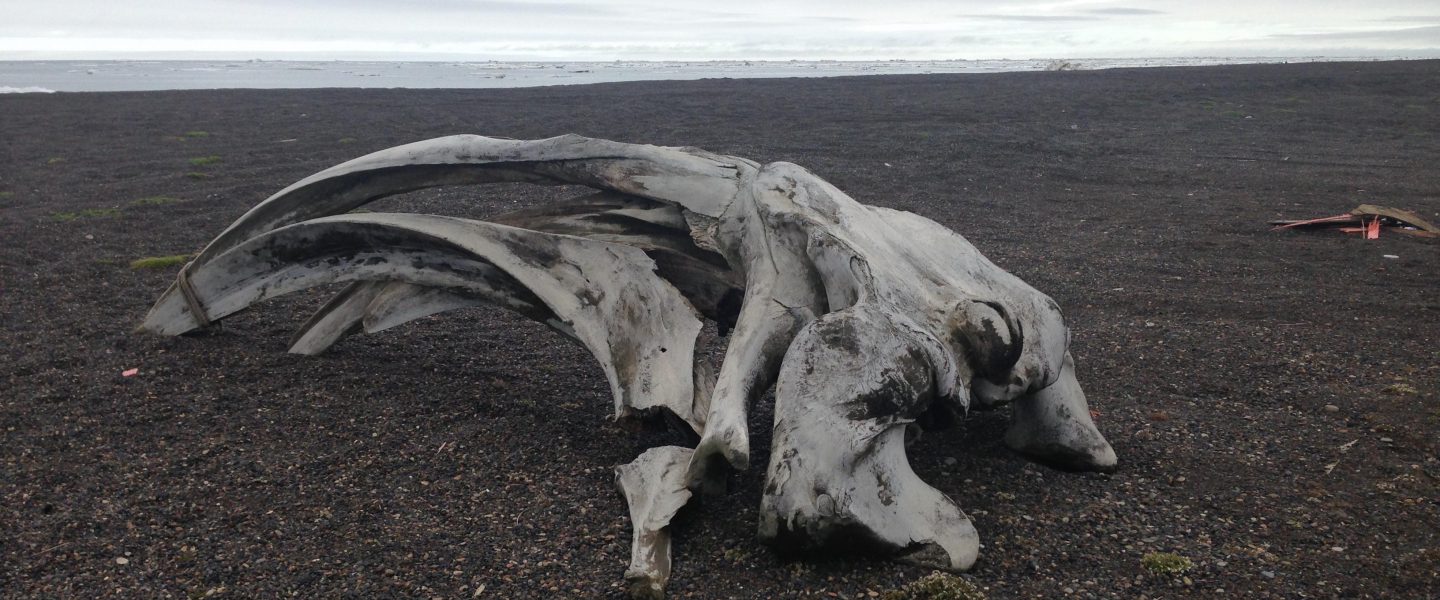
I’m blogging from the Great Apes Trust of Iowa. This morning, I got to watch Kanzi, a bonobo, demonstrate really quite incredible language skills, using symbolic touch screens. But for me, far more arresting is eye-to-eye contact with an ape. It’s very hard to put into the written word just what that feeling is like–my sense is that for a brain scientist that contact is qualitatively different: you have two intelligent creatures with different brains reaching out across the species divide. It reminds me of another time, long ago, when I had the experience of meeting up with a wild male orca (killer whale) on a rocky outcropping of San Juan Island near Friday Harbor Labs. Big big intelligent eye, small very vulnerable human not wanting to be dinner.
Jim
Today for my graduate class, we spent some time talking about the notion of a lab’s culture. I spent the first 1/2 of the class giving vignettes of some of the many labs I’ve been a member or close observer of. We spent the second half of the class in group discussion about which of the described labs was best for a grad student and which was best for the PI or lab chief. It was a very interesting and disparate set of answers.
What is lab culture? What defines the labs with really good cultures? I think it’s an open question.
From my perspective, it certainly involves a commitment to do excellent science. It probably also requires the ability to deliver on that commitment across the group. But also requires a certain tolerance for differences, for pressure and a certain group sense of humor that can bring the group together in a cohesive way that energizes the science.
Jim