Phase III Krasnow

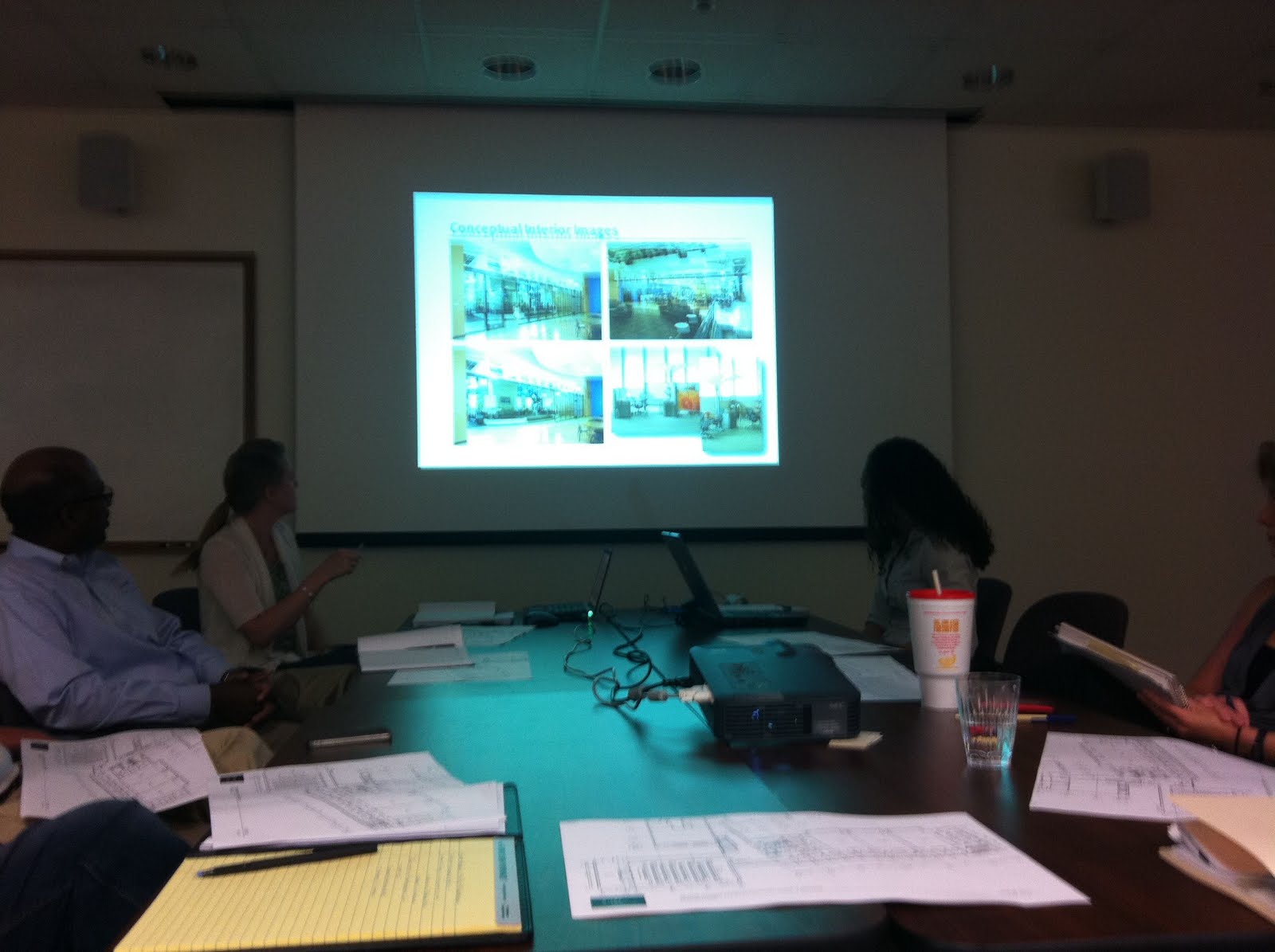
We had an excellent meeting last week on the Phase III expansion project at Krasnow. Phase III of the Institute will bring all of our satellite programs into our current 55,000 square foot facility by adding an additional 20,000 square feet to the south end of the current Institute.  The new wing will house our Center for Social Complexity plus two additional new centers, both of our academic departments and a medium-size auditorium.

When completed, the facility will serve as a magnificent home to the scientific program envisioned by our founders, pretty much exactly two decades after the seminal conference that got us started in 1993.

Rare Earth Elements–the mother lode at the bottom of the Pacific

The report in Nature Geoscience is here. The geopolitical significance could be large. China has been adopting a neo-mercantilistic policy with regards to these commodities for some time. They are ubiquitous in modern gadgets of all sorts and until we have adequate resource substitution, technological supply chains will depend on a constant supply. Right now, the supplier is largely China. According to this report, that could change.

Both an Institute for Advanced Study and an Academic Unit: redux

As an academic unit of Mason we are slowly maturing. I am learning that I am the one to whom distraught students finally turn when something goes really awry. Similarly, we are learning to factor the teaching load into our faculty evaluations. But mostly, we are learning what it means to architect and then nurture new programs. We have minted our first PhD’s and are well on our way to the same for masters degree recipients. We are part of the multi-year self-evaluation cycle at Mason called Academic Program Review and we are learning to work with rubrics as we evaluate student learning outcomes.

At the same time, an interesting challenge: we have to keep focused, not on incremental research findings, but on the really big discoveries, the ones that change paradigms. Which means, we need to have faculty members who can do both: the teaching intertwined inextricably with the research.

The Economist writes an epitaph for manned space flight for ever and ever….

It’s their cover piece from this week, here. I don’t hold a strong enough opinion on the future of manned space to argue their thesis one way or the other. I simply find it extremely problematical to extrapolate far into the future from present trends, particularly when dependent on a number of linked complex adaptive systems (e.g. geopolitics, markets, biosphere).

By the same logic, we should just give up on neuroscience, since the brain is so complex and our progress in understanding it, to date, so slow. I don’t think I’m a buyer on that proposition either.

One of our own….

Kudos to Professor Dan Cox, on winning the Virginia Academy of Sciences Highest Prize for original research. The story is here.

Dan’s Drosophila lab is one of the most exciting places at Krasnow and he’s been instrumental in building out our cellular imaging facility.