
The State of the American University

Anthony Grafton in the New York Review of Books reviews eight serious books on the current state of US higher education here.

Money quote:

Yet American universities also attract ferocious criticism, much of it from professors and from journalists who know them well, and that’s entirely reasonable too. Every coin has its other side, every virtue its corresponding vice—and practically every university its festering sores. At the most prestigious medical schools, professors publish the work of paid flacks for pharmaceutical companies under their own names. At many state universities and more than a few private ones, head football and basketball coaches earn millions and their assistants hundreds of thousands for running semiprofessional teams. Few of these teams earn much money for the universities that sponsor them, and some brutally exploit their players.
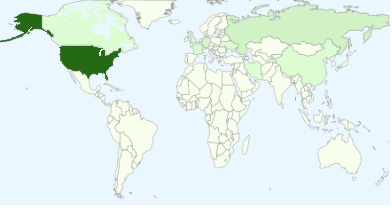
Nevertheless, aspirants from the entire world still gravitate here. Why? I’d like to think it’s because US colleges still offer a combination of the potential for real upward mobility along with the ability to chart one’s own curricular course.

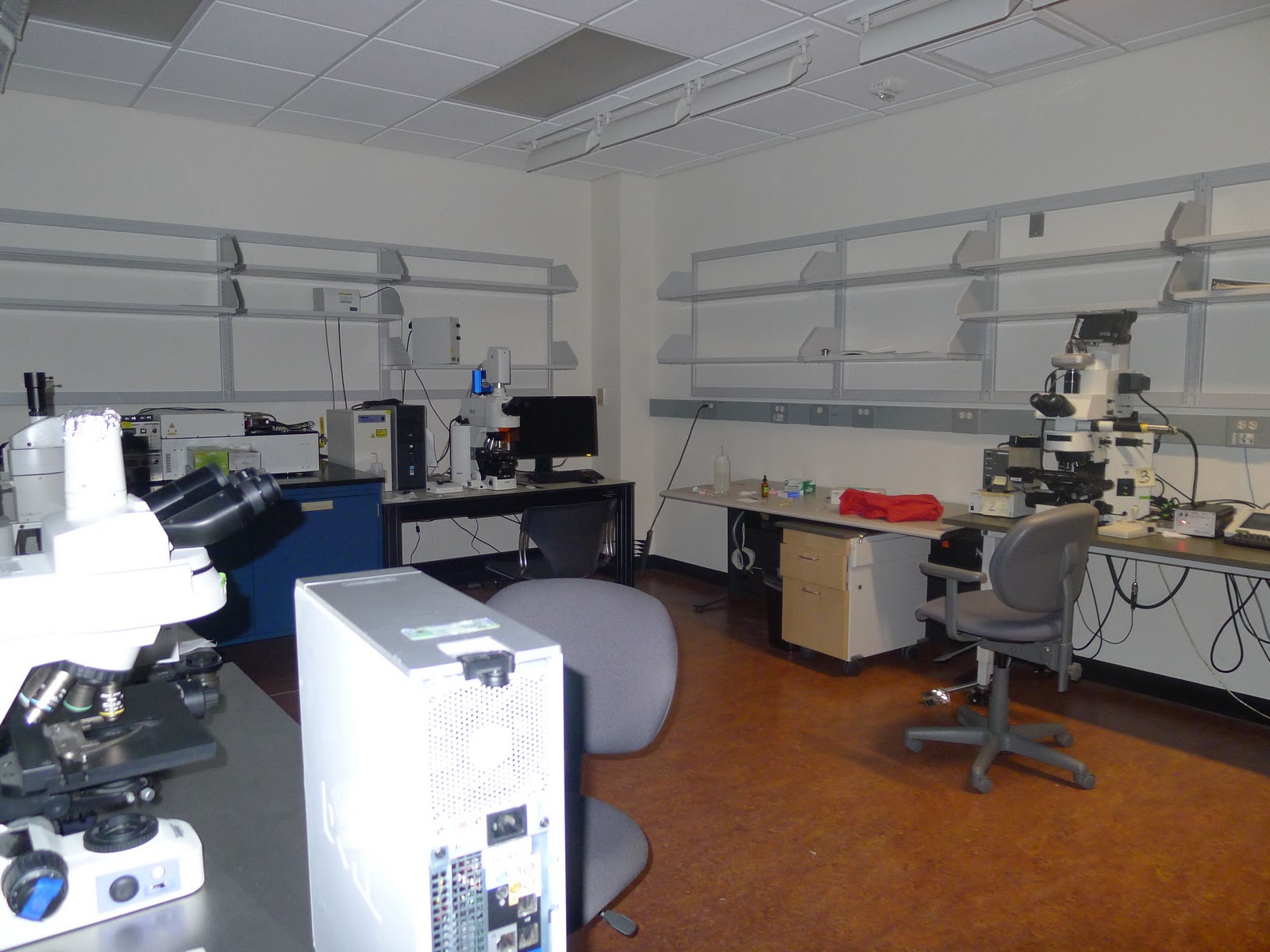
MICKI–Microscopy Imaging Core of the Krasnow Institute

Just opened in our new space. Our cellular imaging core. The facility is already being used extensively by several of our neuroscience labs, but it’s available for other interested investigators in the Washington D.C. area and includes confocal microscopy.

Cellular imaging is a complement to our existing non-invasive human brain imaging capabilities here at Krasnow. In my own research, I’ve used confocal microscopy to image in vivo, the translocation of protein kinase C following sea urchin egg fertilization. Here at Krasnow, cellular imaging is used for a variety of neuroscience models ranging from drosophila (fruit fly) to mouse.

For those interested in using MICKI, please just drop me a line.

The difficulties of the Eurozone…

The current challenges in the Eurozone have the potential to reach far out into global science, certainly beyond Greece and even beyond the EU. The reason is simple: Europe plays a central role in many “big science” initiatives (the obvious ones of course in particle physics and astronomy). But the EU also supports an enormous amount of very high caliber research in the life sciences through its Framework funding initiatives.

Above and beyond the funding of science, there’s also a critical mass of top notch scientists in Europe and the tendrils of their collaborations reach around the globe.

So we wish our colleagues across the Atlantic the best. All of science has a vested interest in the current Eurozone crisis being resolved positively and promptly.

Cultural neuroscience

This is a potentially very controversial term that I first learned about in Singapore, about a year ago. The notion is that culture has the ability to affect our neurobiology. This is not so far off from the question Nicholas Carr as asking a bit back–can Google make us stupid? Clearly, there’s a valid line of research on adult brain plasticity driven by our environment. My own research and that of many other colleagues completely supports this idea.

The above intriguing idea is whether a culture, in the anthropological sense, has the ability to influence brain connectivity above the between- and within-subject variability of a population?

Putting it another way, given the fact that any two of us (from the same culture) have differently wired brains, can our shared culture influence both of our brains in some measurable way that rises above the threshold of natural variance in the cultural group to which we both belong?

My gut sense is no. But as far as I can tell, there is no data out there to make a scientific case upon, one way or the other.

Note above all, that this is not the same question of whether population genetics can influence brains. Although without a doubt culture is an emergent of many brains, and the instruction manual for constructing those brains is in our genes.

But to learn more, next June in Ann Arbor….

Another terrific piece of Science from the Mosers

In the October 13 issue of Nature, here is the abstract. If you don’t have access to behind the firewall, the basic finding is a flickering of place field representation in the hippocampus when the spatial environment of the animal is shifted (teleported to use their word) instantly. This supports the notion that the collection of place field representations connected with a particular spatial environment represent neuronal attractors.

Enjoy!

No, we’re not yet at Mind Reading

This perhaps overly excited piece in the Economist got my attention. At it’s root are a series of studies that have come out over the past several years where machine learning has been used to “recognize” the signatures of concepts (like nouns) from many fMRI scans. Tom Mitchell’s work at Carnegie Mellon comes to mind.

While these are indeed exciting studies, the notion that we’re somehow at the threshold of ubiquitous “mind reading” and deception detection strikes me as far fetched. As an example, the concept of “banana” can surely be found in either an individual’s ground truth or a lie. While we might be able to pick out the brain activity signature of banana in both, we’d really have a great deal of difficulty figuring out which context was the lie.