
Richard Florida is wrong-headed

At least according to Mario Polèse here in City Journal.

Money quote:

The conclusion to draw from all this isn’t that cities can do nothing to promote economic development. It’s that they should avoid academic fads and quick fixes, which are no substitute for obvious policy goals like competently providing mandated services at reasonable cost, keeping streets safe, and not taxing and regulating away businesses—good governance, in sum, and even that comes with no guarantee to work.
Holidays in DC

As we head into Winter Break here at George Mason, there is a bit of time to sit back and reflect on the past semester: we saw the selection of a new President, the opening of some spectacular new campus facilities and an incredibly productive time for our science, both in terms of new research findings and teaching. I’m grateful to the entire faculty, staff and students at the Mason’s Institute for Advanced Study for what they’ve accomplished this Fall and look forward to the Spring semester.

In the meantime, I’m pleased to report that the traffic seems to be getting a bit lighter here as folks leave town. The weather in DC has been relatively balmy lately–as a native Californian, I’d love to see that trend continue through January and February.

Publish in high "retraction rate journals"….

From Bjorn Brembs via the London School of Economics site, here. Turns out that if you’re encouraged to publish in high impact factor journals, you’re also being encouraged to publish in high retraction rate journals.

Money quote:

This already looks like a much stronger correlation than the one between IF and citations. How do the critical values measure up? The regression is highly significant at p<0.000003, with a coefficient of determination at a whopping 0.77. Thus, at least with the current data, IF indeed seems to be a more reliable predictor of retractions than of actual citations. How can this be, given that the IF is supposed to be a measure of citation rate for each journal? There are many reasons why this argument falls flat, but here are the three most egregious ones:

  • The IF is negotiable and doesn’t reflect actual citation counts (source)
  • The IF cannot be reproduced, even if it reflected actual citations (source)
  • The IF is not statistically sound, even if it were reproducible and reflected actual citations (source)

In other words, all the organizations that require scientists to publish in ‘high-impact journals’ at the same time require them to publish in ‘high-retraction journals’. I wonder if requiring publication in high-retraction journals can be good for science?

Christopher Hitchens RIP

A really top notch writer and debater has passed. His Financial Times obit is here. Christopher Buckley’s New Yorker obit is here. Over the years, I always admired his ability to use reasoned argument as a means to advance his views–as opposed to tired emotional screeds that are all too common, especially in the blogosphere. So we’ll miss his voice.

Angel Cabrera

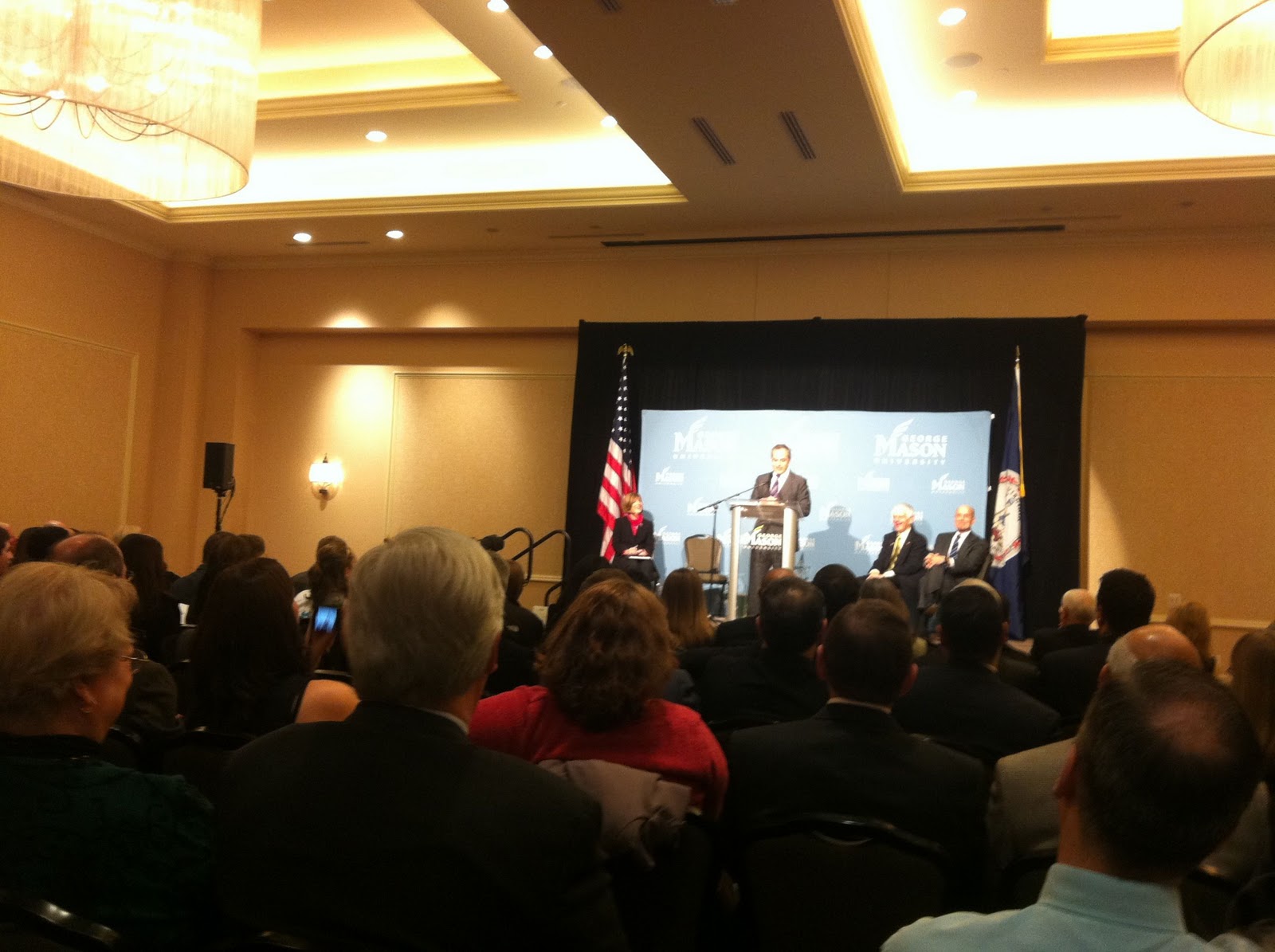
George Mason’s Board of Visitors announced the appointment of Dr. Angel Cabrera to be Mason’s next President in the last hour. The photo is from the press conference that just ended a few minutes ago.

He brings both incredible dynamism and experience to Mason most recently as President of the Thunderbird School of Global Management.

Born in Spain, he trained in Madrid as an engineer and then went on to Georgia Tech to get his doctorate.

Here is a recent You Tube video in which his passion for education is abundantly clear:

Mason will clearly continue its tradition of innovation under dynamic leadership. Dr. Cabrera will take office on July 1 of next year.