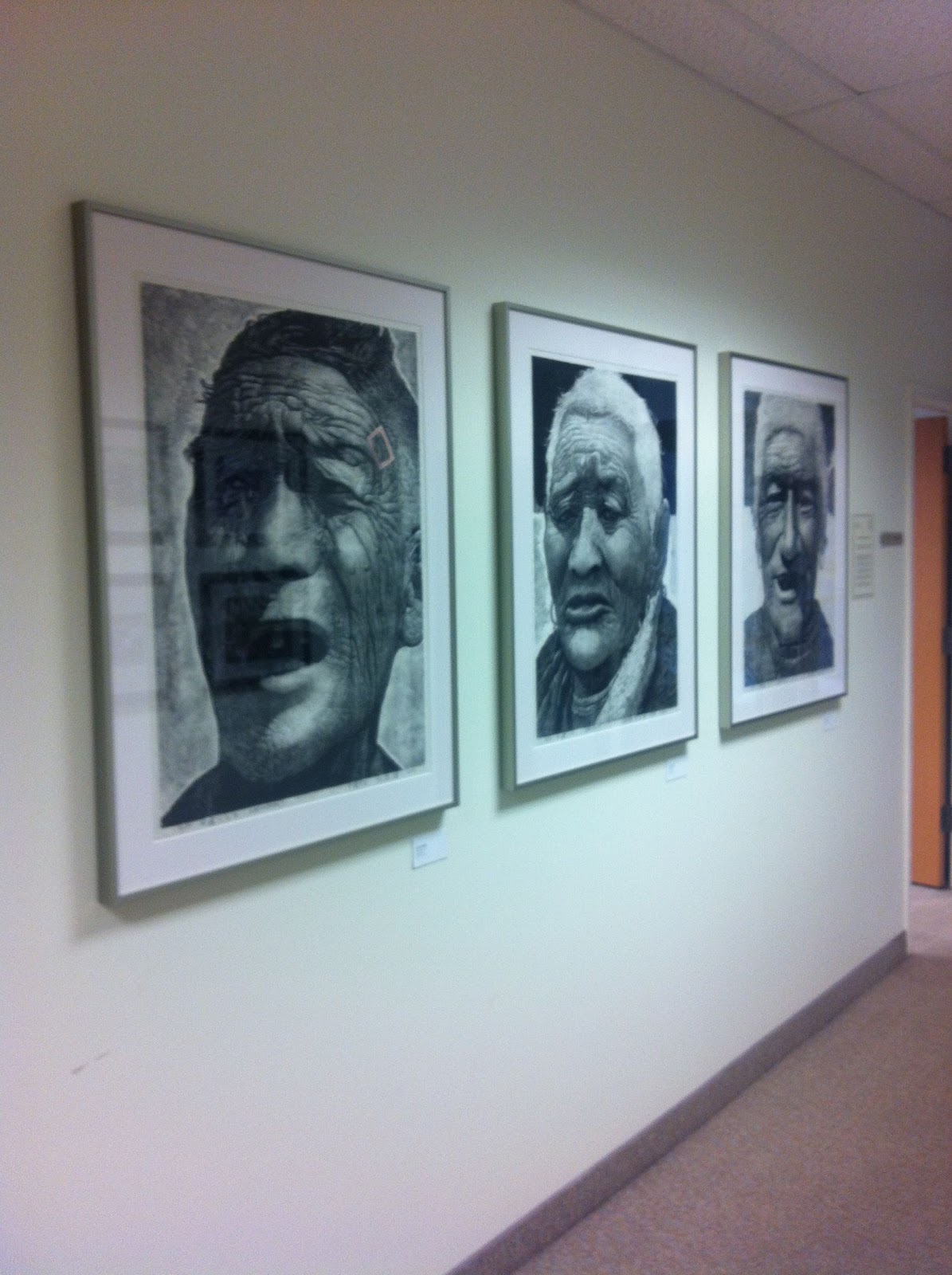
Susan Cain on Group Think in today’s NYT

The piece is here. Note that in spite of the main case being for creative solitude, Cain acknowledges:

Indeed, recent studies suggest that influential academic work is increasingly conducted by teams rather than by individuals. (Although teams whose members collaborate remotely, from separate universities, appear to be the most influential of all.) The problems we face in science, economics and many other fields are more complex than ever before, and we’ll need to stand on one another’s shoulders if we can possibly hope to solve them.

An institute for advanced study: what purpose?

In the short time before the Spring semester commences, it’s perhaps worthwhile to step back and consider  the question of: why an institute for advanced study?

There are quite a few such institutes these days, and not just here in the States, but the granddaddy of them all is the one at Princeton, where Albert Einstein spent the War years in the 1940’s. That Institute has as its key mission “to encourage and support fundamental research in the sciences and humanities – the original, often speculative, thinking that produces advances in knowledge that change the way we understand the world.”

Note the idea of producing advances that “change the way we understand the world”.  That idea of course echos Thomas Kuhn’s notion of a paradigm shift. Not all research does this; most findings are incremental in nature. To aim for paradigm shifts is bold and fraught with risk.

Which brings to mind this commentary on venture capitalists, which appeared on my twitter feed today. Here the operative meme is that VC’s are too cautious these days. That like the Howard Hughes Medical Institute, they should take bigger risks:

VC firms must behave more like the Howard Hughes Medical Institute, which funds radical scientific innovations over long periods of time – and less like the National Institutes of Health, which prefers incremental, almost-sure advances.

 I would argue that it is in institutes for advanced studies that such science takes place, often with great collective purpose and across seemingly vastly different domains of knowledge. It is certainly what we are about at the Krasnow Institute for Advanced Study.

I’ll close with this quote, lifted from our web site, that captures Krasnow nicely:

In the end, we believe that there is no substitute for recruiting the very best people and turning them loose to explore the fascinating world of thought somehow emergent from our biological nature and evolution as Homo sapiens.

Back from Research Triangle

In spite of challenging weather, I had a most interesting visit to Burroughs Wellcome Fund yesterday. I learned about some very interesting STEM education approaches and a very similar interest in success stories in Finland and Singapore.

It’s clear to me that the education puzzle is central to future US economic prosperity.  My sense is that there is even national consensus on this. The devil is in the details in this case and learning what has worked for other countries is an excellent first step towards reform here.

In Finland, for example, the requirement for all K-12 teachers to earn a masters degree with a mix of pedagogy and research is admirable. But that’s for a population of 5.4 million. That simply may not be possible here in the US with a population of 300+ million. But the underlying idea of attracting the very best and the brightest to education does make sense.

So good first steps. It will be interesting to see what evolves here in the US.

Most interesting new book review…

It’s here in today’s FT: Sir Crispen Tickell’s review of Rupert Sheldrake’s new book, The Science Delusion: Freeing the Spirit of Enquiry published in the UK by Coronet (I’ll need to check whether it’s available as an e-book).

Starts off with the premise that there are certain dogmas in present day scientific thought that may not be true and then goes off into the world of self-organization and complexity, and his theory of “morphic resonance”.

P.S. Sheldrake’s views on science are to say the least quite controversial. In fact, there are some who say it’s pseudoscience since, the argument goes, his theories are unfalsifiable.

Macro changes in the Federal R&D funding world…

They are beginning to manifest themselves in seemingly small ways. Today, we see new rules on using NIH grants to support faculty salaries. For those readers with a Chronicle subscription see here. For those, without access, the bottom line is that there will be a salary cap of $179,700 for NIH grants used to support faculty…potentially a huge problem, especially at academic medical centers where faculty researchers may also be seeing patients.

My prediction: we’ll be seeing a whole lot more of this kind of stuff coming down the pike.

At Cru Cafe in Charleston SC

The annual Biological Bulletin Editorial Board dinner. Hosted by the Journal and SICB Secretary Lou Burnett. At the terrific Cru Cafe in balmy Charleston. Around the table from the left going counterclockwise: Managing editor Carol Schachinger, editor emeritus, Michael Greenberg, Charles Derby, Karen Burnett, Bill Kier, Lou Burnett and yours truly.

The editorial board meeting earlier in the afternoon was a great success. And I enjoyed viewing some excellent posters at SICB itself.

But above and beyond, I learned a new skill: manning the exhibition booth! In all honesty, it was a blast. The line of graduate students to take advantage of our swag and subscription promotions was incredible. And it was a real delight to confess, as folks perused the gorgeous hard copy issues of the Journal that I was actually the editor.

In the meantime, I’m back in DC and the nice weather followed me north. The leaves may be off the trees here at Krasnow, but it feels like the Spring weather is just around the corner.