Election Day 2012…

It’s upon us here in the States. I haven’t a clue how it’ll come out, but I have to say…the campaign went on too long and it was entirely too negative. We can do better.

On the other hand, standing in line this morning at my precinct polling place, I was reminded of the essential element of democracy here that Alexis de Toqueville wrote about back in the 19th century–it’s still somehow very much alive. I could see it in the smiles, easy civility and patience of my neighbors, even as they are deeply divided on who should be running this nation.

I expect American science will continue to survive and somehow even thrive in any case. If there’s a clear cut winner by tomorrow, we’ll consider the probabilities for what comes next in science policy in the next blog entry.

Sit back and enjoy the show this evening….and remember, we’re all pundits now.
Future of Higher Education Conference

I’ve been attending the past few days….it’s here at George Mason. Of course the theme has been systemic change in the way we deliver content to undergraduate learners. In spite of all the talk of MOOCs and learning management systems, I’m struck by two things that aren’t changing: first that in science, the theoretical framework (Professor Jim Trefil mentioned this yesterday) stands apart from the mass of regular course content, waiting to be “discovered” by students enabling them to make sense of so much that must otherwise be memorized (think finally understanding enough quantum mechanics to make sense of organic chemistry). Second, that also in science, today’s factual content is tomorrow’s unreplicated result, religated to the wastebin of history–experiments and the scientific method go on 24/7 and theories (and even the framework!) are on a constantly evolving trajectory.

Technology can help teach science–I use it a lot in my own hybrid cellular neuroscience course for undergraduate majors here at Mason–but it doesn’t solve the problem of getting to the aha! moment when the learner sees a glimpse of the underlying framework that makes sense of all that, otherwise, scattered content.

The Moon Shot Shortage…

Hat tip to Tyler Cowen, here’s Jason Pontin’s somewhat poignant piece in MIT Technology Review. Money quote:

I remember sitting in my family’s living room in Berkeley, California, watching the liftoff of Apollo 17 I was five; my mother admonished me not to stare at the fiery exhaust of the Saturn 5 rocket. I vaguely knew that this was the last of the moon missions—but I was absolutely certain that there would be Mars colonies in my lifetime. What happened?

That indeed is the question. Pontin thinks that it’s a combination of political and institutional failure combined with the fact that some of our biggest problems really aren’t technological in nature (he uses Malaria as an example and asserts that it’s really a poverty problem).

For myself, I worry that it’s something deeper. Our human brains are evolved, not engineered and they are far from infinitely capable (for details see here).  It may well be that the current global challenges are just too complex for our collective human “mind” to handle–as Pontin points out, if famines are really a result of political failure, then a new Green Revolution isn’t going to solve the problem.

There are a slew of such “human brain limit” problems facing our global society right now–having just ridden out Hurricane Sandy, climate change comes immediately to mind–it may well be that truly understanding our own brains may well be the ultimate example of such a problem (I have a former graduate student working diligently on the theoretical aspects of that issue).

Taken from the standpoint of a human brain limit, a Moon Shot might be viewed as relatively…simple.

Back on-line

The Krasnow Institute did well during the Storm. And frankly Washington DC did well also. Our concerns go out to our scientific neighbors to the north, especially in New York City.

Sandy: an imperfect storm

She’s remarkably asymmetric. But I’m told her wind field is absolutely enormous. Final preparations are complete here at the Institute–we’ll hope for the best. I’m expecting blogging challenges over the next week, depending on how wide spread the power outages are here in the DC area.

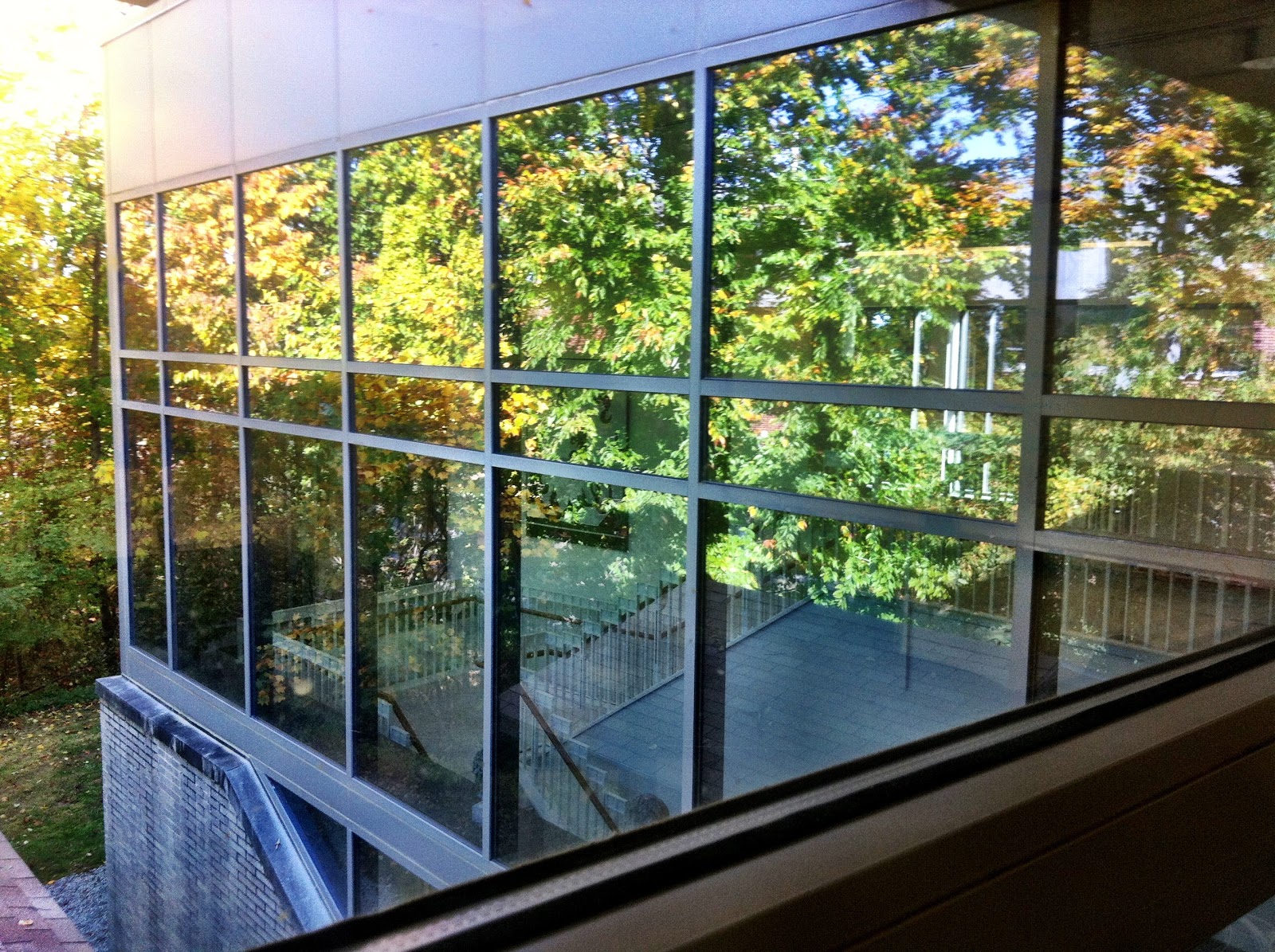
Fall reflections…

The view out my office window: Krasnow Institute for Advanced Study

Fall semester is pretty much half over here at George Mason. Over the past two days, after my return from China, I’ve had time to reflect on the incredible dynamism of the science that goes on here…

An example: today I got to see some absolutely spectacular results that may be relevant to interactions between the brain and the immune system–to my mind, an understudied critical physiological axis in developing new treatments disease.

In the meantime, I’ve been reading up on the default mode network–the system in our brain that seems to subserve mind wandering. Specifically, I’m interested in what happens when the function of this network goes awry (for example in schizophrenia). But the larger question is this: how does the neural dynamics of our brain play out in our complex human social interactions? Can my default mode network affect yours? Time for us to hire some social neuroscientists?

Is academic life changing?

Here’s Mason’s provost, Peter Stearns, on the matter. My own sense is that he’s spot on. Even in the comparatively secure hard sciences, the “social contract” between institution and faculty is undergoing an evolution.

A caution however: one of the US’s enduring competitive advantages has been its ability to attract top flight scientists from all over the world. The perception that either tenure or research support is being eroded will not help, especially in a global environment where countries like China and Singapore are pouring massive amounts of money to bring the best and the brightest to their own shores.

The Dynamics of Social Wishes…

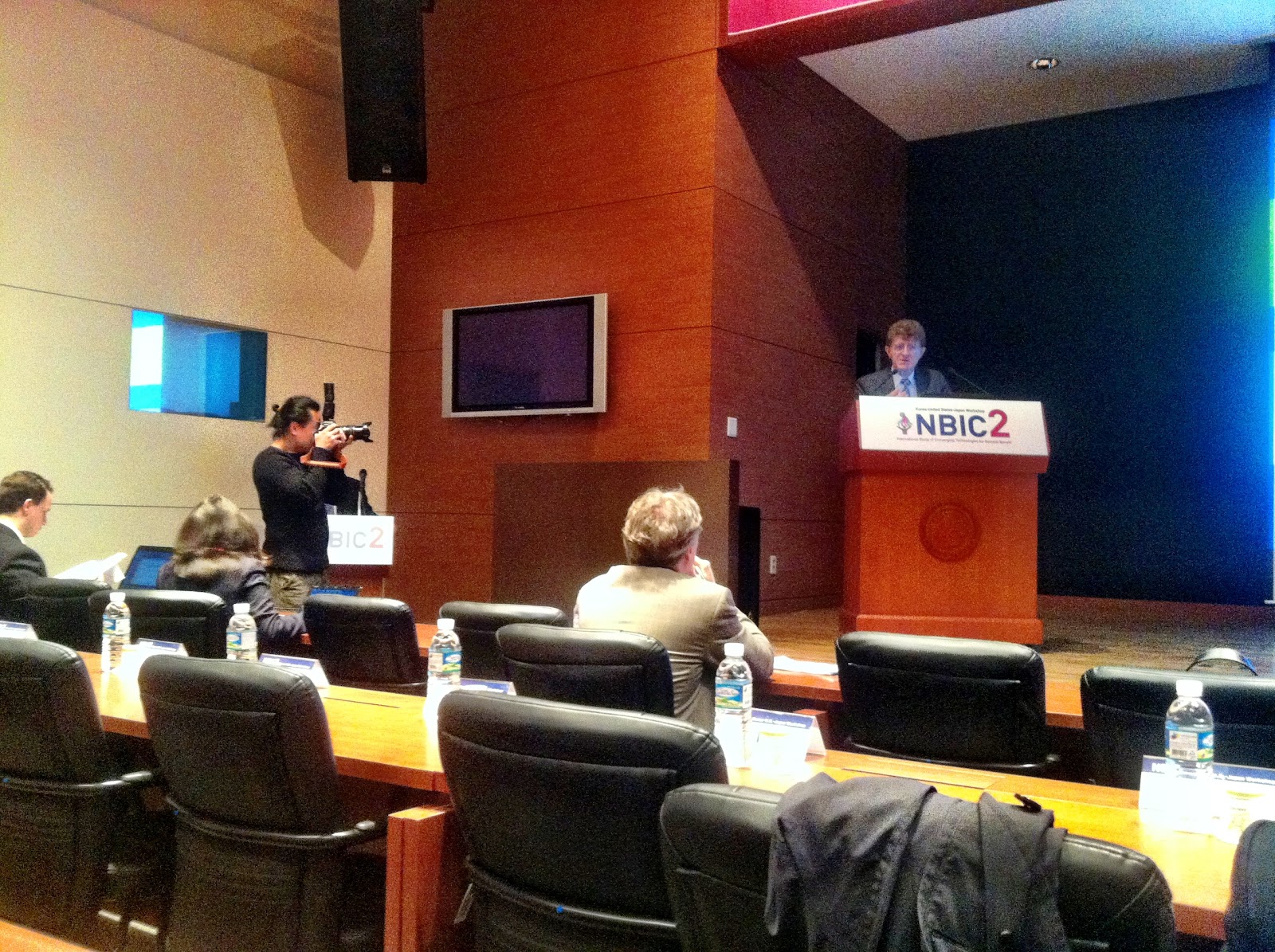
From the Korea Institute for Science and Technology at a Japan-US-Korea co-sponsored workshop on convergent technologies, an interesting idea has been put forward by Professor Tanaka from Japan that there is a dichotomy between scientists who observe (and test hypotheses) and those who design (and create new artifacts). Both types work together to answer the “social wishes” of society.

But how do we determine those social wishes? And crucially, aren’t those social wishes disperate across different societies?

Of course they are. Although there certainly commonalities: we all, I think, want a sustainable biosphere that can support life on the planet. We all want that brain-created thing we call “happiness” (although that means such different things to different individuals).

My plenary is coming up in about an hour. I will be focusing on how dynamics the social wishes of society actually are–two decades ago, the personal computer was a central social wish for those of us involved in data analysis. The emphasis then was autonomy and general purpose computation.

These days, a smart phone and the Net represent quite a different social wish–one that emphasizes mobility, connectivity, and knowledge dissemination. Interestingly, our smart phones are far “smarter” than those early PC’s–but we take the computation for granted and we don’t particularly care about either autonomy….but that connectivity, that’s really critical.