Our colleagues at the Great Ape Trust in the news

Krasnow alum, Rob Shumaker at the center of the story:

Dr. Rob Shumaker, director of orangutan research, signed the document on behalf of Great Ape Trust in January after he and one of his scientific colleagues, Dr. Serge Wich, traveled to the Indonesian island of Sumatra. Wich is one of three co-directors of orangutan research at Ketambe Research Center, the longest-running field study site for orangutans in Sumatra. Ketambe is located entirely in the Gunung Leuser National Park, and is therefore part of the government-protected Sumatran Rainforest World Heritage Site and the Leuser Ecosystem. About 90 percent of 6,700 critically endangered Sumatran orangutans (Pongo abelii) are found in the Leuser Ecosystem.

New faculty member for the Fall: Nadine Kabbani Ph.D.

It’s a pleasure to announce that Dr. Nadine Kabbani will join the Department of Molecular Neuroscience here at the Krasnow Institute for Advanced Study for the Fall term 2008. Dr. Kabbani comes to Mason from the Institute Pasteur in Paris where she was a post-doctoral fellow in the laboratory of Dr. Jean Pierre Changeux. Her research has focused on the proteomic profiling of nicotinic receptor complexes in the brain using mass spectrometry.

Previously Dr. Kabbani was in the laboratory of Dr. Patricia Goldman-Rakic at Yale University. She received her Ph.D. from Penn State University under Dr. Robert Levenson in 2003.

And Dr. Kabbani is coming home. Because she received her B.A. in Biology and Psychology right here at George Mason University.

Welcome back Nadine!

Jim

Mason makes the Sunday NY Times

The subject matter is the current explosion of international campuses for American universities. Mason is an important case study in the piece.

Money quote:

While the Persian Gulf campus of N.Y.U. is on the horizon, George Mason University is up and running — though not at full speed — in Ras al Khaymah, another one of the emirates.

George Mason, a public university in Fairfax, Va., arrived in the gulf in 2005 with a tiny language program intended to help students achieve college-level English skills and meet the university’s admission standards for the degree programs that were beginning the next year.

George Mason expected to have 200 undergraduates in 2006, and grow from there. But it enrolled nowhere near that many, then or now. It had just 57 degree students — 3 in biology, 27 in business and 27 in engineering — at the start of this academic year, joined by a few more students and programs this semester.

The project, an hour north of Dubai’s skyscrapers and 7,000 miles from Virginia, is still finding its way. “I will freely confess that it’s all been more complicated than I expected,” said Peter Stearns, George Mason’s provost.

The Ras al Khaymah campus has had a succession of deans. Simple tasks like ordering books take months, in part because of government censors. Local licensing, still not complete, has been far more rigorous than expected. And it has not been easy to find interested students with the SAT scores and English skills that George Mason requires for admissions.

“I’m optimistic, but if you look at it as a business, you can only take losses for so long,” said Dr. Abul R. Hasan, the academic dean, who is from the South Dakota School of Mines and Technology. “Our goal is to have 2,000 students five years from now. What makes it difficult is that if you’re giving the George Mason degree, you cannot lower your standards.”

Pre-Super Bowl Basketball


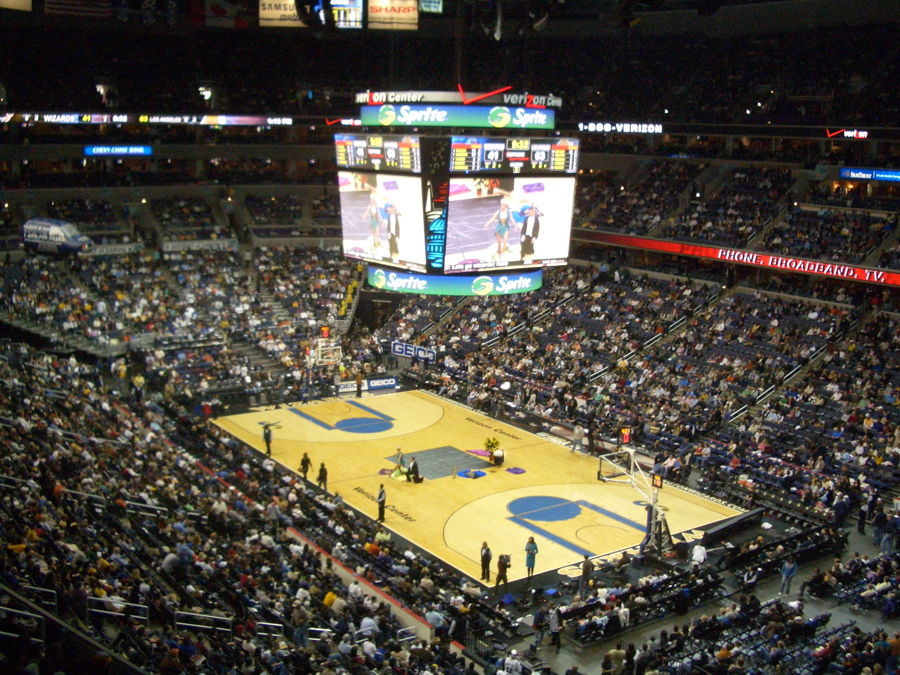
Yesterday afternoon, friends of the Krasnow Institute for Advanced Study celebrated the Super bowl early as they watched the Los Angeles Lakers blow out the Washington Wizards from a Verizon Box at the sold-out Washington Verizon Center. Among those attending the “friend raising event” were Len and Ginger Pomata, Bill Nitze, who have been instrumental in advancing the science of the Institute through their gifts.

What is conflict of commitment?

We’ve all heard the term “conflict of interest” and have some intuitive understanding of what it might consist of. But in academia there is a separate term, conflict of commitment, which is as important to understand (from a job survival standpoint) but for which there is no Wikipedia entry–the term is obscure, yet ubiquitous in the academic policy manuals across the country.

So what is conflict of commitment? To answer this question, I’ll first operate at the level of broad principles and then apply the concept specifically to academics, particularly professors who are either tenured or tenure track. Realize that I am not a lawyer, nor do I play one on TV.

If we think about the commitment that we make when we accept full-time employment at a university, one implied part of that “social contract” is that we accept the primacy of our employer as far as the benefits deriving from our professional life. That is, we realize that as far as our research, service and teaching (and especially teaching but I’ll get to that later), our full time salary compensates us (basically in full) for our employer getting the lion’s share of the benefits of the same research, service and teaching.

The broad principle here is that, as with most real benefits in life (think your TIAA–CREF retirement proceeds should you die) there is a primary beneficiary. In the case of our employment and the benefits of our toil in the lab or classroom–well you can guess, it’s our own institution that is the primary beneficiary.

Now to the details for faculty members: as professors, teaching holds a special place in the list of benefits that our employer receives in compensation for our salaries. After all, you don’t need to be a professor to do research or to serve on a committee. It’s the teaching component that sets the profession of professor apart. And therefore academia places special emphasis upon the role of teaching in building up policies dealing with conflict of commitment.

Put simply: it usually raises a big red flag to take one’s teaching (at any level) to another institution of higher education. At the very least, this type of appearance of conflict of commitment should be discussed carefully with administrators. Teaching is very different from consulting for another institution, or serving on the board of directors, or secretly rooting for the other school’s team in a basketball game. Because teaching is central to your identity as a professor, and a university’s identity as an institution of higher education.

There are other instances of conflict of commitment, but none as important for faculty to store away and remember.

Jim
Spring semester begins

Tomorrow (Tuesday) is the first day of the Spring semester here at Mason. Here are three things I want to accomplish before commencement:

–Recruit at least two new thought leaders to the Advisory Board.

–Garner foundation support for our doctoral programs. Both programs are now beginning to have real track records (normative time to Ph.D. is typically five years or so) and it’s time to gain external recognition of what we are doing in interdisciplinary graduate education and research training.

–Double the number of proposals for sponsored research funding over the same period last year. At the same time, we’ll move towards diversification of our grants portfolio–I would like to also double the number of agencies and foundations that we submit grants to.

Jim

The consciousness of John Searle

I met John at an IBM conference a bit over a year ago in California. Here’s David Papineau of Kinds College in London on John.

Money quote:

Quantum mechanics tells us that the probabilities of physical effects are always fixed by prior physical circumstances. If Searle’s suggestion is right, then this principle breaks down inside the human brain, at those points where conscious minds exert an independent influence on events. This implication is not incoherent, but it seems highly unlikely. Serious physicists are unlikely to start looking for violations of quantum mechanics inside the human skull. With free will, as with consciousness, it seems that Searle’s affinity for common sense has left him in a philosophically unstable position.

Jim

Blogs and scholarship

Librarians are learning about blogs in the context of scholarship. Interesting if true. As a journal editor, I have a difficult time accepting that peer review and editing aren’t part of the crucial value-added part of publishing when scholarship is concerned.

Jim