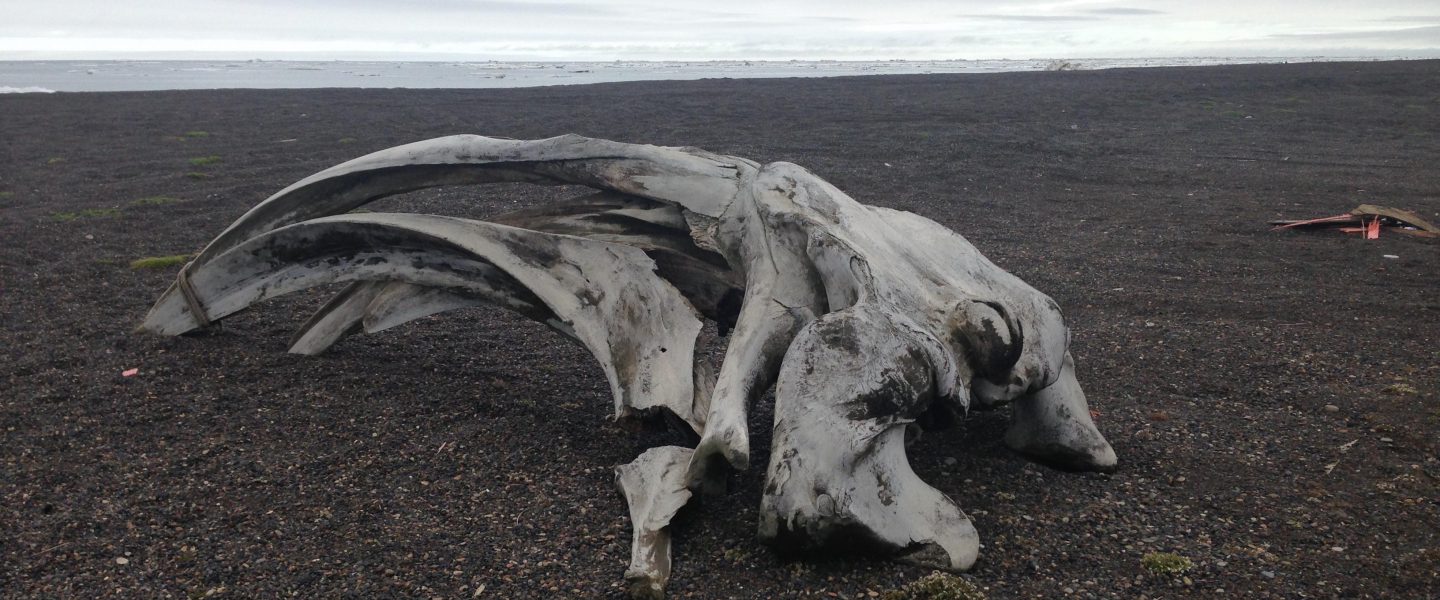
A wonderful dinner last night with a former student, now a valued member of my editorial board, and her husband. This evening sitting out under a cool, cloudy sky in Falmouth working on a new paper about the trajectory of cortical development in post-natal humans (from zero till six years old).
Author: jlolds
MBL Corporation meeting
Today is the high point (at least as far as activity goes) for summer bioscience in Woods Hole–the first Friday in August when the annual Corporation meeting coincides with the hallowed traditions of the Friday Evening Lectures. This morning, the campus of the MBL is pristine, the ocean deep blue and the next three hours will bring together the elected scientists who make up the MBL Corporation–I’m proud to call myself one of them.
MSU’s President: institutes detract
Here’s an interesting piece by Princeton’s Stan Katz on Michigan State University’s President Simon has concluded regarding excellence at the large public university:
MSU President Lou Anna K. Simon is quoted as saying that therefore “the university [must look] at the big picture before it considers any new program and balances societal needs with the institution’s strengths. . . . ‘You try to find areas where you can be one of the best, if not the best.’” The operational conclusion has been “the elimination of independent research centers, which have self-sustaining budgets and can create barriers to interdisciplinary collaboration.”
Forgive me, but I don’t see this logic. Seems to me, that institutes do the opposite–they in fact eliminate barriers that would naturally exist between conventional units to trans-disciplinary collaboration. Read the piece and see what you think.
Jim
Wrong phone directory
It’s a rainy, foggy morning here in Woods Hole. I woke up to the fog horn. The journal staff here played a practical joke on me: they found a copy of the 1978-1979 Woods Hole phone director (where I am listed as a student) and left it on my desk prominently displayed. I thought nothing of it until I tried to look up a number and saw the old three digit extensions.
Tomorrow is the date for the MBL corporation meeting. And then the MBL Friday Evening lecture: Sir Paul Nurse, the Nobel Laureate will talk about “Great Ideas in Biology”. Should be an interesting day.
Jim
Do I need words to think?
When I experience conscious thought, it is mostly in words (I am making a big exception for the type of conscious thought that accompanies hitting my thumb accidentally with a hammer). When I remember my dreams, for the most part, it seems to me that those remembered dreams included words. There is an old French movie L’Enfant Sauvage, directed by Francois Truffaut about a child who somehow survives in the wild to grow up without words. In the movie, the child clearly thinks. There is good scientific evidence that the Great Apes think without words. I believe my dogs think…without words. And yet, I can’t imagine my own conscious experience without the internal narrative of language. Why is that? Is it just our own species-specific experience of conscious thought that requires language?
Berea versus Amherst College: the question of tuition
Read this article by Tamar Lewin in the New York Times about Berea, a college with a billion dollar endowment that doesn’t charge tuition….compared with my Alma Matter, Amherst College.
Money quote:
“You can literally come to Berea with nothing but what you can carry, and graduate debt free,” said Joseph P. Bagnoli Jr., the associate provost for enrollment management. “We call it the best education money can’t buy.”
Actually, what buys that education is Berea’s $1.1 billion endowment, which puts the college among the nation’s wealthiest. But unlike most well-endowed colleges, Berea has no football team, coed dorms, hot tubs or climbing walls. Instead, it has a no-frills budget, with food from the college farm, handmade furniture from the college crafts workshops, and 10-hour-a-week campus jobs for every student.
How the brain interprets mirror images
Natalie Angier from today’s New York Times….
Money quote:
“In a sense, mirrors are the best ‘virtual reality’ system that we can build,” said Marco Bertamini of the University of Liverpool. “The object ‘inside’ the mirror is virtual, but as far as our eyes are concerned it exists as much as any other object.” Dr. Bertamini and his colleagues have also studied what people believe about the nature of mirrors and mirror images, and have found nearly everybody, even students of physics and math, to be shockingly off the mark.
Blogging schedule
I’m finishing up July in DC–as hot and muggy as this month always is. I’ll then be up at the MBL in Woods Hole for about ten days where I hope to post and then off to Scifoo Camp at Googleplex in Mountain View California where I hope to create some hopefully interesting content for this blog.
Jim
The Chronicle weighs in on provostial teas
I know it’s behind the firewall, but if you get a chance, it’s well worth the read. Money quote:
Several times a semester, Peter N. Stearns invites a couple of dozen faculty members to join him for tea and cookies in the administration building at George Mason University. During teatimes, Mr. Stearns, the provost, takes questions and listens to professors’ suggestions. Sometimes, he says, professors share “imaginative approaches” to teaching that he then passes along to others.
Mr. Stearns believes that the teas have opened up communication with professors and are the kind of thing that leads employees to rank George Mason highly when it comes to relations between faculty members and administrators.
The provost says administrators at George Mason also try to react quickly when professors have good ideas. “If a faculty member comes to me or the president or a dean and says, ‘I’ve got this idea,’ our systematic reaction is: That’s great. Let’s make it work.” Just six months ago, a professor told the provost he wanted to create a center to help third-world countries enhance information security. Administrators gave the OK, and the International Cyber Center was born. The professor who started it is already planning the center’s first conference.
Last day of vacation
I am back in Washington. Tomorrow I’ll return to Krasnow for what will turn out to be quite a busy rest of the summer. There are real challenges ahead–the new construction as we continue to expand, the acquisition of a cellular imaging facility that I believe will complement our MRI and the now accelerating momentum of the Decade of the Mind project as we approach the US general election.
My own take on Science 2.0 has been accepted for publication at The Biological Bulletin. It will be in the August issue.
Jim