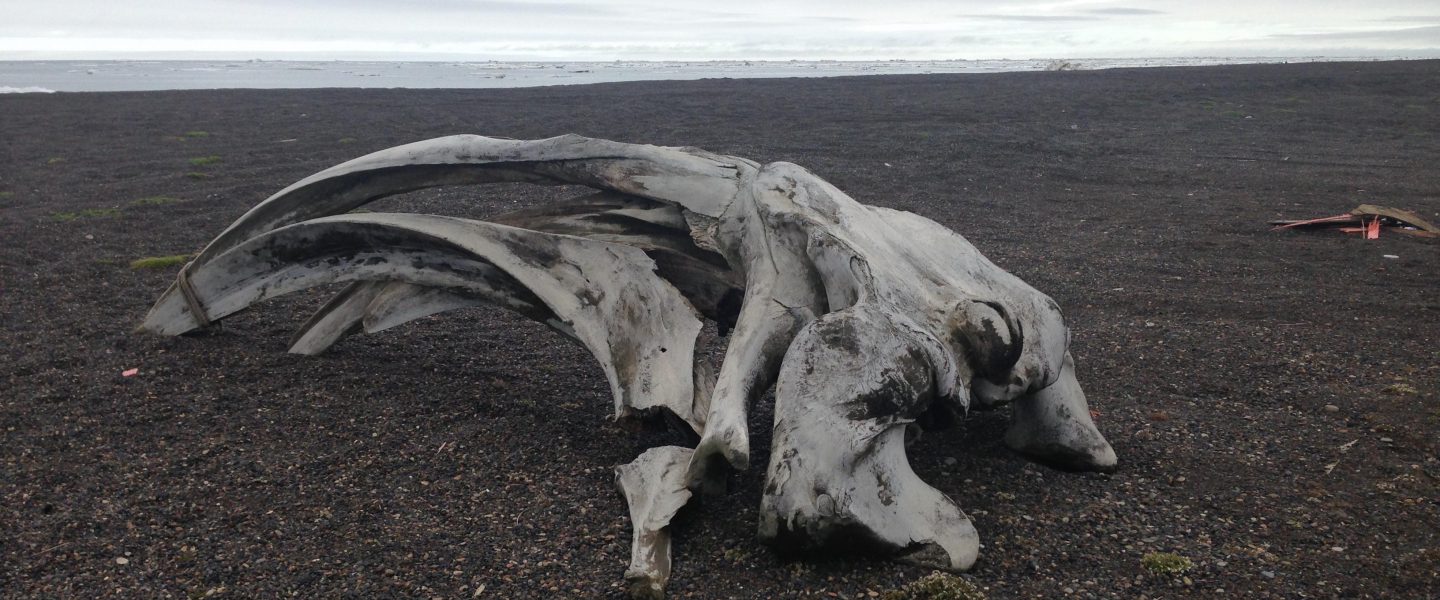

From Science Insider–they aren’t looking good.
Author: jlolds
Native Angeleno, professor of Neuroscience and Public Policy at George Mason University
The dangers of email revisited
I and many others have been following the so-called “Climate-gate” story out of the U.K. As has been well-described now, hackers broke into servers and released emails between respected climate change scientists which were, at the very least, embarrassing. This incident may have very far reaching consequences for policy, but is also a reminder of how potentially damaging electronic mail can be (at a professional and personal level).
I’ve written about this matter before, but it’s useful to remind readers of the following heuristic: if you’re not comfortable seeing your words as a headline in tomorrow’s New York Times, then it’s better not to hit that send button.
And as a corollary, always check to see who’s actually on the cc line.
Jim
Happy Thanksgiving to loyal readers
Here at our Wintergreen house, we’re listening to holiday tunes, baking bread and leisurely making our way through yesterday’s Financial Times. It’s time to say thank you to all of my readers, especially those who have contributed their own thoughts from time to time.
It’s also a good time to give a shout-out for collegiality in science. There’s been a lot of sturm and drang recently among both climate scientists and, to some extent, in the computational neuroscience community. Collegiality facilitates collaboration and is essential for trans-disciplinary science to progress (at least until we all become experts in all fields–a while I think).
Happy Thanksgiving!
Jim
The Great Recession and Tuition at Public Universities
The New York Times has a running-debate here. Economist and colleague, Tyler Cowen and I have talked about this over lunch. At some point I’ll try to crystalize my ideas on the matter and put them into a blog post. In the meantime, let’s see if Tyler addresses the issue over at Marginal Revolution.
Jim
Our constrained brains
Hat Tip to Andrew Sullivan’s Daily Dish for this. Basically the notion that my colleague Tom Vogl has pushed for years: our brains’ architecture and physiology deeply constrain our complex behaviors (such as reading).
A busy week
I’ve been swamped this week with an ONR Workshop and the new Krasnow construction project. But have been keeping a close eye on interesting netsam floating over the Web-Ocean. I’m really pleased about the new NIH investment in behavioral sciences, OppNet–kudos to colleagues who have been working towards this goal for a very long time!
Big Blue’s Dharmendra Modha and Cat Neocortex simulation
Dharmendra’s team at IBM are making the news this morning. Here’s AP’s Jordan Robertson’s story.
Money quote:
A computer with the power of a human brain is not yet near. But this week researchers from IBM Corp. are reporting that they’ve simulated a cat’s cerebral cortex, the thinking part of the brain, using a massive supercomputer. The computer has 147,456 processors (most modern PCs have just one or two processors) and 144 terabytes of main memory — 100,000 times as much as your computer has.
Steve Pinker hits the Malcom Gladwell’s nail on the head
Here’s Steve Pinker’s spot-on review of Gladwell Inc. (the author of Blink and Outliers).
Watch out for those “igon-values” Gladwell apostles!
Neurogenesis in dentate gyrus and cortical memory transfer
A very interesting finding by Inokuchi et al. in Japan–apparently the well-described phenomenon of hippocampal neurogenesis is required for efficiently moving memories out of the short-term hippocampal “buffer” and into long-term neocortical “consolidation”.
Power Laws
Many readers know that power law distributions are of great interest to our faculty here at Mason’s Institute for Advanced Study…..so I’m really pleased (hat tip to Marginal Revolution) to provide this link.
In my own neuroinformatics research, my graduate student David Cooper has been interested in characterizing the distribution of synchronicity for the wiring up of human neocortical areas over the first six years of life.

