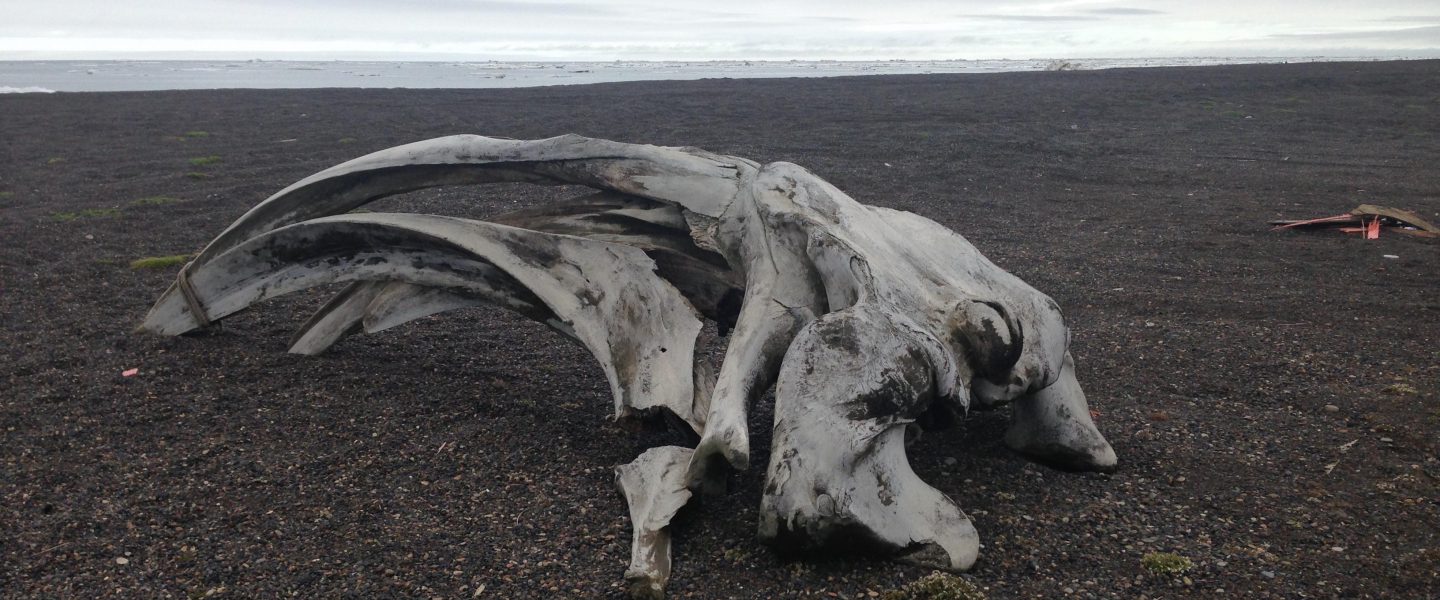
What is science?

When I’m reading the popular media (as opposed to talking with other scientists), I’m often struck by the apparent disconnect between the intelligent lay public view of science and the understanding of science held by most practitioners. In particular, there is a real confusion between technology, applied science and basic science. And then secondarily there is, among many members of the public, little understanding of the scientific method itself.

With regards to the first confusion, I would define technology as the material and sometimes non-material artifacts, built by human labor, that facilitate or enable some portion of human behavior. Thus the wheel is certainly technology, but so also is the Google search algorithm. By the same token, the I-Phone is technology, but so too is the Pub Med database of journal articles. But these things, material and non-material, are not science. Even though Pub Med contains scientific data and is used by scientists, Pub Med, from my point of view is technology.

Applied Science, on the other hand, is scientific research that can more or less, lead directly to the invention and deployment of new technologies. Thus, I view much of biomedical research (translational research in fact) as applied science because it can be used to develop new practical therapies to advance the public health. In the same way, agent-based modeling, applied to economics, potentially offers decision makers new computational tools for predicting and avoiding systemic risk.  The key difference here is that while a prototype technological artifact may emerge from the practice of applied science, a mature technology generally does not.

Basic science, in contrast, is scientific research aimed at understanding the rule-set of the universe–usually by the hypothesis-based practice we call the scientific method.

It is this scientific method, that I think deserves a much better public explanation–it may well help to depoliticize public policy decisions that are based on scientific research, especially basic research. Most discussions of the scientific method, inevitably refer to Karl Popper. Popper’s key point was the the centrality of falsifying a hypothesis. That is, the aim and design of scientific experiments is to produce data which can serve as a test for an underlying hypothesis being true.

Thus, science is constrained by questions that are in fact testable. The ones that aren’t testable (and they are surely out there) aren’t science. In my opinion, it is this notion that’s terribly important for decision makers to understand: a policy issue, sub served by an implicit theory that can’t be tested, is a bad match for scientific research, applied or otherwise.

One last thought: there is a lot of good science out there that is non-hypothesis based. It’s exploratory science–the Human Genome Project was an excellent example of this. Exploratory science aims at adding to our knowledge of the universe, not by gleaning its rule-set, but rather by collecting and curating its facts. And with the technology of modern databases, collecting and curating may offer great practical utility.

Back from vacation

Today I’m back in the office after a week off. The construction outside seems to have advanced, not only here on our building, but all around the Mason campus where new buildings seem to sprout like mushrooms. We are making plans already for three conferences which will make use of the new hotel and conference center here on campus.

A shout-out is in order for our incredible administrative staff here at Krasnow, who kept things humming during my absence. They are a brilliant bunch. I’m very lucky to work with them.

Success at grant writing

This skill is often called grantsmanship. It’s quite different from scientific research itself, but success in science these days requires excellence in grantsmanship as a necessary (albeit non-sufficient) condition.

Here is a great blog entry from SCIENCE on some basic grantsmanship skills. I highly recommend it as a starting point for our junior faculty at Krasnow, in addition to interested readers.

Lurid stories of neuroscientists

Jim Fallon of UC Irvine is a good friend and former professor. He’s all over the news this week because of he’s found a correlation between his brain imagery, his genetics and those of psychopaths. He’s also apparently related to the famed Lizzie Borden.

But before we go out and profile the population for violent crazies, a couple of important cautions:

First, Jim Fallon is definitely not a psychopath. Having known him for thirty years, loyal readers can rest assured. So the correlation is not sufficient for the phenotype.

Second, it’s likely that there are many varieties of psychopaths. As there are many kinds of cancer, each with its own specific etiology, so there are many brain disorders which may lead to what we might legally call psychopathic behavior. My guess is that the variability here is enormous.

Consciousness as reprogramming

Hat tip to Andrew Sullivan….

Scott Adams (Dilbert) sees human consciousness as unique relative to other animals, including dolphins.

Problem with this is that early Homo sapiens had no idea that their brain, as an organ, subserved consciousness, and yet, no doubt were fully conscious and capable of free-will. So there was certainly no idea as such as “reprogramming”. On the other hand, humans were certainly implicitly aware of their own moods which might be changed through behaviors. But this awareness is certainly not limited to humans. We can see the evidence for such advanced cognition in the Great Apes. Bonobos and Orangutans engage in complex “computer games” with researchers, not for reward (as in juice or food) but rather because they chose to for the intrinsic entertainment of the game.

Money quote from Adams:

Suppose we define a creature to have consciousness and free will if it demonstrates the ability to use the external world to reprogram its own brain toward specific ends. By this definition, reading a book in order to change one’s mood or gain data would be an example of both consciousness and free will. But a monkey using a stick as a tool to get bugs would be nothing more than eating. The monkey is not trying to become a smarter or happier monkey; he’s just feeding his body.

Do we really have a cognitive surplus?

Clay Shirky’s new book puts forward the view that now that we’re watching less and less television (are we really?), we are enjoying excess cognitive capabilities–and that that surplus is being deployed on the Net. Sort of the opposite notion from Nicholas Carr’s worry that Google is making us stupid.

What if they are both right? Are we moving from the mindlessness of Gilligan’s Island to the vapidness of Googling ourselves?

My own sense is that Shirky greatly underestimates individual differences in cognitive capabilities. A few humans may always have a great cognitive surplus. And many folks may not– not withstanding how many hours they spend watching TV.

Our bookshelves, our memories

Here is Nathan Schneider’s essay In Defense of The Memory Theater. It is at once, both dystopian and entirely optimistic about the future of computing, the Net and books as any essay that I’ve read recently. His uncle, a former biologist at NIH plays a central role, inventing a text-based knowledge system that itself becomes alive as a “memory theater”.

Coincidentally, Dame Frances A. Yates‘, essay on The Art of Memory–referenced in Schneider’s piece–is next on my own reading list.

The agony of Illinois

My father was born in Springfield Illinois. Therefore it’s was some real pain that I bring to your attention Michael Powell’s piece in the New York Times.

What is happening in Illinois is definitively not universally happening in all of the states. That said, with New York, California and Rhode Island all also in trouble, one wonders what the correlation between a corruption index (constructed in any number of pretty obvious ways) and state budget distress might be. I suspect it would be high.

The implications for state institutions of higher education are significant. I’m really worried about the University of California, not only because I’m a Golden State native, but because I have close colleagues who, as faculty members, are enduring something significantly different from what they signed up for.